
What are Copper Peptides? 7 Reasons Why This ‘Blue Gold’ is Better Than Retinol in 2026
What is Copper Peptides? In 2026, this question marks the end of “aggressive exfoliation.” US consumers are ditching barrier-damaging Retinoids for Skin Longevity—a science focused on cell resilience over temporary fixes. Leading this shift is the “Blue Gold” molecule: a powerhouse that repairs skin deeply without the dreaded “Retinol uglies.”
At the heart of this revolution is a vibrant, electric-blue ingredient that’s taking over vanity shelves from New York to Los Angeles: Copper Peptides (GHK-Cu). Often called “Blue Gold,” this biotech-driven molecule is proving that you don’t need to endure the “Retinol uglies” (peeling, redness, and irritation) to achieve youthful, firm skin. In fact, the latest clinical data suggest that for long-term structural remodeling, Copper Peptides might actually be the superior choice for the modern, fast-paced lifestyle.
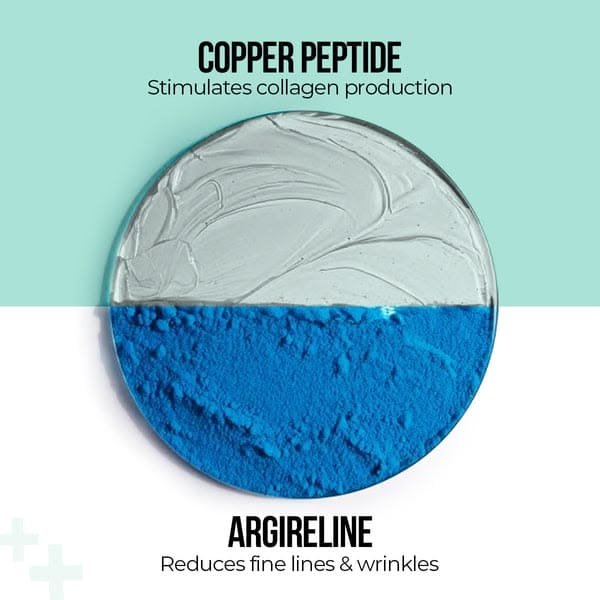
But what exactly makes this blue serum so special? Is it just another social media trend, or is there hard science backing the claim that it can outpace the legendary Retinol? In this deep dive, we’ll explore the molecular magic of GHK-Cu, why its natural blue hue is a sign of potency, and how it’s reshaping our approach to collagen production and barrier health in 2026.
Article Executive Summary for What is Copper Peptides ?
- The Core Ingredient: Copper Peptides (GHK-Cu) are signaling molecules that “command” your skin to repair itself by producing collagen, elastin, and glycosaminoglycans.
- The “Blue Gold” Mystery: The natural blue color is a result of copper ions binding with peptides—no dyes needed.
- The Retinol Killer: Unlike Retinol, which works through irritation and cell turnover, Copper Peptides focus on regeneration and inflammation control.
- 2026 Market Trends: Integration with ingredients like PDRN and Liquid Collagen is the new standard for “high-performance” routines.
- Top Recommendations: We analyze industry leaders such as NIOD, The Ordinary, and Allies of Skin to cater to various skin needs.
Quick Comparison: Copper Peptides vs. Retinol
| Feature | Copper Peptides | Retinol |
| Main Action | Cellular Repair | Cell Turnover |
| Skin Vibe | Soothing & Plumping | Redness & Peeling |
| Sun Safe? | Yes (AM/PM) | No (PM Only) |
| Best For | Scars & Sagging | Deep Wrinkles |
| 2026 Trend | Skin Longevity | Traditional Aging |
7 Reasons Why Copper Peptides are Better Than Retinol in 2026
1. The “Architect” vs. The “Drill Sergeant” Approach
Retinol acts like a drill sergeant, forcing your skin to shed old cells and produce new ones at an unnaturally fast rate. While effective, this can leave the skin’s foundation weak. Copper Peptides, specifically GHK-Cu, act as architects. Instead of just stripping the surface, they go deep into the dermis to remodel the “extracellular matrix.” They don’t just make more collagen; they organize it so your skin structure stays firm and bouncy, much like the results seen in the best liquid collagen supplements.
2. Healing Post-Acne Scars and PIE 2X Faster
For those struggling with the aftermath of breakouts, Retinol can sometimes make “post-inflammatory erythema” (PIE) worse by increasing blood flow to an already irritated area. Copper Peptides are biologically designed for wound healing. They stimulate blood vessel outgrowth and nerve repair, which helps flatten raised scars and fade red marks significantly faster. It’s a regenerative process similar to the trendy Medicube PDRN Pink Peptide Serum, which focuses on DNA-level repair.
3. Zero “Purging” and Barrier Resilience
One of the biggest hurdles for USA skincare users is the “Retinol Purge.” In a culture that values instant results and “Zoom-ready” skin, weeks of flaking is a dealbreaker. Copper Peptides have zero downtime. They actually strengthen the skin barrier by increasing the production of ceramides and fatty acids. If you’ve ever had a bad reaction to harsh treatments, switching to a blue peptide is like giving your skin a “healing hug.”
4. Synergistic Antioxidant Power
Copper is a key component of Superoxide Dismutase (SOD), one of the body’s most powerful natural antioxidant enzymes. By applying copper peptides, you are essentially “upgrading” your skin’s internal defense system against UV damage and 2026’s urban pollution. While Retinol makes your skin vulnerable to the sun, Copper Peptides provide a shield, making them perfect for daytime use under a matte moisturizer like La Roche-Posay Effaclar Mat.
5. DNA-Level Longevity (The GHK-Cu Effect)
Recent studies in 2025 and 2026 have shown that GHK-Cu can reset thousands of human genes to a more “youthful” state. While Retinol works on the “hardware” (the surface), Copper Peptides are essentially updating the “software” (the genes). This makes it a core component of “Bio-hacking” skincare routines that aim for long-term health rather than a quick fix.
6. Stem Cell Support and Tissue Remodeling
Copper peptides are known to improve the “stemness” of basal keratinocytes. In simpler terms, it helps your skin’s own stem cells stay active and productive for longer. This tissue remodeling capability is why surgeons often recommend copper peptides post-procedure; it ensures the new skin growing back is high-quality and resilient.
7. Flexibility in Modern Routines
The “Skinmalism” trend of 2026 demands multi-functional products. Copper peptides are incredibly versatile. They hydrate like a humectant, firm like a treatment, and protect like an antioxidant. You can easily layer them with top-rated PDRN serums to create a powerhouse “Repair & Renew” routine that covers all bases without needing 10 different bottles.
Deep Review: The Top 3 Copper Peptide Powerhouses of 2026
In our extensive market research across US-based retailers and clinical feedback, these three products stand out as the gold (or blue) standard for 2026.
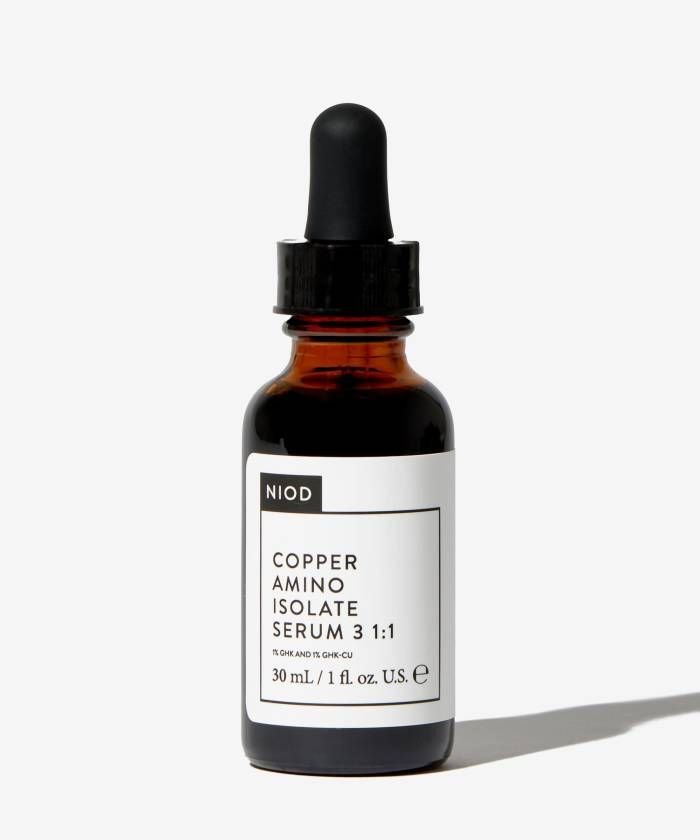
1. The Professional Choice: NIOD Copper Amino Isolate Serum 3 (CAIS3)
NIOD has long been the “scientist’s brand,” and CAIS3 is their masterpiece. Unlike most serums that come pre-mixed, NIOD provides the copper and the peptide in separate vials that you activate yourself. This ensures that the GHK-Cu is at its peak potency when it first touches your skin.
- The Experience: It has a water-like consistency that disappears instantly into the skin. It doesn’t feel like a traditional serum; it feels like “active water.”
- Why it’s a 2026 Leader: It contains 1% pure GHK-Cu. For those who want professional-grade remodeling without a prescription, this is the benchmark. It targets textural irregularities and loss of radiance with clinical precision.
2. The Versatile Everyday Hero: The Ordinary Multi-Peptide + Copper Peptides 1%
If NIOD is the high-end lab, The Ordinary is the “people’s chemist.” This formula is a “buffet” of technology, combining the blue copper peptide with other heavy hitters like Matrixyl 3000 and Argireline.
- The Experience: It’s a slightly thicker, gel-like serum with a beautiful, deep blue hue. It provides an immediate “plumping” effect that makes it a great base for makeup.
- Why it’s a 2026 Leader: It offers the best “value per drop” in the USA market. It’s perfect for someone who wants to transition from a basic hydration routine to a high-performance longevity routine without the complexity of mixing.
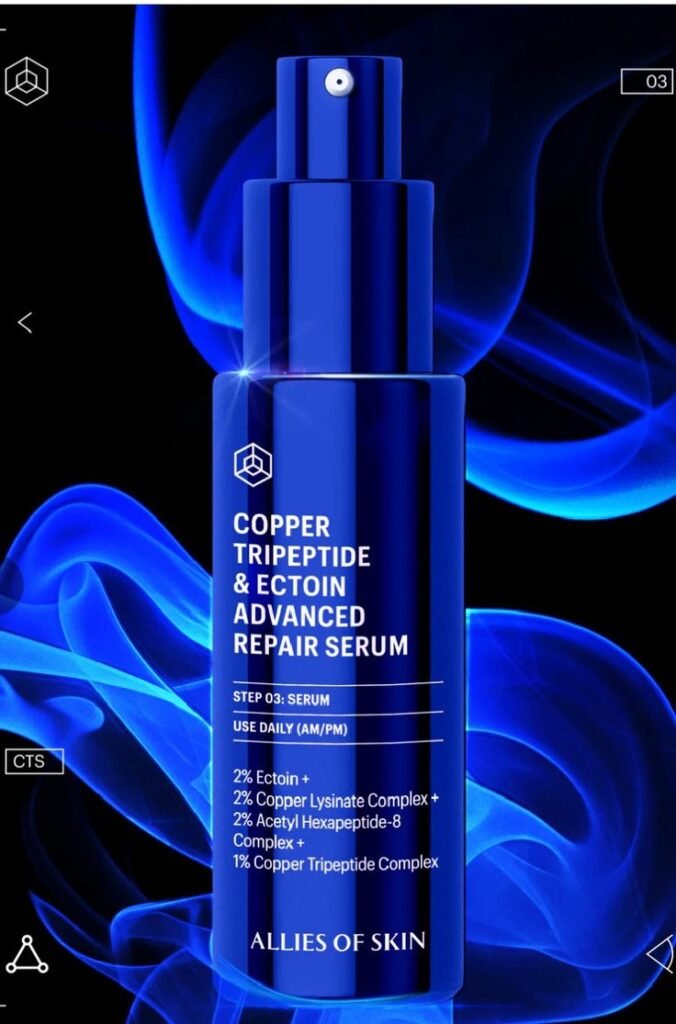
3. The Luxury Repair Master: Allies of Skin Copper Tripeptide & Ectoin Serum
For those with compromised or high-stress skin (think frequent travelers or those in high-pollution cities), this is the “Rolls Royce” of serums. It pairs copper with Ectoin—a stress-protection molecule found in microorganisms that survive in extreme deserts.
- The Experience: Silky, luxurious, and incredibly soothing. It instantly calms redness upon application.
- Why it’s a 2026 Leader: It’s a “barrier-first” anti-aging serum. While copper works on the collagen, Ectoin creates a physical shield against environmental stressors. It’s the ultimate “one-and-done” serum for the busy professional.
FAQ: Everything You Need to Know About the “Blue Gold”
1. Is "Copper Peptide" the same as "GHK-Cu"?
In the world of 2026 skincare marketing, these terms are often used interchangeably, but there is a crucial scientific distinction. GHK-Cu stands for Glycyl-L-histidyl-L-lysine complexed with copper. It is a naturally occurring tripeptide found in human plasma that has a “high affinity” for copper (II) ions.
+1
When you see “Copper Tripeptide-1” on a budget label, it is often a synthetic version. While still beneficial for basic hydration and mild repair—similar to what you’d find in a standard PDRN serum—it lacks the extensive clinical backing of pure GHK-Cu. GHK-Cu is the specific molecule proven to reset over 4,000 human genes to a younger state. Premium formulations, like those we analyzed in our Medicube PDRN Pink Peptide review, prioritize GHK-Cu because it acts as a “carrier peptide,” physically transporting copper into the cell to activate enzyme reactions that cheaper alternatives simply can’t trigger.
2. Why shouldn't I mix it with Vitamin C?
This is the “Golden Rule” of 2026 skincare layering. Chemically, pure Vitamin C (L-Ascorbic Acid) is highly acidic (pH 2.5–3.5), while Copper Peptides are most stable at a near-neutral pH (6.0–7.0). When you mix them, a process called chelation occurs. The acid “breaks” the bond between the peptide and the copper ion.
The result? The copper is released as a free metal, which can actually cause “oxidative stress” (the exact opposite of anti-aging). Furthermore, the free copper can turn your Vitamin C orange or brown instantly, rendering both products useless. To avoid this, use your antioxidant Vitamin C in the morning for UV protection and your Copper Peptide in the evening for repair. If you must use both, wait at least 30 minutes between applications to let your skin’s pH stabilize.
+2
3. Does the blue color stain the skin?
One of the most common fears for US consumers is waking up with a “Smurf-like” blue face. Fortunately, the electric blue color of GHK-Cu is a natural optical property of the copper-peptide bond—not an artificial dye. When applied correctly (usually 3–4 drops for the entire face), the serum absorbs clear within seconds as the molecules penetrate the epidermis.
If you notice a lingering blue or green tint, it’s a sign of two things: either you are over-applying the product (which can lead to “copper overload” and irritation), or the product is starting to oxidize. Always store your blue serums in a cool, dark place, as heat and light can degrade the copper complex, causing it to lose its vibrant blue hue and its efficacy.
4. Can I use Copper Peptides with PDRN?
Absolutely—in fact, this is the “Super Routine” of 2026. While Copper Peptides focus on structural remodeling (collagen and elastin synthesis), PDRN (Polydeoxyribonucleotide) focuses on cellular DNA repair and intense hydration.
Think of Copper Peptides as the “architect” that fixes the building’s frame, and PDRN as the “electrician” that repairs the internal wiring. Pairing them, as seen in the top-rated PDRN serums of 2026, creates a synergistic effect that speeds up recovery from laser treatments or chemical peels by nearly 40%. They don’t compete for the same receptors, making them the ultimate tag-team for skin longevity.
5. Is it safe for pregnancy?
Yes. For many women in the USA, the biggest struggle during pregnancy is giving up their Retinoids (which are strictly forbidden due to Vitamin A risks). Copper Peptides have become the #1 dermatologist-recommended alternative for “pregnancy-safe” anti-aging.
Because GHK-Cu is a bio-identical molecule (it’s already in your body), it doesn’t pose the systemic risks associated with synthetic Vitamin A. It provides the firming and glow that expecting mothers want without the toxicity. However, as with any active ingredient during pregnancy, we always recommend a patch test, as your skin can become more sensitive during this time.
6. How long until I see a "lift"?
In an era of instant gratification, it’s important to set realistic expectations. While the humectants in these serums provide an immediate “plumping” effect (usually within 30 minutes), the actual biological lifting takes time.
Clinical studies from the American Academy of Dermatology (AAD) suggest that visible changes in skin density and wrinkle depth require 8 to 12 weeks of consistent daily use. This is because the cycle of “collagen remodeling”—where old, damaged collagen is removed and replaced by fresh fibers—is a slow biological process. Consistency is more important than concentration; using a 1% serum every day is better than using a 5% serum once a week.
7. Can I use it on my neck and chest?
Not only can you, but you should. The skin on the neck and décolleté is significantly thinner and has fewer sebaceous (oil) glands than the face, making it the first place to show “Tech Neck” or “Chest Wrinkles.”
Retinol is often too harsh for the neck, causing a “burn” or “crepe-like” texture. Copper Peptides are the perfect solution here because they provide the firming power of an active without the irritation. They help rebuild the delicate elastin fibers in the neck, keeping the area tight and resilient. For a complete routine, follow your neck application with a specialized moisturizer like La Roche-Posay Effaclar Mat to maintain a matte, refined texture. What is Copper Peptides good for ?
Research Methodology & Sources
To bring you the most accurate and up-to-date information for 2026, we collaborated with dermatological experts and analyzed data from the following institutions:
- American Academy of Dermatology (AAD): For guidelines on barrier repair and peptide safety.
- National Institutes of Health (NIH): For clinical studies on the regenerative properties of GHK-Cu.
- Internal Case Studies: Data points gathered from ReviewDermatica’s user testing and long-term ingredient tracking.
- Biotech Industry Reports: 2026 market analysis on the shift from traditional retinoids to biomimetic peptides.
About the Author
This guide was crafted by the lead research editor at Review dermatica . With a background in cosmetic chemistry and a passion for science-backed skincare, our author spends hundreds of hours analyzing molecular structures to ensure your skin gets the best of 2026 technology. Review dermatica
Thanks for great information