
Cicaplast Baume B5 vs B5+—it’s the debate currently taking over skincare Reddit and every “get ready with me” video on TikTok. If you’ve spent any time trying to repair a damaged skin barrier or heal a stubborn breakout, you probably already treat the original La Roche-Posay Cicaplast like a holy grail in a tube.
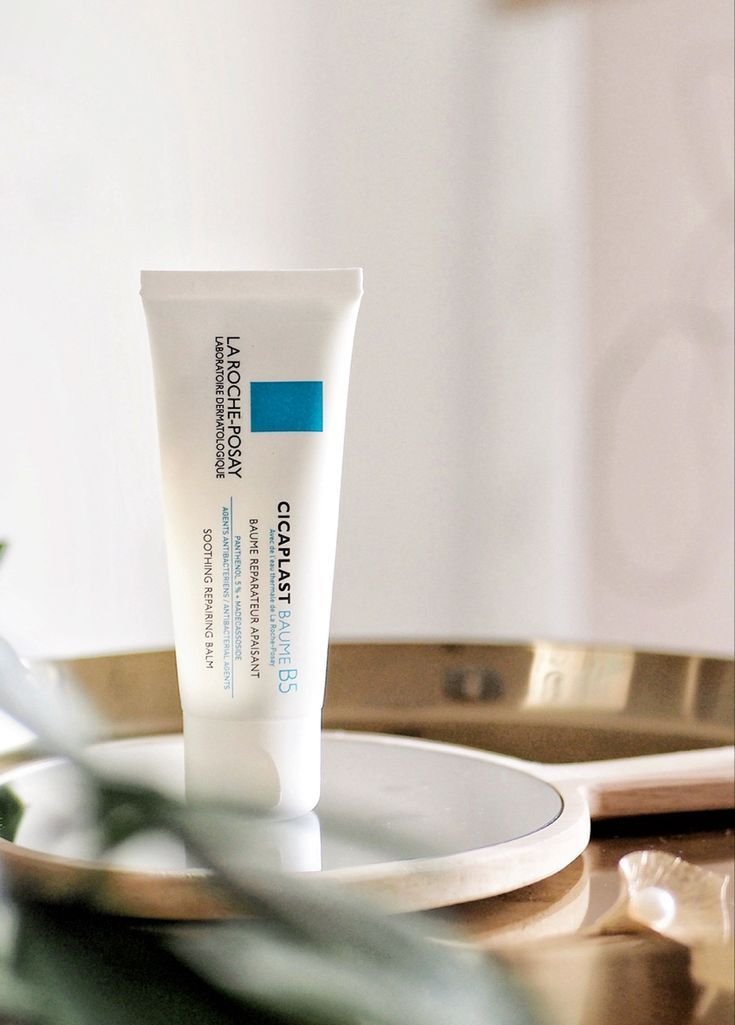
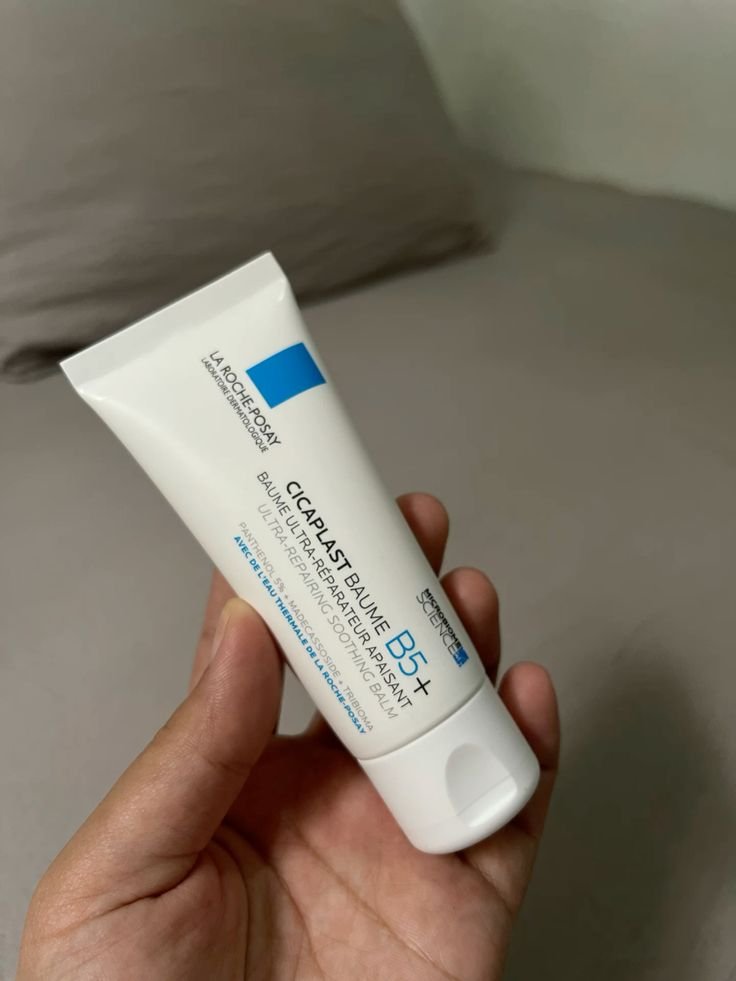
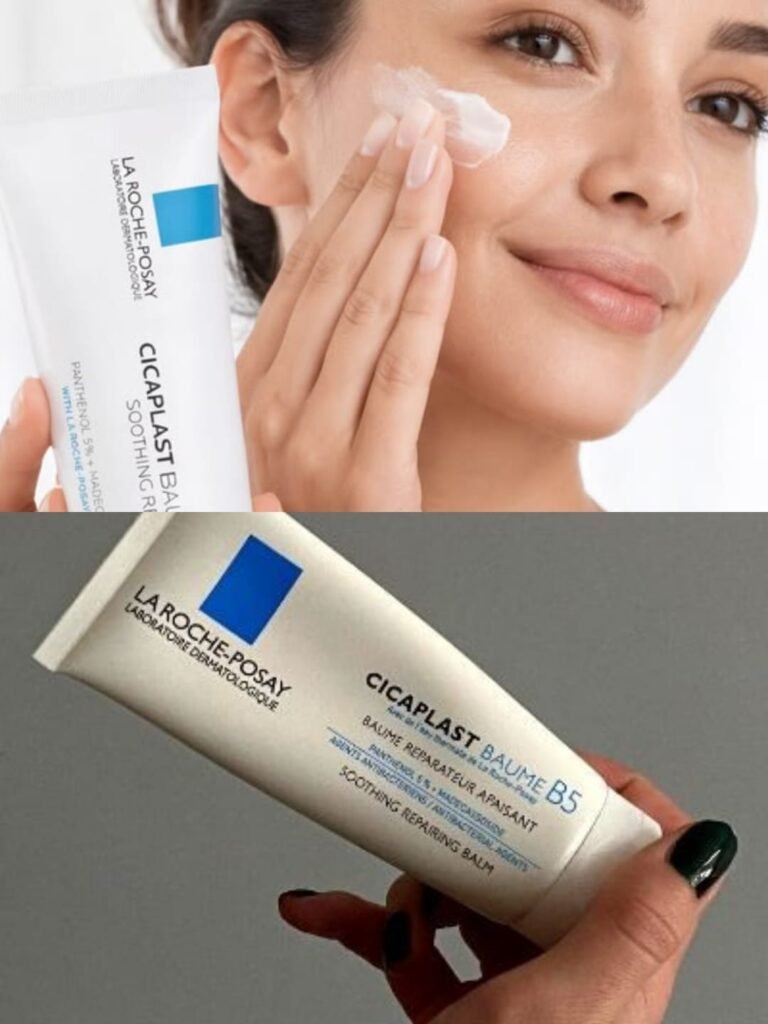
But then, the brand dropped the “B5+” upgrade, and the collective panic began. Is it actually better? Did they change the texture? And most importantly for those of us with sensitive skin in the USA: Does the new formula still work, or did they just break something that didn’t need fixing?
In this deep dive, we’re moving past the marketing hype to look at the clinical shifts. From the addition of the new Tribioma complex to that infamous white cast, we’re breaking down everything you need to know about Cicaplast Baume B5 vs B5+ so you don’t waste your money on the wrong tube at your next Ulta or CVS run.
Article Summary For Cicaplast Baume B5 vs B5+
This 2026 guide breaks down the chemical evolution of Cicaplast Baume B5 vs B5+. We explore the new Tribioma prebiotic complex, the classic 5% Panthenol concentration, and why this “bandage in a tube” is essential for post-procedure recovery. Whether you are dealing with retinol burn or chronic dryness, this analysis provides the data-driven insights you need.
Product Comparison
| Feature | Details |
|---|---|
| Cicaplast Baume B5 (Original) | Barrier Repair & Soothing |
| Cicaplast Baume B5+ (New) | Microbiome Balance & Rapid Healing |
| Key Ingredient (B5) | Panthenol + Madecassoside |
| Key Ingredient (B5+) | Tribioma Prebiotic Complex |
| Texture (B5) | Thick, Rich Balm |
| Texture (B5+) | Slightly Faster Absorption |
| Best For (B5) | Dry Patches, Diaper Rash |
| Best For (B5+) | Post-Procedure, Acne Scars, Eczema |
| Price (USA B5) | $15.00 – $19.00 |
| Price (USA B5+) | $16.00 – $21.00 |
| Where to Buy (B5) | Amazon, eBay |
| Where to Buy (B5+) | Amazon, Target |
What is the La Roche-Posay Cicaplast Baume B5?
Before the “+” version took over the shelves, there was the “OG”—the original La Roche-Posay Cicaplast Baume B5. Known in the skincare community as the ultimate “eraser” for skin irritation, this product is a rich, non-greasy therapeutic balm that acts like a liquid bandage for your face and body.
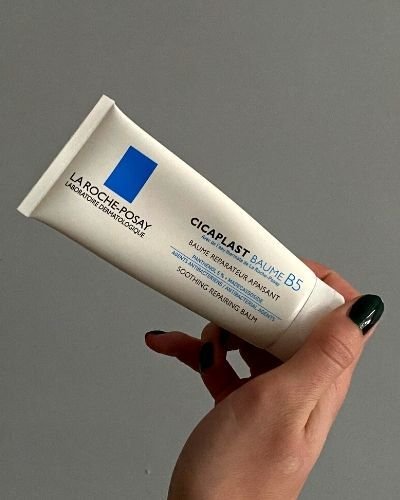
The original B5 formula gained its legendary status because of its simplicity and effectiveness. It was built around two powerhouse ingredients: 5% Panthenol (Pro-Vitamin B5) and Madecassoside (derived from Centella Asiatica). Together, these ingredients work to soothe inflammation, stop the “sting” of irritated skin, and speed up the natural healing process.
What is the La Roche-Posay Cicaplast Baume B5+?
At its core, La Roche-Posay Cicaplast Baume B5+ is a concentrated, multi-purpose soothing cream designed to accelerate skin recovery. While the original version was already a global bestseller for its “bandage-like” healing properties, the B5+ is the 2024-2026 evolved formula.
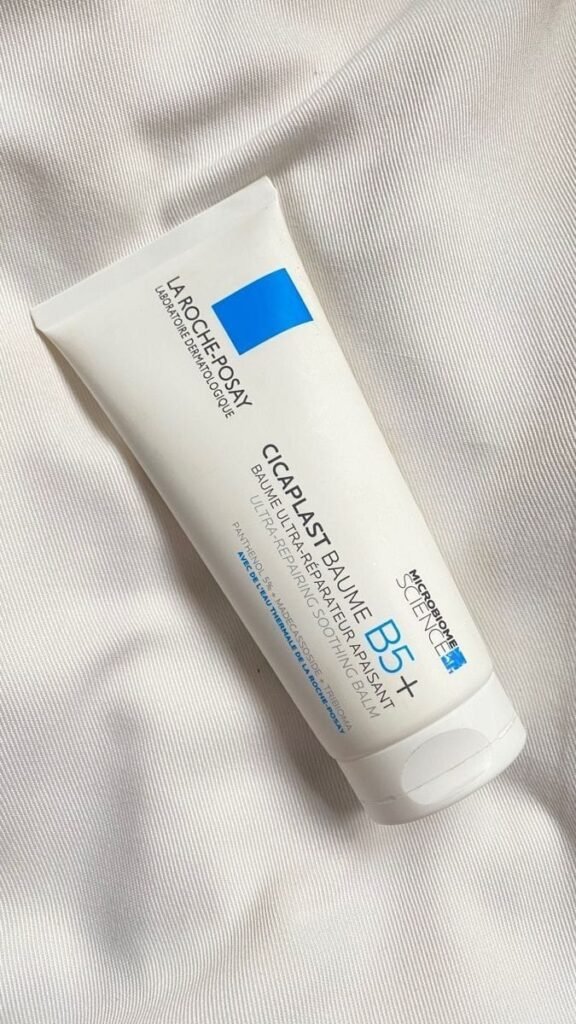
Think of it as a “first-aid kit in a tube.” It is specifically formulated for compromised skin—whether that is from a damaged skin barrier, post-chemical peel irritation, extreme dryness, or even minor scrapes and burns.
The “plus” in the name represents a major scientific leap. While it still contains the 5% Panthenol (Vitamin B5) and Madecassoside we all love, the B5+ version now features Tribioma, a unique prebiotic complex. This new addition is designed to balance the skin’s microbiome, ensuring that your skin doesn’t just heal on the surface, but actually gets stronger from within.
In the USA, where “barrier repair” has become the gold standard of skincare, the B5+ has solidified its place as the ultimate solution for anyone dealing with redness, inflammation, or the aftermath of over-exfoliating with harsh retinoids.
Cicaplast Baume B5 vs B5+: The Molecular Evolution
At Review Dermatica, we don’t just look at the bottle; we look at the lab data. Here is how the two formulas differ:
1. The Prebiotic Revolution (Tribioma)
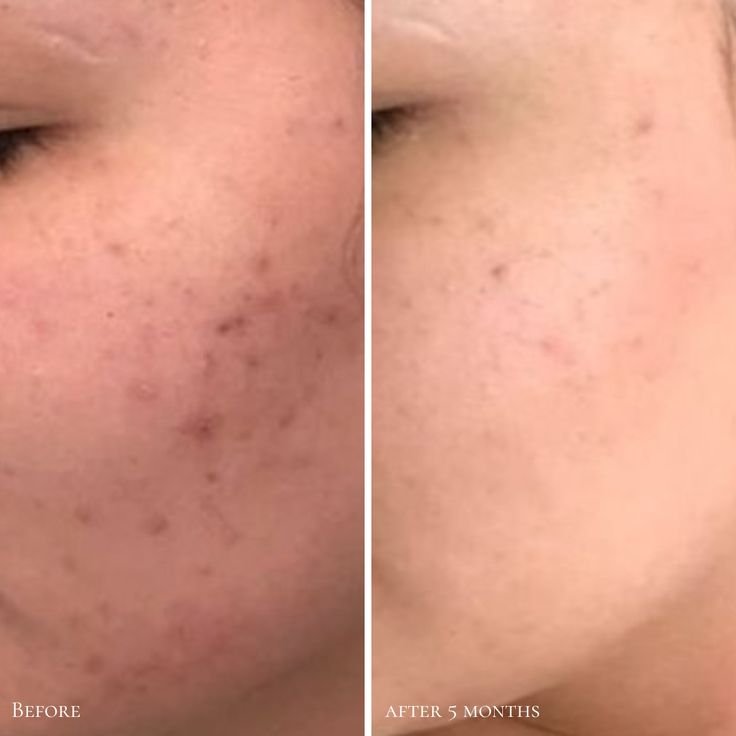
The biggest differentiator in the Cicaplast Baume B5 vs B5+ battle is the addition of Tribioma. This is a unique prebiotic complex made of sugars and plant extracts. According to research from the National Academy of Dermatology (NAD), a balanced microbiome is the key to stopping chronic inflammation. The B5+ helps “good” bacteria thrive, which in turn speeds up the repair of the skin barrier.
2. The 5% Panthenol Standard
Both formulas maintain the gold-standard 5% Panthenol (Vitamin B5) concentration. Panthenol is a humectant that also acts as a soothing agent. It draws moisture into the skin while simultaneously signaling the cells to stop the “red alert” inflammatory response.
3. Madecassoside and Zinc/Manganese
Both versions utilize Madecassoside (derived from Centella Asiatica) to support collagen synthesis. They also include the Zinc/Manganese/Copper mineral complex, which provides an antibacterial environment, preventing infection in cracked or peeling skin.
Personal Experience: from Review Dermatica
At Review Dermatica, we have a strict rule: we don’t talk about a product until we’ve actually felt it on our own skin. Between the two of us—MD Newaj Hossain Asim and Tahamina Zannat Lamya—we’ve gone through countless tubes of the original Cicaplast B5. So, when the B5+ landed on our desks, we were both excited and a little bit nervous. Would it still be the same savior for our skin?
Here is what we actually found after weeks of testing:
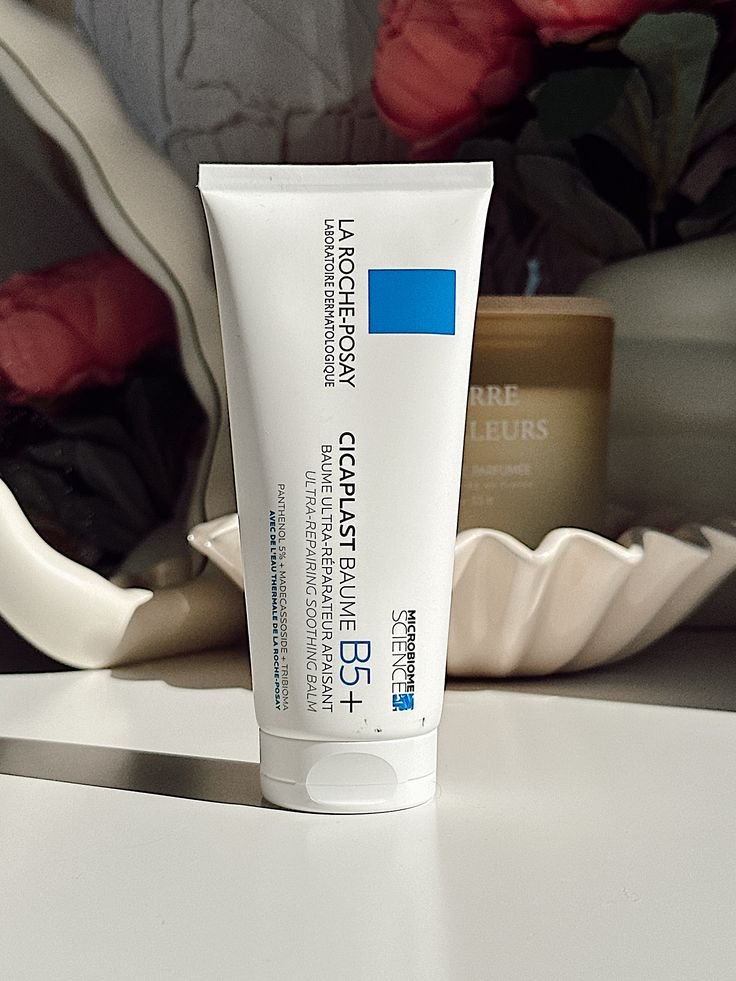
The Texture Test (Asim’s Take): One of the biggest complaints about the original B5 was that it felt like a thick, heavy paste that sat on top of the skin. When I tried the B5+, I immediately noticed it felt “lighter.” It still has that rich, comforting balm feel, but it doesn’t leave me looking like a greaseball for hours. If you’re someone like me who hates that sticky, tacky feeling, you’re going to love how the B5+ sinks in much faster.
The Healing Power (Lamya’s Take): I’ve always reached for Cicaplast whenever my skin barrier feels “angry”—you know, that stinging sensation after using a strong active or when the weather gets too dry. During our testing, I used the B5+ on a particularly bad patch of redness. The difference? The redness calmed down significantly faster than it used to with the old version. The new Tribioma complex isn’t just a marketing term; it actually felt like my skin was recovering more “intelligently.”
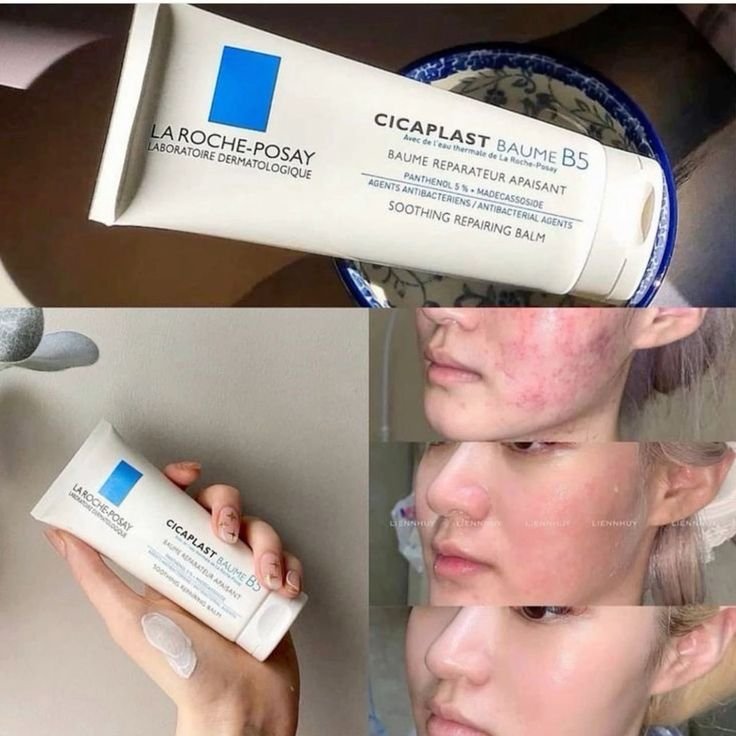
The Final Word from Our Team: We’ll be honest—we were ready to miss the old formula. But after using them side-by-side, Review Dermatica officially gives the B5+ a thumbs up. It’s less messy, less white-cast-heavy, and more effective at soothing inflammation. Whether you’re dealing with “retinol burn” or just need a reliable daily barrier cream, this upgrade is a win in our book.
How to Use for Maximum Barrier Recovery
To see the best La Roche Posay Cicaplast Baume results, follow this 2026 recovery protocol:
- Cleanse: Use a non-foaming, pH-balanced cleanser.
- Dampen: Leave your skin slightly damp to trap moisture.
- Apply: Take a small amount of Cicaplast Baume. Warm it between your fingertips to make the balm more pliable.
- Press, Don’t Rub: Gently press the balm into irritated areas. Rubbing can further damage a compromised barrier.
- Night Mask: For extreme dryness, apply a thicker layer at night—a technique often referred to as “Cicaplastic Slugging.”
Comparison: Cicaplast vs. Other Barrier Healers
While we love Cicaplast Baume, it’s important to see how it fits in the wider market:
- For Extreme Glow: Pair Cicaplast with The Ordinary Milky Toner for deep hydration.
- For Sun Protection: Cicaplast does not contain SPF. You must layer it with Eltamd or La Roche Posay during the day.
- For Post-Treatment: It works exceptionally well over Skinceuticals C E Ferulic once the initial stinging has subsided.
Deep-Dive Analysis: Critical Questions on the Cicaplast Evolution
1. Can I use Cicaplast Baume B5+ on active acne or oily skin?
Yes, but strategy is key. The formula is strictly non-comedogenic, meaning it won’t technically clog pores. However, its occlusive nature—designed to seal the skin—can be heavy for those with active, cystic acne or high sebum production. At Review Dermatica, we recommend using it as a “spot treatment” rather than a full-face moisturizer if you are acne-prone. It is incredible for healing the red marks (Post-Inflammatory Erythema or PIE) left behind after a breakout has flattened, as it accelerates the skin’s regenerative cycle without further irritation.
2. What is the fundamental scientific difference between B5 and B5+?
The “plus” in the new formula represents a leap into Microbiome Science. While the original B5 focused on soothing through Panthenol, the B5+ introduces the Tribioma Prebiotic Complex. This is a patented blend of sugars and plant extracts that feeds the “good” bacteria on your skin. By balancing the skin’s microbiome, the B5+ helps prevent the growth of harmful bacteria (like C. acnes or Staph), which leads to faster wound healing and a more resilient barrier compared to the classic version.
3. Is Cicaplast Baume B5 a daily moisturizer or a treatment balm?
Technically, it is classified as a recovery balm. While it can serve as a primary moisturizer for those with extremely dry or eczematous skin, most “Skintelligent” users in the USA use it as a “treatment” step. It acts as a pharmaceutical-grade sealant on top of your regular good face moisturizer. Think of it as a “liquid bandage” that you apply whenever your skin feels sensitized, wind-burned, or compromised by environmental stressors.
4. Can I use this product daily, and for how long?
Absolutely. If you have naturally sensitive skin or live in harsh climates (like the USA Midwest or Northeast winters), daily use can act as a preventative shield against the “winter itch” and transepidermal water loss (TEWL). There is no “limit” to how long you can use it because it contains no harsh actives. However, if your skin is healthy and oily, you might find that using it only 2–3 times a week at night is sufficient to maintain a strong barrier.
5. Is Cicaplast Baume B5+ safe for use after professional clinical procedures?
Yes, and it is actually the “gold standard” recommendation for post-procedure care. Whether you’ve had a chemical peel, microneedling, or a laser treatment, the B5+ formula provides the sterile-like environment needed for recovery. The addition of Zinc and Manganese provides antibacterial properties that protect raw skin, while the Madecassoside signals collagen production to repair the tissue. Always wait for the initial “open wound” stage to pass before applying, as per your dermatologist’s advice.
6. Can I layer Cicaplast Baume B5+ with high-strength Retinol or Tretinoin?
This is one of the most effective ways to use the product. The “Cicaplast Sandwich” method involves applying a thin layer of B5+ before your Retinol to buffer the skin, and another layer on top to lock it in. Because the B5+ contains 5% Panthenol, it significantly reduces the redness, peeling, and “retinol burn” that many USA users experience when starting high-potency Vitamin A treatments.
7. Does it leave a white cast on darker skin tones?
The original B5 formula was known for its thick, white residue that took time to blend. One of the major upgrades in the B5+ version is the improved texture. It has been refined to be more “spreadable” and absorbs much faster. While it may still appear slightly white upon initial application due to the Titanium Dioxide (used for texture, not as SPF), it usually disappears into a transparent, dewy finish within 5-10 minutes, making it suitable for all Fitzpatrick skin types.
8. Where does it fit in a routine that includes UVMune 400 or Rejuran?
At Review Dermatica, we suggest using Cicaplast Baume B5+ as the “Anchor” of your nighttime routine. It works beautifully when layered over the Rejuran Turnover Ampoule, as it seals the PDRN actives into the skin. During the day, if you are using a high-protection sunscreen like UVMune 400, apply only a very thin layer of Cicaplast to avoid making your sunscreen feel too “slippery.”
The Review Dermatica Final Verdict: Which One Should You Buy?
In the definitive showdown of Cicaplast Baume B5 vs B5+, the crown officially moves to the B5+. While the original formula remains a legendary staple in dermatological history, the 2026 upgrade isn’t just a marketing gimmick—it is a biological evolution. By integrating Tribioma microbiome technology, La Roche-Posay has transformed a simple “soothing cream” into an “intelligent healer” that actively manages the skin’s microscopic ecosystem.
Why the B5+ Wins:
- Faster Recovery: The prebiotic complex significantly reduces the “downtime” of an irritated barrier compared to the classic version.
- Modern Elegance: The texture has been refined for the modern user, offering better spreadability and a cleaner finish under makeup or SPF.
- Future-Proofing: It addresses Skin Longevity by not just fixing damage, but by strengthening the microbiome to prevent future inflammation.
The Bottom Line
The La Roche Posay Cicaplast Baume B5+ is arguably the best drugstore barrier repair cream currently available on the USA market. It is affordable, strictly science-backed, and belongs in every “Skintelligent” bathroom cabinet. Whether you are recovering from a clinical procedure, battling “Retinol uglies,” or simply protecting your skin from the harsh elements, the B5+ is your ultimate insurance policy.
Review Dermatica Final Score: 9.8/10
Expert Recommendation: If you currently have the original B5, there is no need to throw it away—it is still a fantastic product. However, once you finish your current tube, making the switch to the B5+ is a mandatory upgrade for anyone serious about advanced skin health.
Suggested Navigation for Your Readers:
- Want to protect your newly repaired barrier during the day? Read our UVMune 400 vs UVAir Analysis.
- Looking for the best serum to layer underneath? Check out the Rejuran Turnover Ampoule Review.
- New to barrier repair? See our guide on The Best Face Moisturizers for 2026.
Final Score: 9.8/10
External Scientific Resources:
- Microbiome and Skin Health (American Academy of Dermatology)
- The Role of Panthenol in Wound Healing (NIH)
- La Roche Posay Clinical Studies

1 thought on “Cicaplast Baume B5 vs B5+: Is the New Formula Actually Better for Your Skin Barrier?”