
Sunscreen SPF 30 vs SPF 50: Which One Actually Protects Your Skin Better?
This post contains affiliate links. If you buy through our link, we may earn a small commission at no extra cost to you.
You’re standing in the skincare aisle, staring at two bottles of sunscreen. One says SPF 30. The other says SPF 50. The SPF 50 costs a little more, looks a little more “serious,” and the packaging is definitely more impressive. So you grab it — because more must mean better, right?
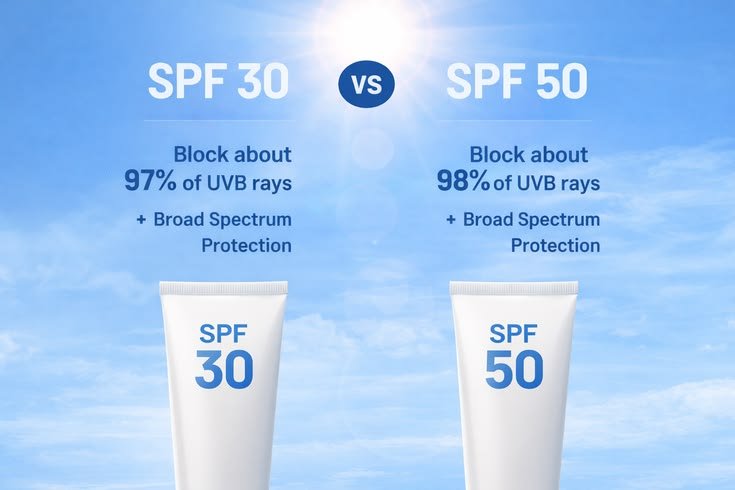
Here’s the truth that most sunscreen brands don’t want you to sit with: SPF 30 blocks approximately 97% of UVB rays. SPF 50 blocks approximately 98%. The real-world difference between these two numbers is exactly 1%. One percent.
So is SPF 50 just clever marketing? Or does that single percentage point actually matter?
As someone who reviews skincare products professionally at Review Dermatica, I’ve tested dozens of sunscreens across both SPF levels — on different skin types, in different climates, and under very different daily routines. What I’ve found is that the answer isn’t as simple as “just go higher.” The truth lives somewhere in the middle, and it depends entirely on how you live your life.
In this guide, I’m breaking down everything you need to know about sunscreen SPF 30 vs SPF 50 — from the real science behind the numbers, to which one you should actually be reaching for every morning.
QUICK SUMMARY BOX
- SPF 30 blocks 97% of UVB rays. SPF 50 blocks 98%. The difference is just 1%.
- Most people only apply 25–50% of the recommended amount — making SPF 50 a smarter safety buffer in real life.
- For daily indoor use and commuting, SPF 30 broad-spectrum is sufficient.
- For beach days, outdoor sports, or extended sun exposure: SPF 50 is the better choice.
- The #1 rule that beats any SPF number: apply generously and reapply every 2 hours.
- Always choose broad-spectrum — SPF alone does NOT protect against UVA (aging) rays.
What Does SPF Actually Mean? (Most People Have This Wrong)
Before we get into the sunscreen SPF 30 vs SPF 50 debate, let’s get one thing straight — most people fundamentally misunderstand what the SPF number actually measures.
SPF stands for Sun Protection Factor. It measures how effectively a sunscreen protects your skin from UVB rays — the ultraviolet rays primarily responsible for sunburn, and a major contributor to skin cancer.
Here’s how the number works: if your bare skin would begin to redden after 10 minutes of direct sun exposure, an SPF 30 sunscreen theoretically allows you to stay in the sun for 300 minutes (30 × 10) before burning. An SPF 50 gives you 500 minutes. Simple enough, right? Not quite.
The Lab vs. Real World Problem
That calculation assumes you’re applying sunscreen in a perfectly controlled lab environment — specifically, 2 milligrams of sunscreen per square centimeter of skin. In practice, the average person applies roughly 0.5 to 0.8 mg/cm², which is less than half the tested amount. When you underapply, the protection you actually receive drops dramatically — sometimes to less than half the labeled SPF.
This gap between lab testing and real-world application is the single most important thing to understand in the entire SPF 30 vs 50 conversation.
What SPF Does NOT Measure
SPF only measures UVB protection — the “burn” rays. It tells you nothing about UVA protection. UVA rays penetrate deeper into the skin, causing premature aging, wrinkles, dark spots, and long-term DNA damage — even on cloudy days, even through glass.
This is why the words “broad-spectrum” on your sunscreen label are non-negotiable. A broad-spectrum sunscreen protects against both UVA and UVB rays. A high SPF without broad-spectrum coverage is only doing half the job.
In Europe and the UK, you’ll also see the PA rating system (PA+, PA++, PA+++, PA++++), which specifically grades UVA protection. If you’re shopping for European or Asian formulas, this is worth paying attention to alongside SPF.
Sunscreen SPF 30 vs SPF 50: The Real Difference, Explained
The 1% Difference That’s Actually Worth Understanding
SPF 30 filters approximately 97% of incoming UVB radiation. SPF 50 filters approximately 98%. On paper, that’s a 1% gap. But here’s the framing that changes everything: that 1% means SPF 50 allows 50% less UV radiation to reach your skin compared to SPF 30. When you think about cumulative daily exposure — day after day, year after year — that buffer starts to matter seriously for long-term skin cancer prevention and photoaging.
A randomized, double-blind clinical trial published in the Journal of the American Academy of Dermatology studied this directly. Researchers had participants apply SPF 50 to one side of their face and SPF 100 to the other during five consecutive beach days. The results clearly showed higher SPF offered measurably better real-world protection — particularly among participants who applied less than the recommended amount, which was the majority of them.
Head-to-Head: SPF 30 vs SPF 50 at a Glance
UVB Blocked: SPF 30 = 97% / SPF 50 = 98% Reapplication needed: Both every 2 hours — no difference Texture: SPF 30 generally lighter / SPF 50 can be heavier Under-application buffer: SPF 30 less forgiving / SPF 50 better safety net Daily commute/office: Both excellent Outdoor sports/beach: SPF 50 recommended Sensitive or oily skin options: More lightweight options at SPF 30 Price: SPF 50 slightly higher on average
[H3] The Under-Application Factor — Why SPF 50 Has a Hidden Advantage
Studies consistently show that most people apply only 25% to 50% of the amount of sunscreen used in lab testing. When you apply half the recommended amount of SPF 50, you may only be achieving the equivalent of SPF 10 to 15 protection in reality. But that same under-applied SPF 50 still outperforms an equally under-applied SPF 30.
This is the hidden real-world advantage of SPF 50 sunscreen vs SPF 30 — it acts as a buffer for human error. And when it comes to sun protection, human error is nearly universal.
Who Should Use SPF 30 — And Who Genuinely Needs SPF 50?
SPF 30 Is Right For You If:
You spend the majority of your day indoors. You have medium to deep skin tones with lower natural burn risk. You’re consistent with application and reapplication. You prefer lighter formulas — especially on oily or acne-prone skin. The American Academy of Dermatology confirms SPF 30 as the recommended daily minimum, and when applied correctly, it provides excellent protection for most everyday activities. Source: AAD
SPF 50 Is the Better Choice If:
You spend significant time outdoors — hiking, running, gardening, and beach days. You have fair, light, or sensitive skin that burns easily. You tend to forget to reapply. You’re at a high altitude. You have a personal or family history of skin cancer. The Skin Cancer Foundation recommends SPF 50 or higher for extended outdoor activities, noting that the higher baseline compensates for imperfect real-world application. Source: The Skin Cancer Foundation
A Note on Skin of Color
There’s a persistent and harmful myth that people with darker skin tones don’t need sunscreen. This is categorically false. Melanin provides some natural UV protection, but it does not prevent UV-induced DNA damage, hyperpigmentation, or skin cancer. A 2026 review published in MDPI Cancers found that daily sunscreen users showed a 73% reduction in invasive melanomas — across all skin tones — with consistent protection being the key variable. Source : MDPI
The Biggest SPF Myths — Busted for Good
Myth 1: “SPF 50 Is Twice as Strong as SPF 30”
False. SPF 50 offers roughly 1% more UVB filtration than SPF 30. The scale is not linear — doubling the SPF number does not double the protection. SPF 30 blocks 97%, SPF 50 blocks 98%, SPF 100 blocks 99%. The curve flattens dramatically after SPF 30.
Myth 2: “Higher SPF Means I Can Skip Reapplying”
False — and this one causes real harm. No sunscreen, regardless of SPF level, lasts longer than 2 hours of sun exposure. SPF 50 does not last longer than SPF 30. Reapplication every 2 hours is non-negotiable for both.
Myth 3: “My Moisturizer Has SPF — That’s Enough”
Not quite. To achieve the labeled SPF from a moisturizer, you’d need to apply it at the same density as a dedicated sunscreen — roughly a nickel-sized amount for the face alone. Most people apply a fraction of that when moisturizing. A dedicated sunscreen applied correctly will always outperform SPF in a moisturizer.
Myth 4: “I Don’t Need Sunscreen on Cloudy Days”
False. Up to 80% of UV radiation passes through cloud cover. UVA rays — the aging and DNA-damaging rays — penetrate clouds and glass consistently throughout the year.
Myth 5: “Always Go Highest — SPF 100 Is the Safest”
Not necessarily. Beyond SPF 50, returns diminish sharply. A Procter & Gamble lab study found the same SPF 100 sunscreen, tested at five different labs, returned results ranging from SPF 37 to SPF 75 — showing that very high SPF claims can be inconsistent. For most people, SPF 50 broad-spectrum is the practical sweet spot.
Broad Spectrum Is Non-Negotiable — Here’s Why
SPF only measures UVB protection. UVA rays — which make up approximately 95% of all UV radiation reaching Earth’s surface — cause premature skin aging, dark spots, hyperpigmentation, deeper DNA damage, and contribute to melanoma. They penetrate clouds, windows, and car windshields year-round.
A sunscreen without broad-spectrum coverage leaves you completely unprotected from the majority of UV radiation you encounter every single day. Whether you choose SPF 30 or SPF 50, broad-spectrum is the non-negotiable first filter — everything else comes after.
If you want to understand how mineral and chemical formulas differ in their UV coverage, I’ve covered it in depth here: Mineral vs Chemical Sunscreen for Face.
How to Apply Sunscreen Correctly (Most People Are Doing This Wrong)
Choosing between SPF 30 and SPF 50 matters far less than applying whichever one you choose correctly.
The Right Amount
For your face and neck: a nickel-sized dollop, or two finger-lengths of product. Most people apply 20–30% of this amount, meaning they’re receiving a fraction of the labeled protection. For your body: approximately one shot glass (30ml) of sunscreen for all exposed skin.
The Right Timing
Apply 15 to 20 minutes before sun exposure to allow the sunscreen to bond with the skin properly.
Reapplication Rules
Reapply every 2 hours without exception. If swimming or sweating heavily, reapply immediately after. Water-resistant sunscreens maintain their SPF for 40 to 80 minutes in water — not indefinitely.
Areas People Consistently Miss
Ears, back of the neck, tops of feet, hands, the hairline, and lips. A lip balm with SPF 30 or higher is worth adding to your routine — the lips are one of the most sun-vulnerable areas on the face.
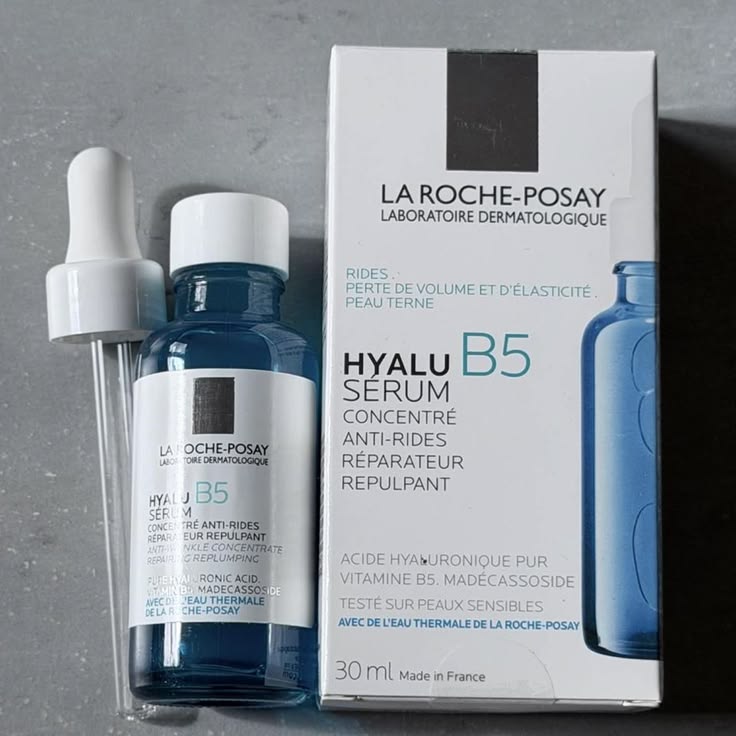
Pairing your sunscreen with a strong moisturizer underneath makes a real difference for comfort and consistency. I’ve reviewed the La Roche-Posay Toleriane Double Repair Face Moisturizer and the iUNIK Beta Glucan Power Moisture Serum — both layer beautifully under SPF without pilling.
Best Sunscreens to Consider: Our Top Picks
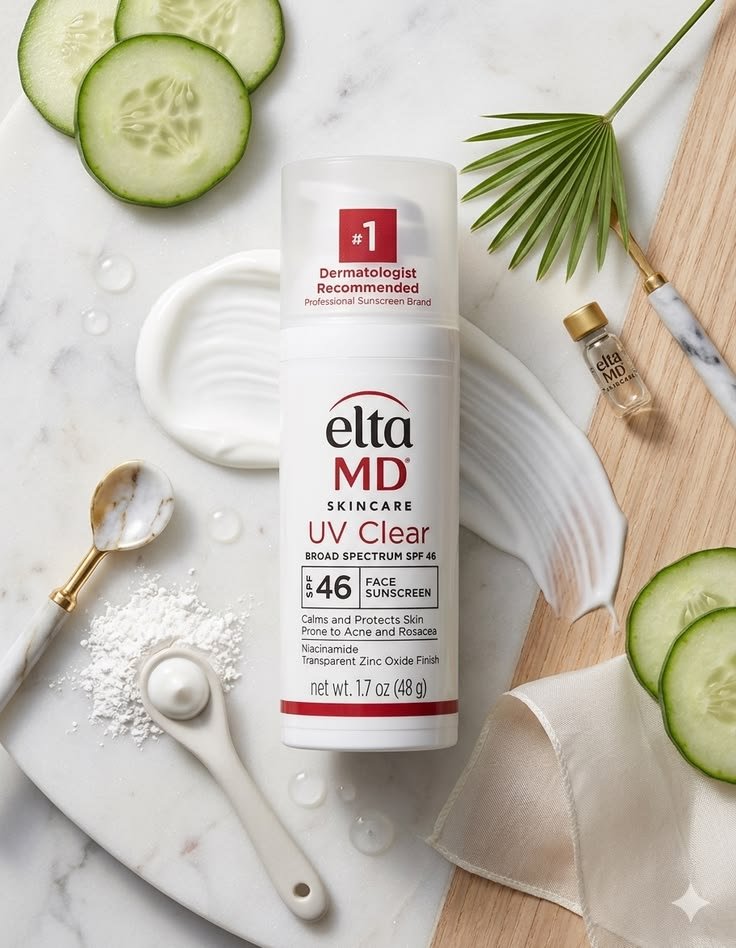
Best Overall — EltaMD UV Clear SPF 46
EltaMD UV Clear combines 9% transparent zinc oxide with niacinamide, making it exceptional for acne-prone, sensitive, and rosacea-prone skin. It absorbs like a lightweight serum, leaves zero white cast, and is non-comedogenic. A dermatologist staple for years. I reviewed it in full here: EltaMD UV Clear SPF 46 Review.
Skin type: Oily, acne-prone, sensitive SPF: 46 broad-spectrum
Best for Extended Outdoor Use — La Roche-Posay Anthelios Melt-In Milk SPF 60
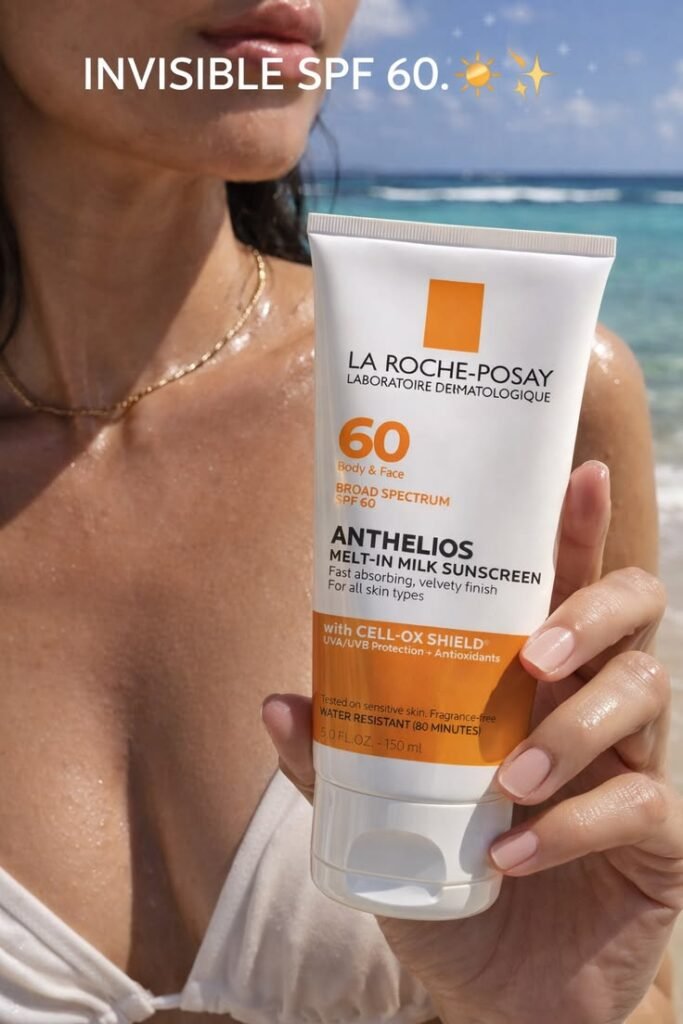
La Roche-Posay’s Anthelios line uses Cell-Ox Shield technology with photostable UVA/UVB filters and antioxidant protection. The 2026 formula features the Mexoryl 400 filter — one of the most advanced UVA filters currently available, targeting long-wave UVA rays that cause the majority of photoaging. Applies as a lightweight fluid with zero white cast.
Skin type: All skin types, including sensitive. SPF: 60 broad-spectrum
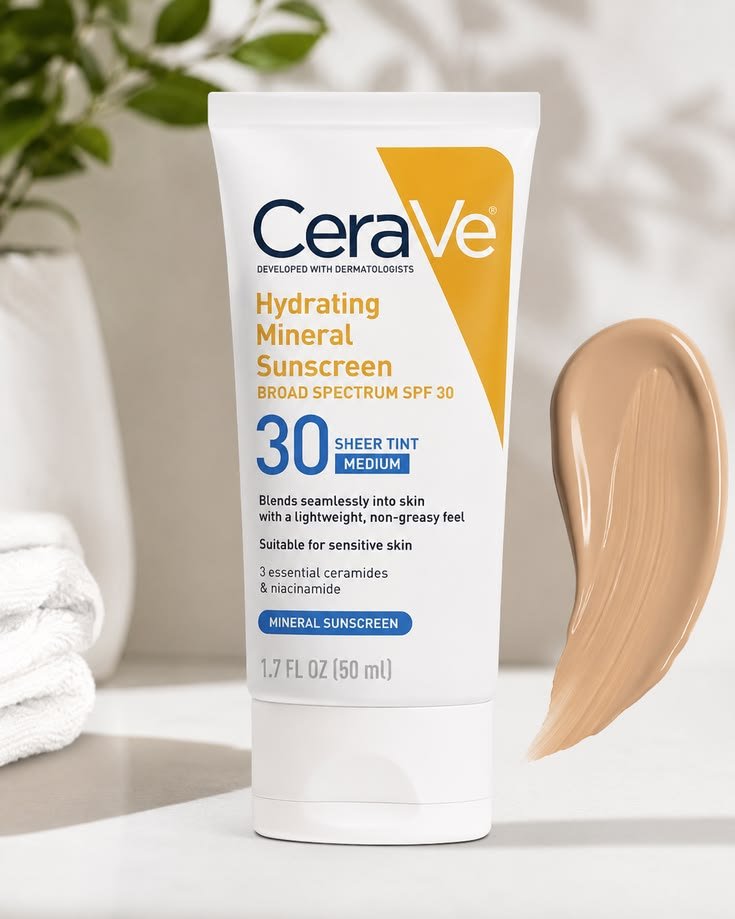
Best Budget Daily SPF — CeraVe Hydrating Sheer Sunscreen SPF 30
Contains ceramides and hyaluronic acid alongside its mineral SPF 30 filter. Lightweight, layers under makeup without pilling, and genuinely affordable. If you’re building a consistent daily SPF habit, this is where I’d start. Consistency with SPF 30 will always outperform inconsistency with SPF 50.
Skin type: Dry, normal, sensitive SPF: 30 broad-spectrum mineral
Ingredients to Look For — and Be Aware Of
Seek Out
Zinc Oxide — Broad-spectrum mineral filter, photostable, well-tolerated by sensitive and acne-prone skin. The gold standard for reactive skin types.
Tinosorb S and Tinosorb M — Advanced chemical filters widely used in European and UK formulas. Photostable and provide significantly better long-wave UVA protection than older filters.
Mexoryl SX and Mexoryl XL — Proprietary to La Roche-Posay. Exceptional UVA filtration, especially the Mexoryl 400 in the 2026 Anthelios lineup.
Niacinamide — Not an SPF ingredient, but reduces inflammation, controls oil, and fades hyperpigmentation over time when included in sunscreen formulas like EltaMD UV Clear.
Be Aware Of
Oxybenzone and Octinoxate — Banned in Hawaii and several regions due to coral reef concerns. Ongoing FDA research into systemic absorption. If you prefer clean formulas, zinc oxide alternatives are a strong choice.
Fragrance — A common cause of contact dermatitis in sensitive skin. Choose fragrance-free formulas consistently if you have reactive skin.
For a deeper look at how supportive ingredients interact with daily SPF use, see: What Is Beta-Glucan for Skin?
Clinical Research Referenced in This Article
Journal of the American Academy of Dermatology — Sunscreens: Mechanisms and Efficacy (2024–2025)
MDPI Cancers — Photoprotection for Skin Cancer: What’s New (February 2026)
Sage Journals — A Review of Sunscreen in the Prevention of Skin Cancer (2025)
PubMed / NCBI — Sunscreen Safety and Efficacy for the Prevention of Cutaneous Neoplasm.
The Verdict: SPF 30 or SPF 50?
Choose SPF 30 If:
You live a predominantly indoor lifestyle, have medium to deep skin, apply sunscreen consistently and generously, and have found a broad-spectrum SPF 30 formula you genuinely love. Consistency with a formula you’ll actually use beats a higher number you’ll under-apply or avoid.
Choose SPF 50 If:
You spend time outdoors, have fair or sensitive skin, tend to under-apply or forget to reapply, or face intense and prolonged sun exposure regularly. SPF 50 gives you a real-world buffer that matters in imperfect conditions — which describes most people, most days.
The One Rule That Overrides Everything
Whatever SPF you choose — apply enough of it, apply it 15 minutes before going outside, and reapply every 2 hours. No SPF number, no matter how high, compensates for inconsistent or insufficient application.
In the sunscreen SPF 30 vs 50 debate, the real winner isn’t a number. It’s a habit.
As someone who has reviewed hundreds of skincare products at Review Dermatica, the most impactful advice I can give is this: find a broad-spectrum sunscreen you like the feel of, that works for your skin type, and that you will actually reach for every morning. That habit, sustained over years, is what the clinical research consistently identifies as the single most effective intervention for preventing photoaging and skin cancer.
For more on how sunscreen fits into a complete skin health routine, check out the iUNIK Beta Glucan Power Moisture Serum Review and our Augustinus Bader vs La Prairie comparison for context on where SPF sits within a research-backed full routine.
Frequently Asked Questions
Is SPF 30 enough for everyday use?
Yes. The American Academy of Dermatology recommends a minimum of SPF 30 for daily use when applied correctly and consistently. For office workers, daily commuters, and those who spend most of their time indoors, SPF 30 broad-spectrum provides excellent protection.
Does SPF 50 last longer than SPF 30?
No. Both SPF 30 and SPF 50 require reapplication every 2 hours, and immediately after swimming or heavy sweating. A higher SPF number does not extend how long the sunscreen stays effective.
Can I use SPF 30 in winter?
Absolutely — and you should. UVA rays are present year-round at consistent intensity, regardless of temperature or cloud cover. Up to 80% of UV radiation reaches the skin on overcast days.
What SPF should I use for oily or acne-prone skin?
Look for non-comedogenic, oil-free formulas in SPF 30 to 50. EltaMD UV Clear SPF 46 is the top dermatologist recommendation for this skin type. Mineral formulas with zinc oxide tend to be better tolerated than heavy chemical sunscreens on oily skin.
About the Editorial Team
The Strategic Architect: Newaj H. Asim | Founder & Lead Analyst Asim leads the technical SEO and clinical skincare audits for Review Dermatica, focusing on high-authority digital brand growth in the USA.
The Scientific Mind: Tahmina Zannat Lamya | Co-Founder & Clinical Researcher Tahmina conducts the ingredient deep-dives at Review Dermatica, specializing in the intersection of UV protection and inflammatory skin conditions.
The Medical Reference: Dr. Shereene Idriss, MD Dr. Shereene Idriss, a leading board-certified dermatologist based in NYC, serves as our primary medical reference for “Skintelligence.”
3 thoughts on “Sunscreen SPF 30 vs SPF 50: Which One Actually Protects Your Skin Better?”