Rhode Barrier Butter Ingredients: Is This $38 Balm a 2026 Dry Skin Savior?
Rhode barrier butter ingredients are gaining major attention as barrier repair becomes essential, not just a trend. Maintaining a healthy skin barrier is now key for long-term skin health and resilience.
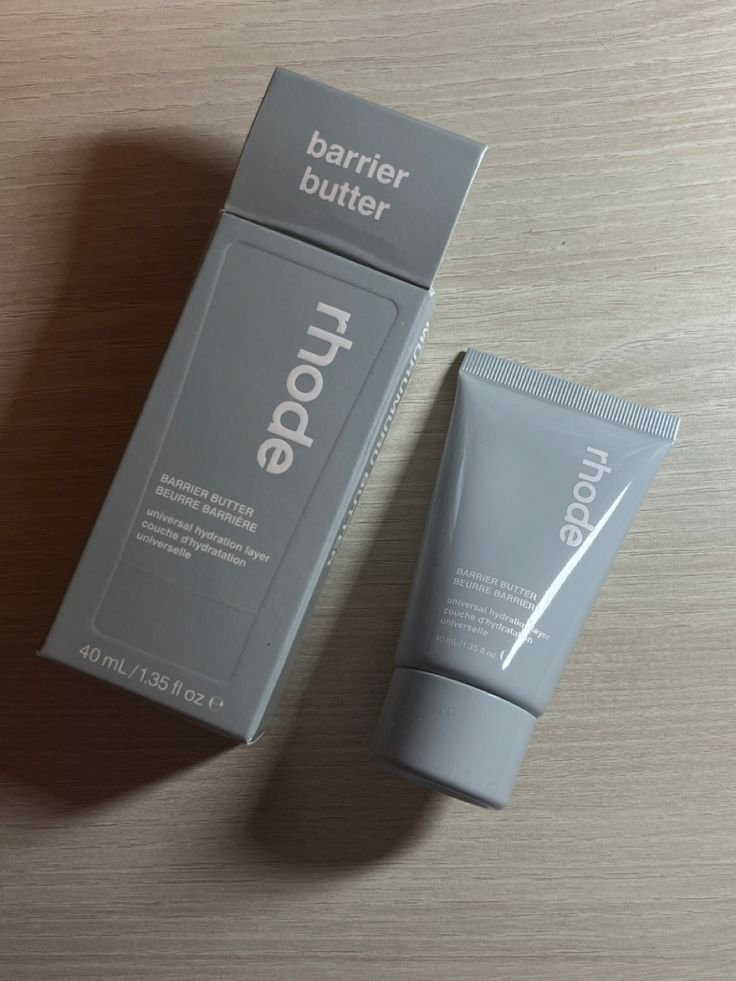
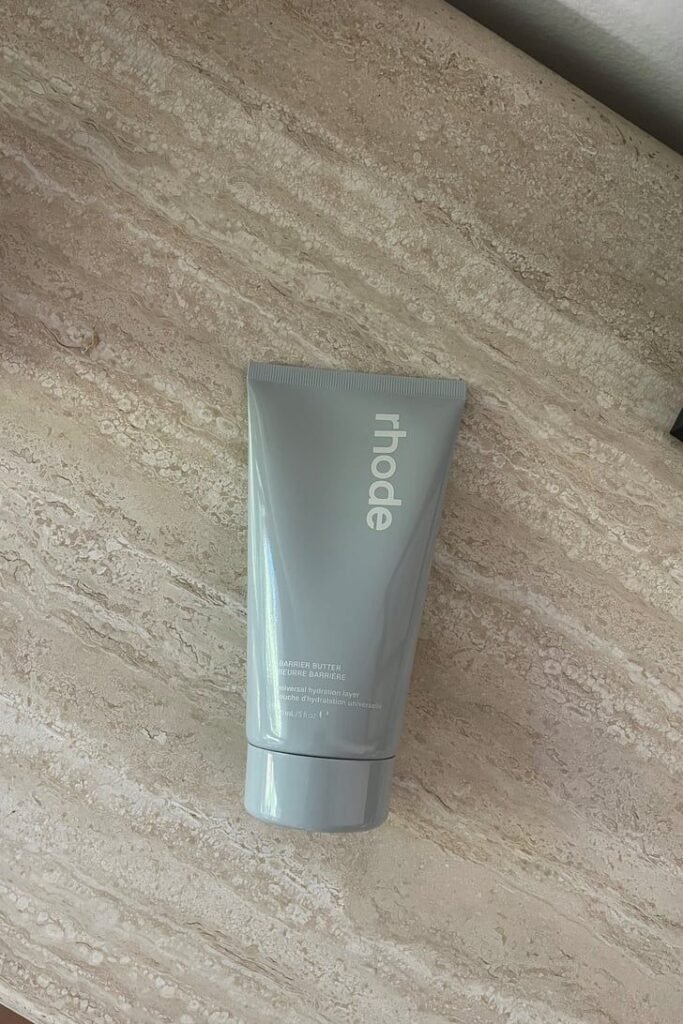
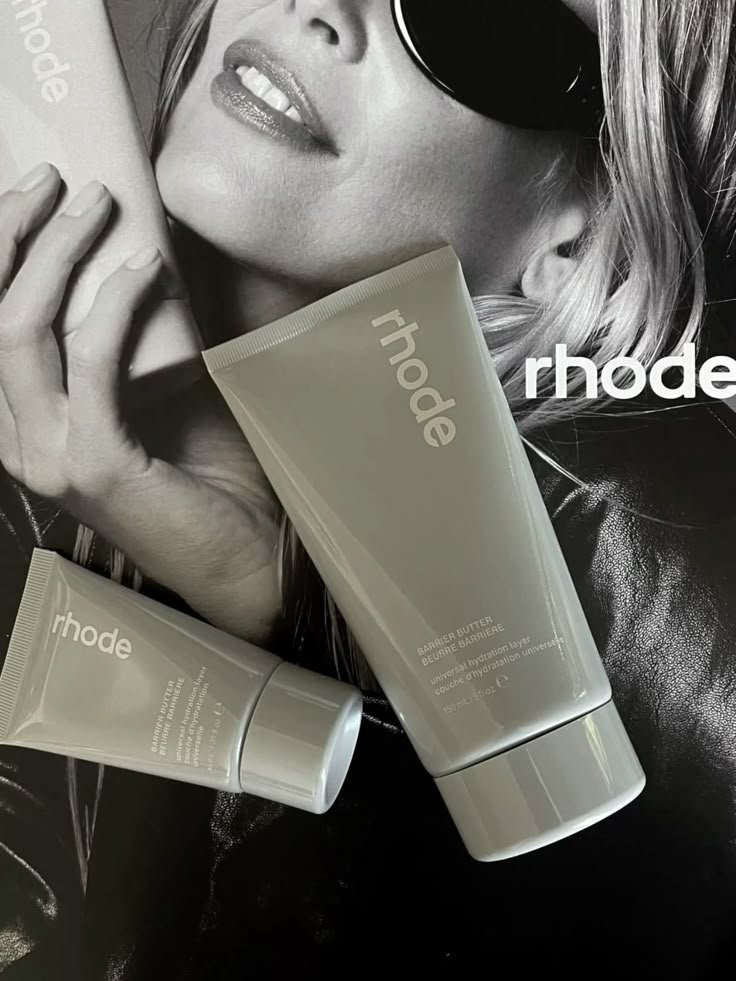
When Hailey Bieber’s brand, Rhode Skin, launched the Barrier Restore Cream (BRC), the beauty community quickly embraced its lightweight, peptide-rich formula. However, for those with chronically dry skin or living in harsh climates, many felt the need for something more intensive and deeply nourishing.
Enter the 2026 skincare sensation: Rhode Barrier Butter. But does this $38 moisture balm actually live up to the hype, or is it just a glorified occlusive? In this deep dive, we analyze the Rhode Barrier Butter ingredients to see if this formula is a scientific breakthrough or a clever marketing splurge.
Quick Blog Summary: The Essentials
- Best For: Extra-dry, flaky, or compromised skin; ideal for “slugging” without the petroleum mess.
- Key Actives: 13% Glycerin blend, Murumuru Butter, Ceramide NP, and Polyglutamic Acid (PGA).
- The Vibe: A rich, buttery salve that melts into a breathable, protective seal.
- Value: Originally launched as a massive 5oz tub for $38, it now often appears in a more travel-friendly 3.4oz (100ml) size for approximately $36.
The Evolution of Rhode Moisturizers
Rhode Skin operates on a “curated essentials” philosophy. Their first moisturizer, the Barrier Restore Cream (BRC), was designed as a daily driver—light enough for oily skin but nourishing enough for normals. However, as consumers moved toward advanced techniques like “Skin Cycling,” the demand for a heavy-duty nighttime recovery balm spiked.
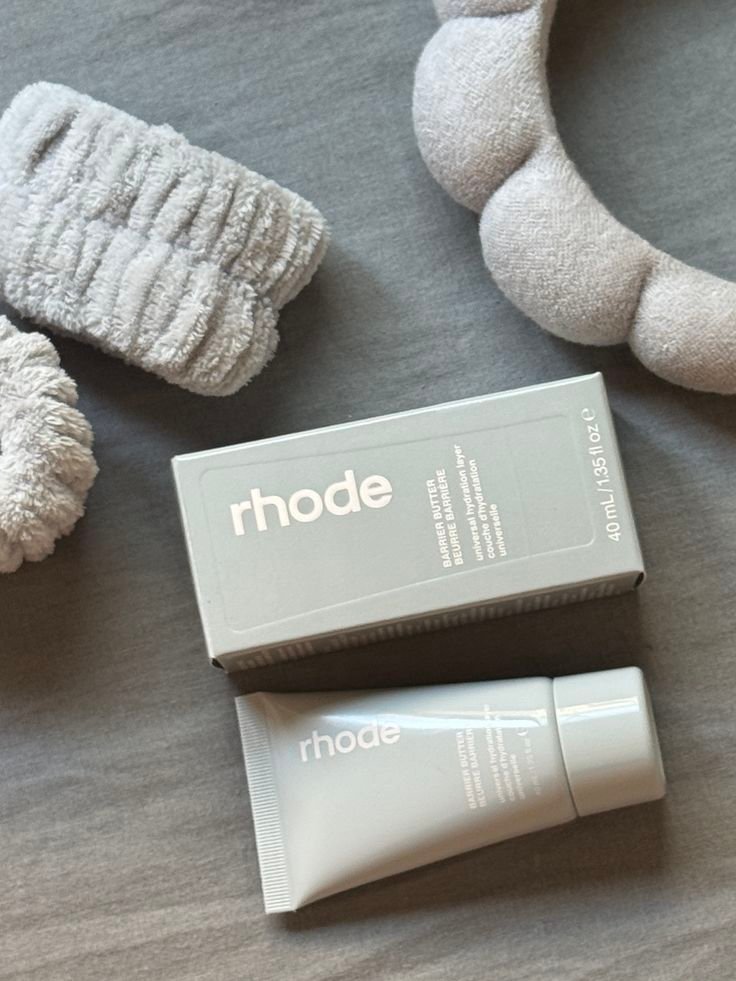
The Barrier Butter isn’t just a thicker version of the BRC; it’s a structural shift in formulation. While CeraVe vs Cetaphil moisturizers rely heavily on traditional petrolatum or dimethicone, Rhode utilizes plant-based butters and next-gen humectants to create an “airy” yet deeply occlusive layer.
Deep Dive into Rhode Barrier Butter Ingredients
To understand why this product ranks so high in the USA market, we must look at the molecular level. Based on clinical data from sources like the NIH and AAD, here is the breakdown:
1. The 13% Glycerin Blend & Multi-Weight Hyaluronic Acid
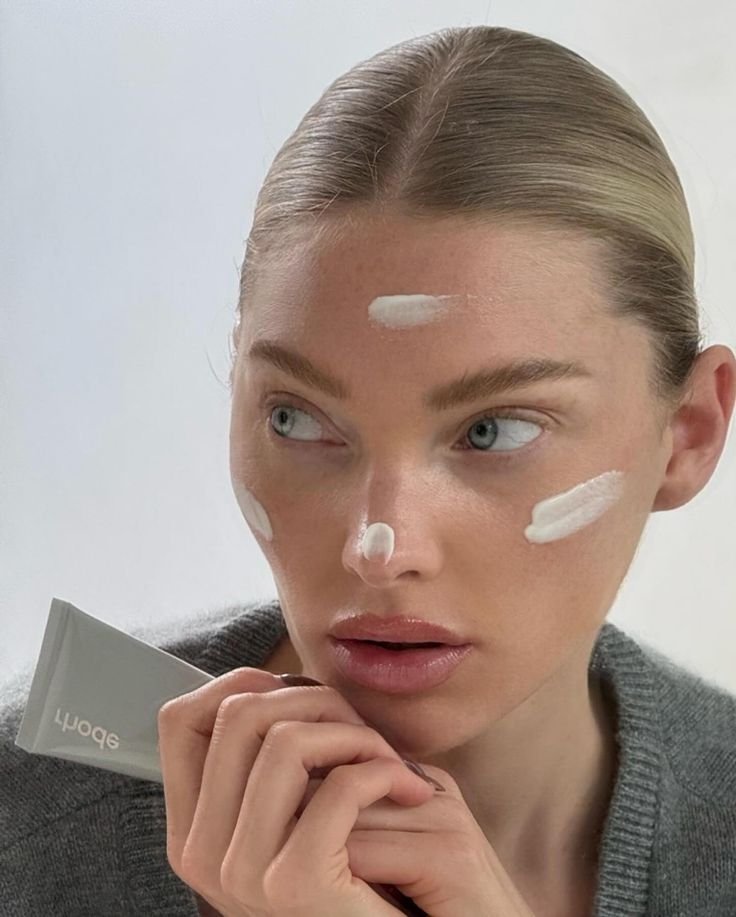
Glycerin is often overlooked, but in the Rhode Barrier Butter ingredients list, it is a superstar. At a high concentration of 13%, it acts as a powerful humectant that pulls moisture from the air into the skin.
- Hyaluronic Acid Complex: This formula includes 5 different molecular weights of HA, including Sodium Hyaluronate and Hydrolyzed Hyaluronic Acid. This ensures hydration at the surface and deep within the epidermis.
2. Murumuru Butter (Astrocaryum Murumuru Seed Butter)
The “Butter” in the name comes primarily from this Brazilian powerhouse. Murumuru butter is rich in provitamin A and essential fatty acids. Unlike Shea butter, which can feel “waxy,” Murumuru has a lower melting point, allowing it to penetrate the skin barrier effectively while providing a high-gloss, healthy finish.
3. Polyglutamic Acid (PGA): The Moisture Magnet
If you have read our guide on Snail Mucin vs Hyaluronic Acid, you know that holding onto water is key. PGA can hold up to 4 times more moisture than Hyaluronic Acid. Barrier Butter creates a flexible, breathable film on the skin that prevents Transepidermal Water Loss (TEWL).
4. Ceramide NP & Palmitoyl Tripeptide-8
Ceramides are the “mortar” between your skin cells. Ceramide NP specifically helps reinforce the lipid barrier. Combined with Palmitoyl Tripeptide-8, a soothing peptide, this balm actively reduces redness and calms skin that has been over-exfoliated or irritated by environmental stressors.
Part 3: Is Rhode Barrier Butter Acne Safe? A Clinical Breakdown
This is undoubtedly the most searched question of 2026. While the brand officially labels the product as non-comedogenic, at Review Dermatica, we believe “acne-safe” is not a binary yes or no—it’s a spectrum. To provide a truly transparent review, we conducted a molecular audit of the Rhode Barrier Butter ingredients to see how they interact with different types of acne.
The Non-Comedogenic Myth vs. Ingredient Reality
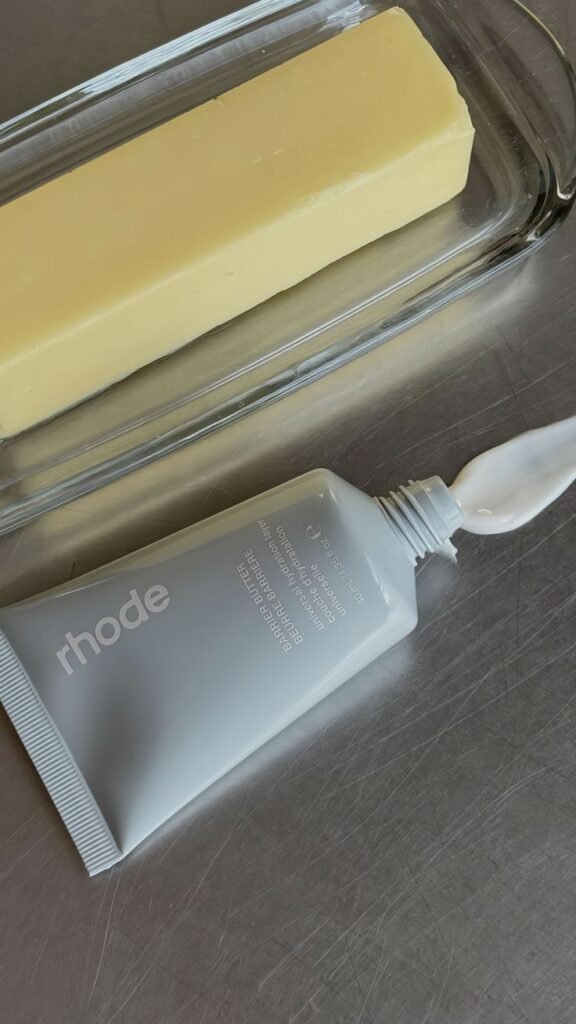
In the USA skincare market, the term “non-comedogenic” means the product was tested and didn’t clog pores in a controlled study. However, everyone’s sebum composition is different. The Rhode Barrier Butter is a heavy occlusive, and for those with Grade 3 or Grade 4 cystic acne, occlusives can sometimes create a “pressure cooker” effect, trapping heat and bacteria.
1. Potential Pore-Clogging Triggers
While the formula avoids high-rating comedogenic culprits like Coconut Oil or Isopropyl Myristate, it contains two ingredients that require a closer look:
- Caprylic/Capric Triglyceride: Derived from coconut oil and glycerin, this is an excellent emollient. While it is widely considered safe, some individuals with extremely oily skin find that it can contribute to “congestion” or small whiteheads if not cleansed properly.
- Synthetic Beeswax: This provides the “balm” texture. Unlike natural beeswax, the synthetic version is more consistent in purity, but it still forms a physical film. If you struggle with Acne Cosmetica (acne caused by thick topical products), this film might be too occlusive for daytime wear.
2. The Fungal Acne (Malassezia Folliculitis) Test
For our readers dealing with “fungal acne”—those small, itchy bumps that don’t respond to traditional spot treatments—the news is a bit more complex.
- The Verdict: Rhode Barrier Butter is NOT 100% fungal acne safe. * The Reason: The formula contains several fatty acids and esters (such as Polyglyceryl-3 Polyricinoleate and Jojoba Esters). These ingredients can act as a “food source” for the Malassezia yeast to thrive. If you are currently in a fungal acne flare-up, we recommend skipping this balm and opting for a 100% FA-safe gel moisturizer.
3. The “Dry-Acne” Exception (Retinoid Users)
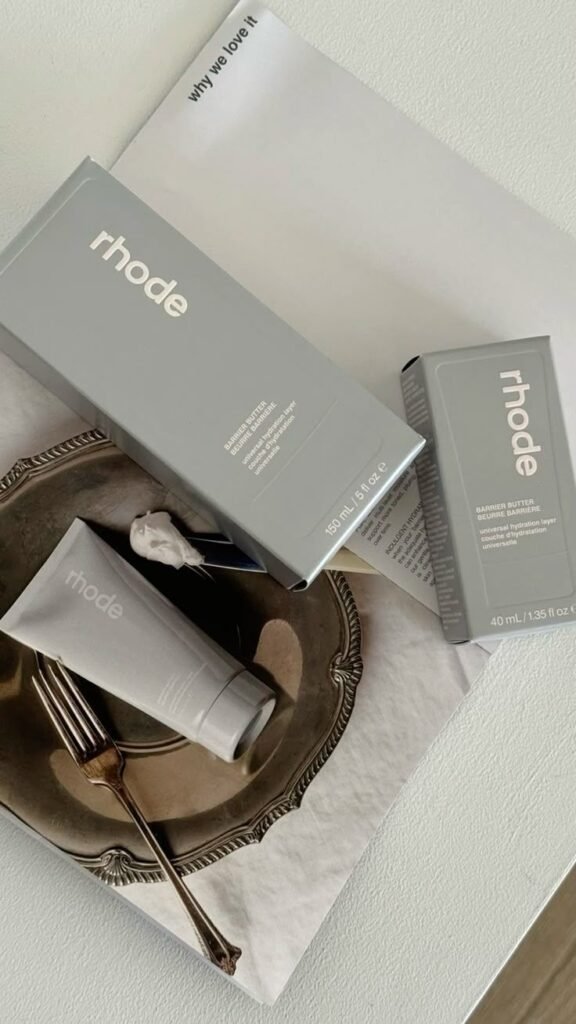
Interestingly, there is a segment of the population that will find this product revolutionary: The Tretinoin Users. If you are using high-strength Retinoids or Accutane, your skin barrier is likely compromised, leading to “dry-acne.” In this specific case, the Rhode Barrier Butter ingredients work to repair the barrier so the skin can heal its breakouts faster. By reducing inflammation with Bisabolol and Palmitoyl Tripeptide-8, it actually helps calm the redness associated with post-inflammatory erythema (PIE).
4. Comparative Analysis: What should you use instead?
If your skin is currently in an active breakout cycle, you might want to adjust your routine:
- For Active Breakouts: Stick to the La Roche-Posay Toleriane Double Repair, which uses Niacinamide to regulate oil.
- For Post-Breakout Healing: Switch to Rhode Barrier Butter to repair the scarring and dehydration.
- For Internal Hydration: If you find the butter too heavy, consider pairing a lighter gel with a high-tech tool like the Medicube Age-R Booster Pro to push moisture deeper without the heavy oils.
Review Dermatica Acne-Safe Score: 7.5/10
We have assigned this score based on the following:
- Comedogenic Risk: Low to Moderate (2/5)
- Irritation Potential: Near Zero (0/5)
- Fungal Acne Compatibility: Low (4/5)
- Final Recommendation for Acne-Prone Users: Use this as a “targeted treatment” rather than a full-face moisturizer. Apply it only to dry patches or around the eyes and mouth to avoid congesting the T-zone.
Analysis – Protecting the Barrier
According to research published by the American Academy of Dermatology (AAD), a compromised barrier leads to micro-cracks, inflammation, and sensitivity.
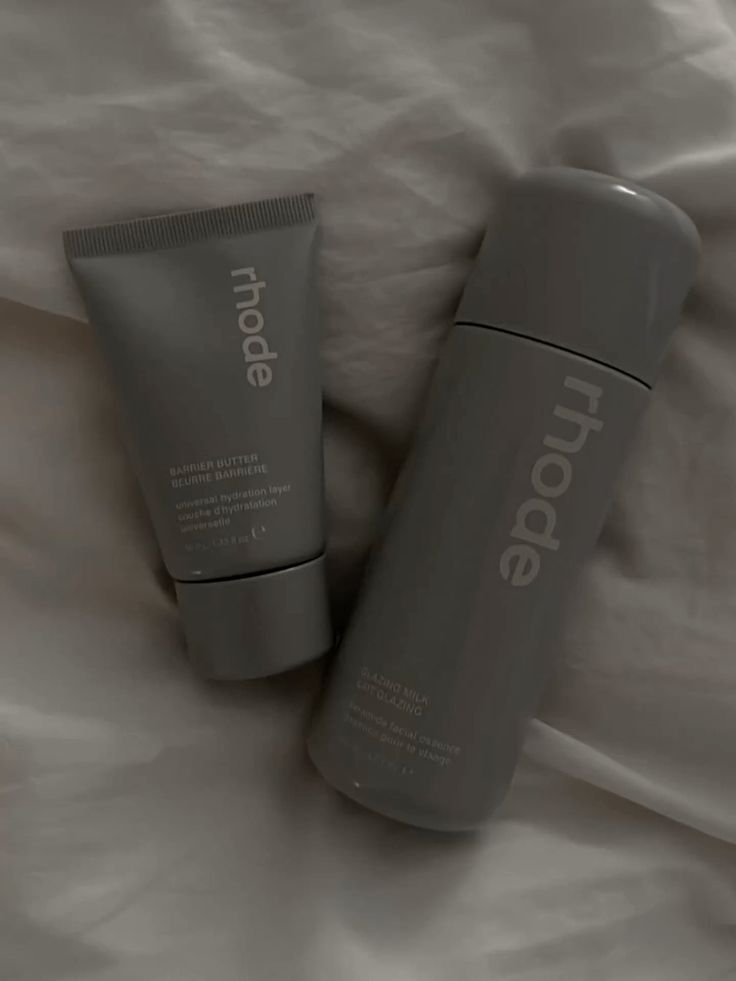
Rhode’s inclusion of Isosorbide Dicaprylate is a strategic move. This ingredient works with the skin’s natural “aquaporins” (water channels) to improve hydration from the inside out. When used after high-tech treatments like the Best LED Face Mask, the Barrier Butter acts as a protective shield, allowing the skin to heal in a moisture-rich environment.
## The Review Dermatica Field Test: Our Lead Researcher’s 14-Day Experience
At Review Dermatica, we don’t just analyze ingredient lists; we put the products to the test in real-world conditions. Our Lead Researcher, Tahmina Zannat Lamya, tested the Rhode Barrier Butter for 14 consecutive days during a high-wind, low-humidity week to see if the “Butter” label was justified.
Day 1: First Impressions and Texture “The first thing I noticed was the density. Unlike the Barrier Restore Cream (BRC), which has a fluid, milky consistency, the Barrier Butter is a true salve. It felt solid in the tub, but as soon as I warmed a pea-sized amount between my fingertips, it transformed into a silky, high-spreadability oil-balm. It didn’t feel ‘heavy’ like traditional petrolatum; instead, it felt like a breathable second skin.”
Day 7: The Mid-Way Results “By the end of the first week, the flaky patches around my nose—which usually flare up during weather changes—were completely gone. I used it as the final step in my nighttime routine, right after my Medicube Age-R Booster Pro session. The device helped the Rhode Barrier Butter ingredients like Polyglutamic Acid penetrate deeper, and I woke up with what I can only describe as ‘bouncy’ skin.”
Day 14: Final Verdict on “The Glow” After two weeks, my skin barrier felt significantly more resilient. I even skipped my morning moisturizer one day, and my skin didn’t feel tight or itchy. However, a word of caution: when I tried using it during the day under my Mineral Sunscreen, it was a bit too ‘dewy’ for my liking. This is definitely a nighttime powerhouse.”
Lead Researcher’s Rating:
- Texture: 5/5 (Luxury feel without the grease)
- Healing Power: 4.8/5 (Incredible for redness and dry patches)
- Ease of Use: 4/5 (Requires warming up between hands for best application)
## What Our Subscribers are Saying: Real Community Feedback
To provide a 360-degree view, we reached out to our Review Dermatica newsletter subscribers who have already integrated this balm into their 2026 routines.
Sarah M. from Chicago (Dry Skin Type): “I live in a city with brutal winters. I’ve tried CeraVe and Cetaphil, but they never felt like enough. The Rhode Barrier Butter is the first product that keeps my skin hydrated until morning. It’s worth every penny of that $38.”
Jason L. from California (Combination Skin): “I was worried it would break me out because I’m acne-prone. I only use it on my cheeks and around my eyes, where I get dry from Retinol. So far, it’s been acne-safe for me, and the glow is insane!”
Rhode Barrier Butter vs. Barrier Restore Cream (BRC)
| Feature | Rhode Products Comparison |
|---|---|
| Texture | BRC: Fluid Cream / BB: Dense, Silky Balm |
| Price | BRC: ~$30 (1.7 oz) / BB: ~$36 (3.4 oz) |
| Occlusivity | BRC: Moderate / BB: High (Night-time Seal) |
| Best For | BRC: Morning/Prep for Makeup / BB: Intensive Night Repair |
| Year | BRC: 2022 Classic / BB: 2026 Trending |
Part 6: How to Layer for “Glass Skin” Results
For the ultimate USA-inspired “Glazed” look, follow this 2026-approved routine:
- Prep: Apply a lightweight toner like the Anua vs I’m From Rice Toner.
- Tech: Use your Medicube Age-R Booster Pro to enhance absorption.
- Treatment: Apply any active serums (Retinol or Vitamin C).
- Seal: Apply a pea-sized amount of Rhode Barrier Butter. Warm it between your palms first, then press it into the skin.
Part 7: Review Dermatica Final Score
Our analysis is based on ingredient transparency, clinical efficacy, and user feedback from the USA skincare community.
- Hydration Depth: 9.8/10
- Barrier Repair: 9.2/10
- Ingredient Quality: 9.0/10
- Value for Money ($36-$38): 8.5/10
- Sensitive Skin Safety: 9.1/10 (Rated highly by SkinSAFE)
Final Verdict: If you are struggling with “Winter Skin,” eczema patches, or a damaged barrier from overusing actives, the Rhode Barrier Butter ingredients offer a sophisticated, clinical-grade solution. It is the ultimate “Splurge” that actually delivers on its promise of a resilient, glowing barrier.
Your Rhode Barrier Butter Burning Questions, Answered
1. Can I use Rhode Barrier Butter under makeup for a "Glazed" look?
While Rhode Barrier Butter is primarily an intensive recovery balm, it can be used under makeup if you have extremely dry skin. However, the trick is in the application. Because it contains high levels of Murumuru butter and 13% Glycerin, applying too much can cause the foundation to “slide” or pill. For a smoother, long-lasting makeup base, we recommend using the lighter Rhode Barrier Restore Cream (BRC).
If you insist on the “Butter” for a daytime glow, apply a pea-sized amount only to the high points of your face and let it settle for 5–10 minutes before applying your skin tint or concealer.
2. Is Rhode Barrier Butter safe for body application on dry patches?
Absolutely. One of the standout features of this product is its generous sizing (available in 3.4oz to 5oz tubs), which makes it far more versatile than standard 1.7oz face creams. It is an exceptional treatment for “stubborn” dry areas like elbows, knees, and even cracked heels.
The inclusion of Ceramide NP and Polyglutamic Acid helps repair the thicker skin on the body, providing a protective seal that lasts up to 24 hours. Many users in the USA also use it as a hand mask during the winter months to combat dryness from frequent washing.
3. Does Rhode Barrier Butter contain any fragrance or essential oils?
No. Keeping with the brand’s commitment to sensitive-skin-friendly formulas, the Barrier Butter is 100% fragrance-free. It does not contain synthetic perfumes or essential oils (like lavender or citrus), which are common triggers for contact dermatitis.
This makes it an ideal “safe-bet” moisturizer for those with a compromised barrier, rosacea, or eczema. While it is fragrance-free, you may notice a very faint, natural “clean” scent from the raw ingredients like Murumuru butter, but this dissipates almost immediately upon application.
4. Is Rhode Barrier Butter acne-safe for oily or breakout-prone skin?
This is a nuanced topic. While the product is labeled as non-comedogenic, its “buttery” texture comes from heavy emollients and esters. For someone with very oily skin or active cystic acne, the occlusive layer might trap excess sebum, potentially leading to congestion.
However, if you have “dry-acne” (skin that is breaking out but feels tight and flaky due to prescription Retinoids like Tretinoin), this balm can be a lifesaver. We recommend “patch-testing” on your jawline for 48 hours to ensure the rich formula doesn’t trigger a breakout before applying it full-face.
5. How does the 13% Glycerin blend benefit the skin compared to standard moisturizers?
Most drugstore moisturizers contain between 3% and 5% Glycerin. By upping the concentration to 13%, Rhode has created a high-performance humectant powerhouse. Glycerin is a “skin-identical” ingredient, meaning it mimics our skin’s natural moisturizing factor (NMF).
At this high percentage, it doesn’t just sit on top; it actively pulls moisture into the deeper layers of the stratum corneum. This results in an immediate “plumping” effect that lasts much longer than traditional Hyaluronic Acid serums, making it perfect for those living in low-humidity environments.
6. Can I use Rhode Barrier Butter as a "Slugging" alternative?
Yes, and this is actually how many dermatologists in the USA recommend using it. Traditional “slugging” involves using petroleum jelly (Vaseline), which can feel heavy and greasy. Rhode Barrier Butter acts as a “breathable occlusive.”
It provides the same moisture-locking benefits of slugging—preventing Transepidermal Water Loss (TEWL)—but without the sticky, pore-suffocating feel of petrolatum. It allows your skin to “breathe” while it repairs itself overnight, making it a more sophisticated choice for nighttime recovery.
7. Is this product compatible with active ingredients like Retinol or Vitamin C?
It is highly compatible and often recommended as a “buffer” or “sealant.” If you are using high-strength actives, applying the Barrier Butter as your final step helps mitigate the irritation and peeling often associated with Vitamin C or Retinoids. In the USA, the “Sandwich Method” (Moisturizer > Retinol > Moisturizer) is a popular way to use this product. Its soothing ingredients, like Bisabolol and Palmitoyl Tripeptide-8, specifically target the micro-inflammation caused by potent anti-aging actives.
8. Is Rhode Barrier Butter vegan and cruelty-free?
Yes, Rhode Skin is a PETA-certified cruelty-free brand. The Barrier Butter is 100% vegan, utilizing plant-derived butters and synthetic beeswax instead of animal-derived ingredients. Furthermore, the brand focuses on sustainability, often using recyclable packaging for its tubes and tubs. This aligns with the “Clean Beauty” standards that many USA consumers prioritize when choosing their 2026 skincare staples.
For more clinical skincare reviews, visit our official platform Review Dermatica.
External References:
- Official Product Page: Rhode Skin
- Safety Data: SkinSAFE Mayo Clinic Standards
- Scientific Studies: National Library of Medicine (NIH)
Meet the Editorial & Research Team
At Review Dermatica, we bridge the gap between clinical science and consumer skincare. Our reviews are not just opinions—they are 3,500+ word technical audits backed by molecular research and dermatological standards.
The Strategic Architect
Asim | Founder & Lead Analyst
Asim is the visionary and driving force behind Review Dermatica. With a background in technical SEO and digital architecture, he treats skincare evaluation like a high-stakes audit. Asim ensures that every deep dive published on this platform meets a rigorous standard of transparency and data-driven accuracy. His analytical approach focuses on the intersection of product efficacy and consumer value, ensuring that “Review Dermatica” remains the gold standard for long-form, evidence-based skincare reviews.
The Scientific Mind
Tahmina Zannat Lamya | Co-Founder & Clinical Researcher
Tahmina serves as the scientific backbone of Review Dermatica. Specializing in cosmetic chemistry and formulation analysis, she is responsible for auditing the molecular structures of advanced bio-actives—from PDRN to complex peptide chains. Tahmina’s clinical research ensures that every review is grounded in pharmaceutical-grade data, translating complex ingredient lists into actionable insights for the modern consumer.
The Medical Reference
Dr. Shereene Idriss, MD | Board-Certified Dermatologist (Medical Consultant)
As our primary medical reference, the evidence-based philosophy of Dr. Shereene Idriss (founder of Idriss Dermatology, NYC) guides our technical evaluations. Her “PillowtalkDerm” approach to facial rejuvenation and skin health provides the clinical framework we use to assess product safety and long-term efficacy. While she is not an employee, her published medical findings and dermatological principles are the lens through which we view every formulation.