
La Roche-Posay Pure Vitamin C10 Serum Review: Does It Actually Work for Sensitive Skin?
If you’ve spent any time researching vitamin C serums, you’ve probably stumbled across the La Roche-Posay Pure Vitamin C10 Serum Reviews at least once.
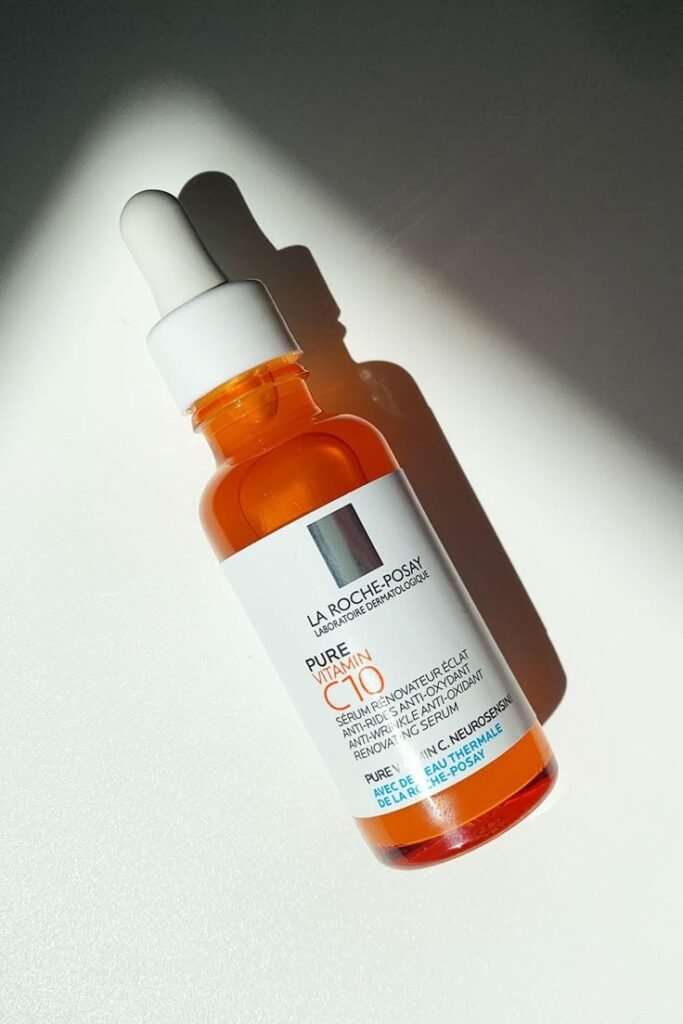
It shows up on “best of” lists, gets recommended by dermatologists, and has a loyal fanbase across skincare forums. But does it actually deliver? Or is it just riding the La Roche-Posay brand name all the way to the checkout?
[This post contains affiliate links. If you buy through our link, we may earn a small commission at no extra cost to you.]
I’ve been using this serum consistently for eight weeks now — every single morning, no skipping — and I want to share everything I noticed. The good stuff, the frustrating stuff, and the things the brand quietly glosses over in its marketing.
This is a proper, no-fluff review. Let’s get into it.
Pros and Cons — The Honest Summary
What works well:
- Genuine brightening and radiance improvement over 6–8 weeks
- Noticeably gentle — suitable for sensitive and combination skin
- Smart supporting ingredients (dual HA, Neurosensine, Vitamin E)
- Dermatologist-developed and clinically tested formulation
- The amber glass packaging genuinely helps with stability
What could be better:
- The fragrance is unnecessary and alienates fragrance-sensitive users
- Oxidises relatively quickly once opened — requires careful storage
- The higher pH (5.5) means slightly reduced raw potency compared to lower-pH competitors
- Can feel a touch drying on very dry skin types
- The price per ml is on the higher side for a 10% concentration
What Is the La Roche-Posay Pure Vitamin C10 Serum?
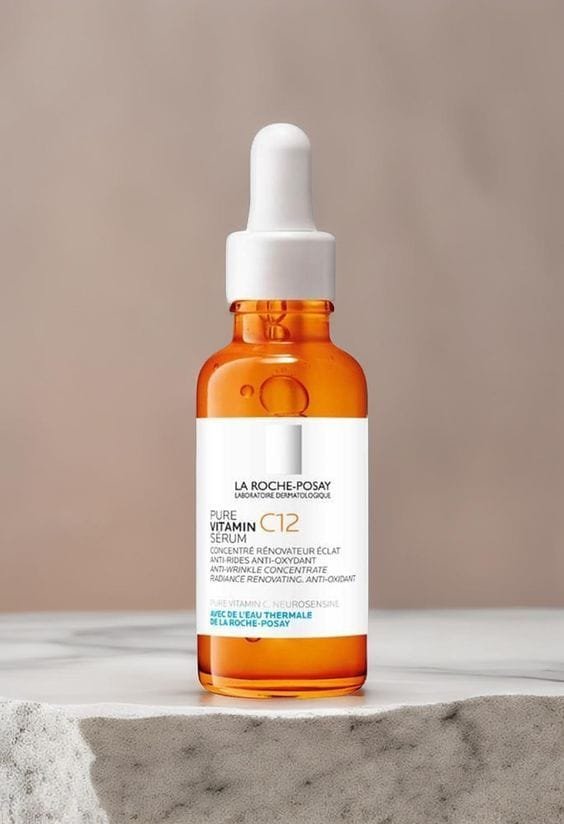
The La Roche-Posay Pure Vitamin C10 Serum is an anti-aging, brightening serum from the French dermatological brand La Roche-Posay. It was specifically designed to deliver the brightening and collagen-boosting benefits of pure vitamin C — in the form of L-ascorbic acid — to even the most reactive skin types.
The “10” in the name refers to its 10% concentration of L-ascorbic acid, which is the gold-standard, most biologically active form of vitamin C used in skincare. What makes this serum slightly different from many other vitamin C products on the market is its formulation at a physiological pH (around 5.5), which the brand claims makes it more tolerable for sensitive skin without sacrificing efficacy.
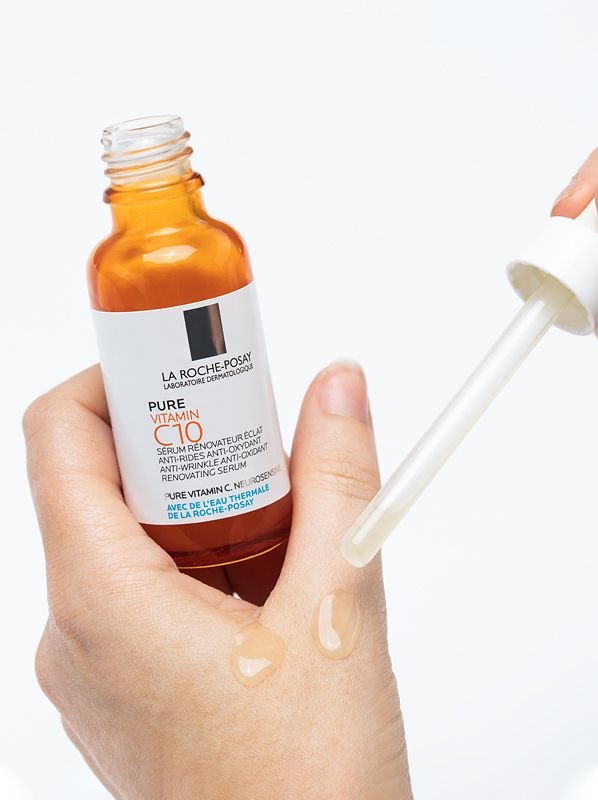
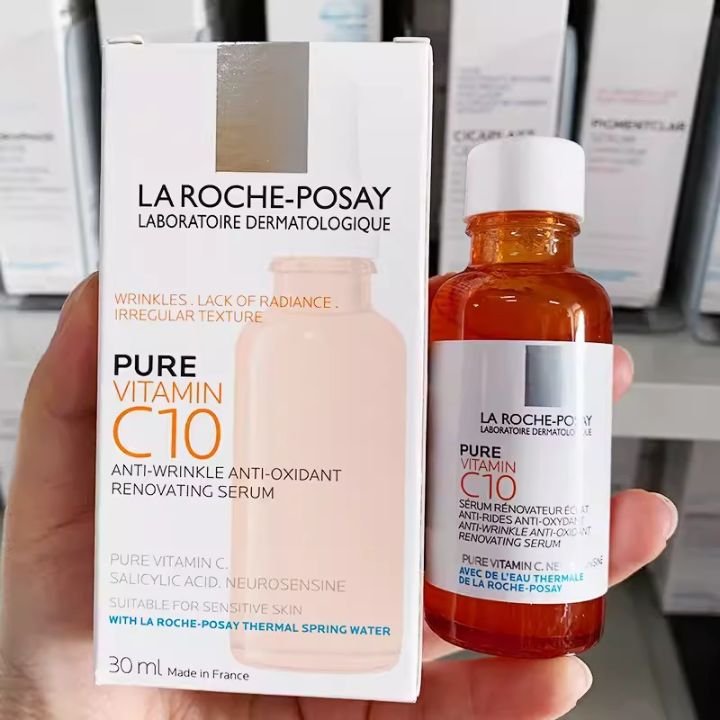
It comes in a 30ml dropper bottle, and the recommended use is 3–4 drops each morning on clean skin, before moisturiser and SPF.
Who Is This Serum For?
Before I go any further, let me be upfront: this serum was built with sensitive skin in mind. If your skin tends to react badly to actives — tingling, redness, flaking — this is one of the gentler entry points into vitamin C.
It’s well-suited for:
- People dealing with early signs of aging (fine lines, dullness, uneven tone)
- Sensitive or combination skin types
- Anyone new to vitamin C who wants a reliable, dermatologist-backed option
- Those looking for a French pharmacy-quality product without the luxury price tag
It’s probably not your best bet if you have very dry skin (more on that shortly), or if you’re already using a high-strength vitamin C and want something stronger.
If you’re specifically looking for options tailored to reactive skin, our guide on the best vitamin C serums for sensitive skin covers several alternatives worth comparing.
The Ingredients — What’s Actually in This Bottle?
Let’s talk about the formula, because it’s genuinely interesting.
10% L-Ascorbic Acid — This is the hero ingredient. L-ascorbic acid is the most researched form of vitamin C in dermatology. According to a review published in the Journal of Clinical and Aesthetic Dermatology, topical vitamin C helps increase collagen synthesis, stabilise collagen fibres, reduce melanin formation, and protect against UV-induced oxidative stress. In short, it’s one of the most evidence-backed actives in skincare, full stop.
Neurosensine (Acetyl Dipeptide-1 Cetyl Ester) — This is La Roche-Posay’s soothing peptide. It’s included to counteract the potential irritation that comes with 10% L-ascorbic acid. For sensitive skin users, this is a meaningful addition.
Salicylic Acid — A beta hydroxy acid (BHA) that gently exfoliates and refines texture. The concentration here is low — it’s there to support brightening and pore refinement rather than act as a dedicated exfoliant. It works in tandem with vitamin C to help with uneven skin tone.
Hyaluronic Acid (Sodium Hyaluronate + Hydrolyzed Hyaluronic Acid) — Two forms of hyaluronic acid for hydration at different skin depths. This is a smart pairing with vitamin C, which on its own can feel slightly drying for some skin types.
Thermal Spring Water — A signature La Roche-Posay ingredient. Rich in selenium and trace minerals, it’s included for its soothing and antioxidant properties.
Adenosine — A well-researched ingredient with evidence for reducing the appearance of fine lines and supporting skin elasticity.
Tocopherol (Vitamin E) — Works synergistically with vitamin C to enhance antioxidant protection. The combination of vitamins C and E has strong clinical backing for photoprotection.
One thing worth flagging: the formula does contain alcohol denat and fragrance (parfum). The alcohol helps with the lightweight texture and fast absorption, but it can be dehydrating for dry skin types. The fragrance is noticeable — not overwhelming, but if you have fragrance sensitivities, it’s something to be aware of.
Texture, Smell, and First Impressions
Opening the box for the first time, I was surprised by how substantial the packaging feels. The amber-tinted glass dropper bottle is clearly designed to slow down oxidation — vitamin C degrades rapidly when exposed to light and air, so the dark glass is a practical choice, not just aesthetics.
The texture is thicker than I expected. It’s not a watery serum — it sits somewhere between a lightweight lotion and a traditional serum. It absorbs reasonably well, but it does leave a very faint residue initially, particularly if you use more than 3–4 drops.
The smell is where opinions tend to divide. It has a distinct, slightly synthetic floral scent that fades within a few minutes. I personally didn’t find it unpleasant, but I’ve seen plenty of La Roche-Posay Pure Vitamin C10 Serum reviews from people who found it quite strong. If you’re fragrance-sensitive, patch test first.
Application is straightforward: I dispensed 3 drops onto my fingertips and pressed them into my skin after cleansing and before anything else. It took about 60–90 seconds to fully absorb.
My 8-Week Experience — Week by Week
Weeks 1–2: The Adjustment Period
No dramatic changes, but that’s expected. Vitamin C serums typically take at least four to six weeks to show meaningful results at the surface level, because the changes happen in deeper skin layers. I noticed my skin felt slightly more hydrated after the first few applications, likely thanks to the hyaluronic acid. No irritation, no tingling. First impressions were positive.
Weeks 3–4: Early Brightness
Around week three, I started to notice a subtle but real improvement in my skin tone. Not a dramatic glow — just less dullness when I looked in the mirror in the morning. Dark spots from old breakouts seemed to be lightening marginally. I was cautiously optimistic.
Weeks 5–6: Visible Texture Improvement
This is where things got more interesting. By week five, the combination of vitamin C and low-dose salicylic acid was clearly doing something to my skin texture. My skin felt smoother to the touch, and the slightly rough patches I sometimes get on my cheeks were noticeably less obvious. Fine lines around my forehead looked a little softer, though not dramatically reduced.
Weeks 7–8: The Honest Summary
By week eight, I’d seen genuine improvement in radiance, texture, and the appearance of mild hyperpigmentation. Not a transformation — let’s be realistic — but a steady, consistent improvement. La Roche-Posay’s own clinical data states that in a study of 53 subjects, 79% found their skin irregularities were less visible after 8 weeks, and 84% found pores appeared smaller and tighter after 4 weeks. That broadly matched my own experience.
La Roche-Posay Pure Vitamin C10 Serum Before and After — What to Realistically Expect
I want to be straight with you here, because a lot of the La Roche-Posay pure vitamin C10 serum before and after content online is misleading.
This is a maintenance and prevention serum as much as it is a corrective one. If you go in expecting to erase deep pigmentation or completely smooth out established wrinkles, you’ll be disappointed. That’s not a criticism of this product — that’s just reality for topical vitamin C at this concentration.
What you can realistically expect after consistent use:
- Brighter, more even skin tone
- Slight reduction in the appearance of fine lines
- Smoother surface texture
- Mild improvement in hyperpigmentation (post-acne marks, mild sun spots)
- Better skin radiance overall
What takes longer or may need additional support:
- Deep pigmentation or melasma (a prescription-strength option may be needed)
- Significant wrinkle reduction (you’d need a retinoid alongside this)
- Dramatic pore minimisation
The Oxidation Problem — A Genuine Concern
This is the elephant in the room for any L-ascorbic acid product, and it’s worth addressing directly.
L-ascorbic acid is chemically unstable. It oxidises when exposed to light, heat, and air — and when it oxidises, it turns yellow, then orange, and it loses its effectiveness. The vitamin C in the bottle is essentially degrading from the moment you open it.
The amber dropper bottle helps slow this process, but it doesn’t stop it. The serum I tested remained pale yellow throughout my 8-week period (which is normal), but I’ve seen several reviews of people receiving already-oxidised product or experiencing rapid colour change.
Practical tips to slow oxidation:
- Store it in a cool, dark drawer — not your bathroom shelf in the light
- Don’t touch the dropper directly to your skin (bacteria introduction accelerates degradation)
- Try to finish the bottle within 3 months of opening
- If it turns dark orange, the vitamin C is largely inactive
This is not a unique problem to La Roche-Posay — it’s an inherent challenge with L-ascorbic acid formulations. But it does mean the serum requires a bit more care than a typical moisturiser.
How Does It Compare to Other Vitamin C Serums?
This is where it gets interesting. The vitamin C serum market is crowded, and this isn’t the only credible option.
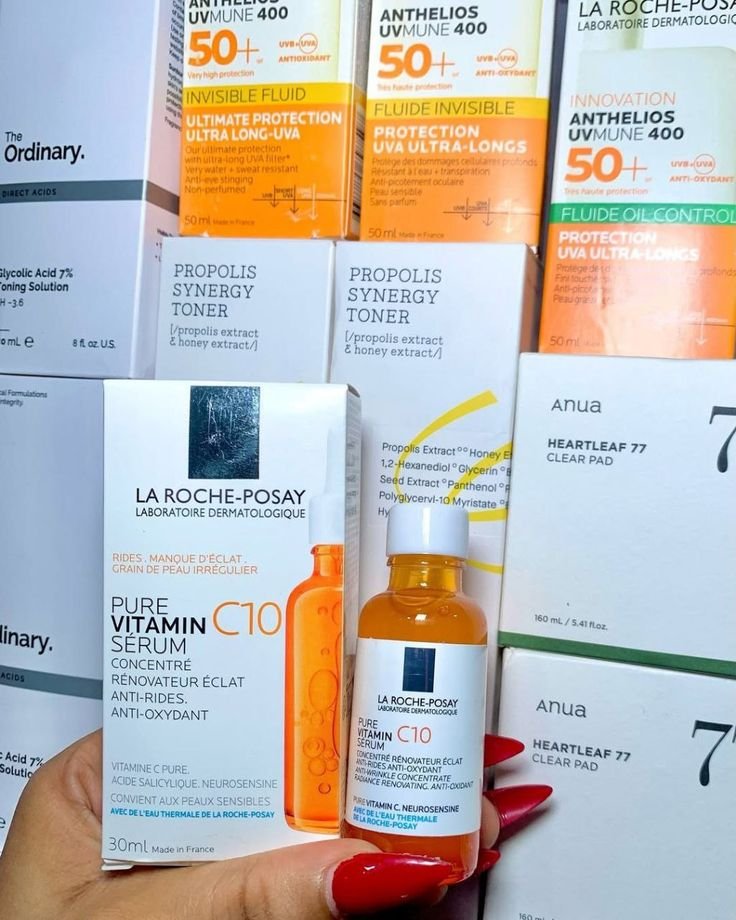
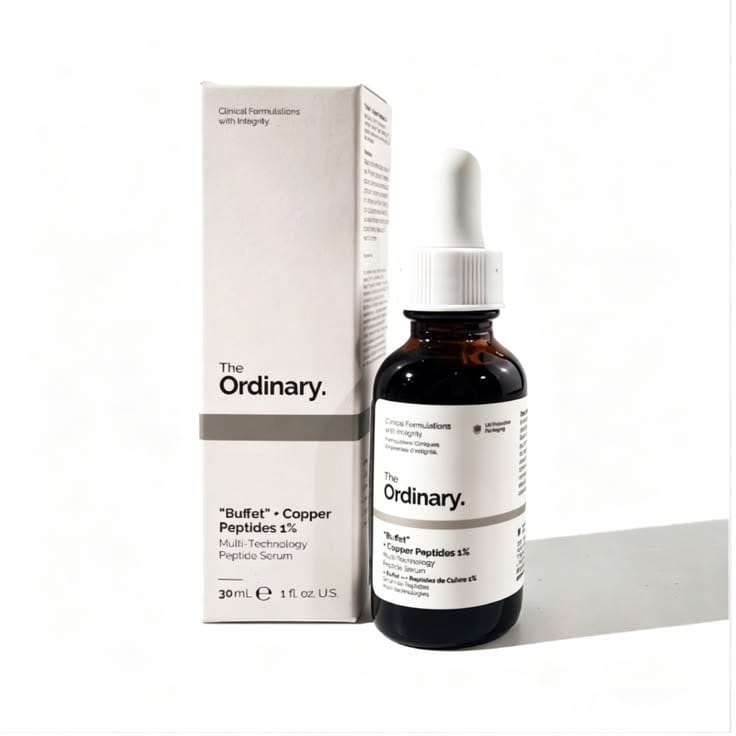
Compared to more budget-friendly vitamin C serums (like those from The Ordinary), this formula is more complex — the addition of Neurosensine, thermal spring water, and dual hyaluronic acid makes it noticeably gentler and better tolerated. If you’ve tried The Ordinary’s ascorbic acid products and found them irritating, this is a meaningful step up in terms of skin compatibility.
On the other hand, the pH of 5.5 is higher than what’s typically considered optimal for L-ascorbic acid (ideally below 3.5). That means you might be trading some raw potency for skin tolerance. For sensitive skin types, that’s probably the right trade-off. For those with tougher, non-reactive skin, a lower-pH formulation might give faster results.
If you want to explore how different vitamin C approaches compare side-by-side, our breakdown of The Ordinary vs Paula’s Choice vitamin C serums is a useful read.
How to Use It for Best Results
Getting the most out of this serum comes down to routine placement and consistency.
Step 1 — Cleanse first. Apply to completely clean, dry skin. Any residue from a cleanser can interfere with absorption.
Step 2 — Apply 3–4 drops. Press gently into your face and neck. Don’t rub — pressing helps the serum absorb without dragging the skin.
Step 3 — Follow with a good moisturiser. Because the serum can feel slightly drying for some people, layering a hydrating moisturiser on top makes a real difference. La Roche-Posay’s own Toleriane Double Repair moisturiser pairs well with it if you want to stay within the same line.
Step 4 — Always use SPF. This is non-negotiable with vitamin C. The serum boosts your skin’s antioxidant defences, but it doesn’t replace sunscreen. Vitamin C and SPF work synergistically — the serum primes your skin, the SPF finishes the job. If you’re still figuring out which sunscreen works best for you, our comparison of mineral vs chemical sunscreen for the face is worth a read.
Use it in the morning only. Vitamin C works best during the day because it neutralises free radicals generated by UV exposure. Some people use it at night, too, but daytime application is where it earns its keep.
What I Think of the Packaging
The dropper design is practical for controlling how much product you use, which is important given the price per ml. However, I’ve seen a few complaints in other La Roche-Posay Pure Vitamin C10 Serum reviews about the dropper mechanism being fiddly or inconsistent. In my experience, it worked fine, but I did notice that if the bottle was nearly empty, the dropper didn’t always draw product up cleanly.
The amber glass is a genuine positive. So many vitamin C serums come in clear packaging, which accelerates oxidation. The decision to use tinted glass shows the brand understands its own formulation.
Building a Routine Around This Serum
Vitamin C doesn’t exist in isolation. For it to do its best work, you need a routine that supports it.
For sensitive or combination skin, a solid morning routine might look like: gentle cleanser → vitamin C serum → hydrating moisturiser → broad-spectrum SPF.
If you want to address multiple skin concerns alongside brightness and anti-aging, adding a well-formulated hydration serum in the evening can help. The La Roche-Posay Hyalu B5 Serum is a strong option to layer in at night for targeted hydration without conflicting with your morning vitamin C. Similarly, if barrier support is a priority, the iUNIK Beta Glucan Power Moisture Serum is worth looking into — beta glucan is one of the most effective ingredients for strengthening a compromised skin barrier, and if you want to understand the ingredient more deeply, here’s what beta glucan actually does for the skin.
For SPF, the EltaMD UV Clear SPF 46 consistently comes up as one of the best daily sunscreens for sensitive, acne-prone skin — it layers well over vitamin C serums without pilling.
The Science Behind Vitamin C — Why It Works
For those who want to understand the “why” behind the results, here’s a quick breakdown.
L-ascorbic acid is one of the most rigorously studied actives in cosmetic dermatology. Research published in the Journal of Clinical and Aesthetic Dermatology confirms that topical vitamin C increases collagen synthesis, stabilises collagen fibres, decreases collagen degradation, and reduces melanin formation — all of which translate to visible anti-aging and brightening effects on the skin.
A 2023 systematic review in the Journal of Cosmetic Dermatology (Correia et al.) also confirmed that topical ascorbic acid produces significant lightening in patients with both melasma and solar lentigines, along with evidence for improving skin elasticity in photodamaged skin.
The key caveat from the research is that effectiveness depends heavily on concentration, pH, and formulation stability. L-ascorbic acid needs to be below a pH of roughly 3.5 for maximum absorption, but this makes it more irritating. La Roche-Posay’s decision to formulate at pH 5.5 is a deliberate compromise toward tolerance, which may reduce peak efficacy but makes the product accessible to a much wider range of skin types. For a deeper dive into the clinical evidence, the full review is available via the National Institutes of Health (NIH) PubMed database.
Final Verdict — Is It Worth Buying?
Yes — with the right expectations.
The vitamin C serum La Roche-Posay has built here is a well-formulated, dermatologist-backed product that genuinely delivers on its core promises over consistent use. It’s not the most powerful vitamin C on the market, but it’s one of the most accessible for people with sensitive or reactive skin who’ve struggled with other formulations.
If you’ve tried cheaper vitamin C serums and found them irritating, this is a worthwhile upgrade. If you’re a veteran of low-pH, high-strength vitamin C and want maximum potency, you’d probably find this underwhelming.
For most people — especially those dealing with mild dullness, early signs of aging, or uneven tone — this is a reliable, sensible choice from a brand with strong dermatological credibility. Use it consistently, pair it with a good SPF, and give it at least six weeks before judging the results.
Where to Buy
You can find the La Roche-Posay Pure Vitamin C10 Serum at major retailers, including Boots, Lookfantastic, Dermstore, and directly through La Roche-Posay’s own website.
👉 Check Current Price & Buy La Roche-Posay Pure Vitamin C10 Serum →
Frequently Asked Questions
Can I use this serum every day?
Yes. It’s formulated for daily morning use. Start with every other day if you’re new to vitamin C, then build up to daily.
Does it work on dark spots?
It can help with mild hyperpigmentation over time — particularly post-acne marks and early sun spots. For deeper or more established pigmentation, you may need to combine it with a prescription-strength option or a more targeted treatment.
Can I use it with retinol?
Yes, but keep them separate — vitamin C in the morning, retinol at night. Combining them in the same application can irritate and reduce the effectiveness of both.
Is it suitable for oily skin?
Yes. The lightweight, non-greasy texture makes it well-suited for oily and combination skin. Those with very dry skin may want to follow with a richer moisturiser.
How long does one bottle last?
At 3–4 drops per morning application, a 30ml bottle typically lasts around 6–8 weeks.
About the Editorial Team
The Strategic Architect: Newaj H. Asim | Founder & Lead Analyst Asim leads the technical SEO and clinical skincare audits for Review Dermatica, focusing on high-authority digital brand growth in the USA.
The Scientific Mind: Tahmina Zannat Lamya | Co-Founder & Clinical Researcher Tahmina conducts the ingredient deep-dives at Review Dermatica, specializing in the intersection of UV protection and inflammatory skin conditions.
The Medical Reference: Dr. Shereene Idriss, MD Dr. Shereene Idriss, a leading board-certified dermatologist based in NYC, serves as our primary medical reference for Skintelligence.

1 thought on “La Roche-Posay Pure Vitamin C10 Serum Review: Does It Actually Work for Sensitive Skin?”