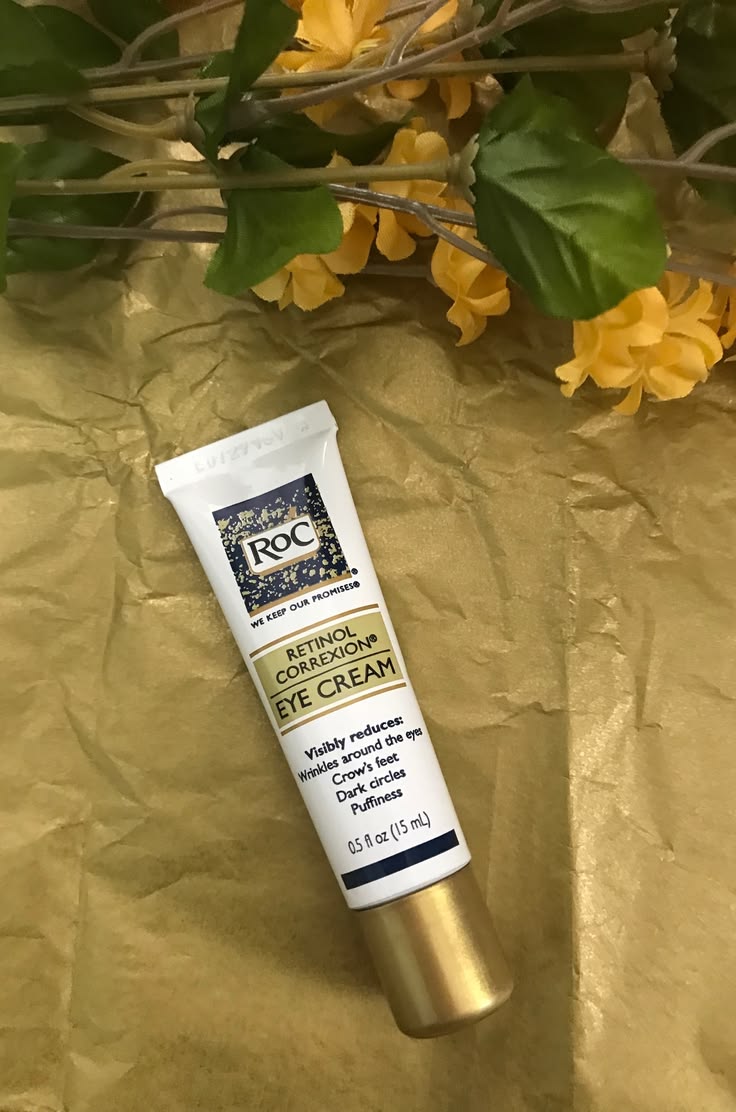
Under-eye skin ages faster than almost any other part of the face. It’s thinner, it moves constantly, and it shows tiredness before anything else does.
That’s exactly why RoC built its Retinol Correxion line around this one small, stubborn area. The brand has been making drugstore retinol products since 1957, and this eye cream is one of its most talked-about releases.
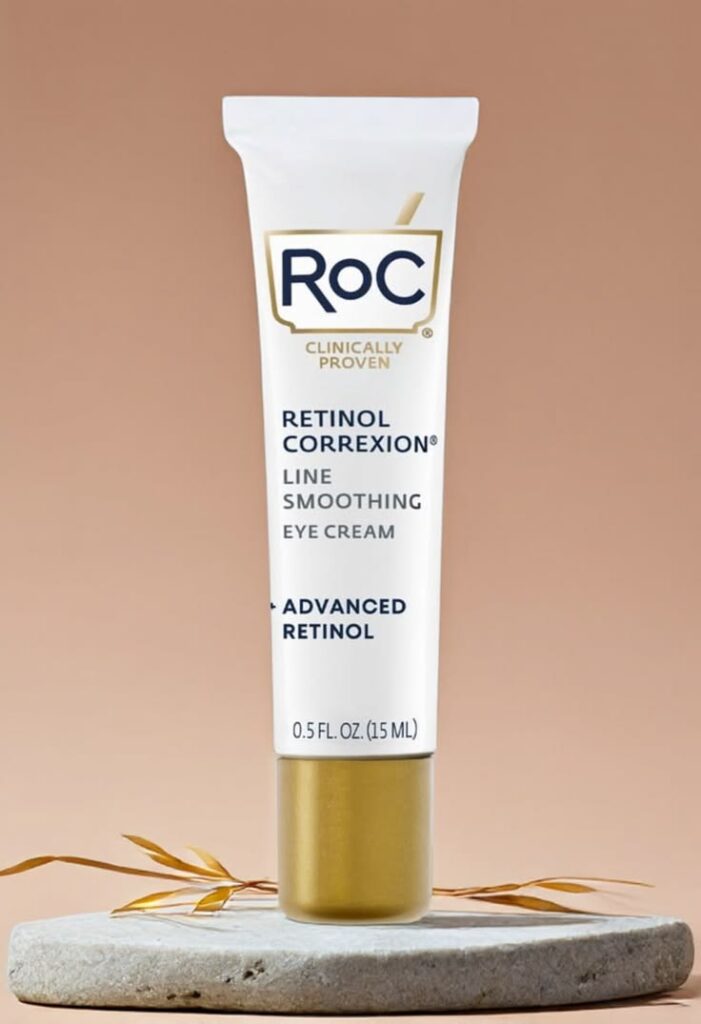
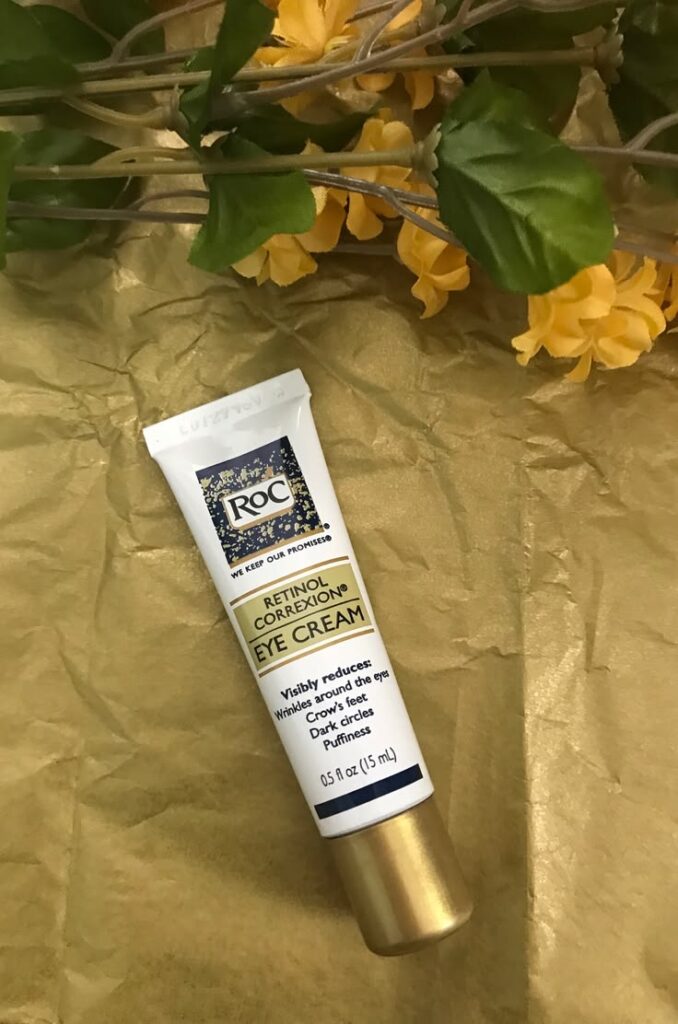
We spent several weeks testing the RoC Retinol Correxion Under Eye Cream to see if a sub-$25 retinol formula can actually compete with the $60+ options everyone recommends. This RoC Retinol Correxion review breaks down exactly what happened — the good, the underwhelming, and everything in between.
If you’re comparing budget-friendly retinol eye cream for dark circles and fine lines, this guide should save you some guesswork.
Quick Summary For RoC Retinol Correxion review
- Best for: Fine lines, crow’s feet, mild puffiness, and early dark circles
- Key actives: Slow-release retinol, mineral complex, glycerin
- Texture: Lightweight, fast-absorbing, non-greasy
- Time to see results: 4 weeks for puffiness/dark circles, 12 weeks for deeper lines
- Price: Budget-friendly, under $25
- Skin type fit: Normal, combination, mature skin; caution for very sensitive or reactive eyes
- Fragrance-free: Yes
- Our rating: A solid, science-backed pick if you want retinol without the luxury price tag
Editorial Disclosure
This review was researched and written by the Review Dermatica editorial team. Tahmina Zannat Lamya led the ingredient and clinical-research analysis, cross-checking every claim against published studies rather than marketing copy.
Review Dermatica may earn a small commission if you purchase through links on this page. This never influences our rating or our conclusions — every product we recommend is chosen because we genuinely believe it deserves a place on your shelf.
Why the Eye Area Ages Differently
Before getting into the product itself, it helps to understand why eye creams exist as a separate category at all. Some people assume any face moisturizer will do the job just as well.
The skin around your eyes has almost no oil glands, is significantly thinner than facial skin, and moves thousands of times a day through blinking and expressions. That combination makes it one of the first places to show fine lines, dryness, and volume loss.
It’s also more prone to irritation, which is exactly why formulating a retinol product for this area is harder than formulating one for the rest of the face. A cream that works beautifully on your cheeks can easily sting or flake around your eyes.
This is the exact challenge RoC set out to solve with a slow-release retinol system instead of a standard formula.
What Is RoC Retinol Correxion Under Eye Cream?
RoC Retinol Correxion Under Eye Cream is a targeted anti-aging treatment built to handle three concerns at once: fine lines, puffiness, and dark circles.
It’s part of RoC’s larger Retinol Correxion family, which includes serums, night creams, and capsules. The eye cream version is formulated specifically for the thinner, more delicate skin around the orbital bone.
Unlike face retinol products, this one is designed to be gentle enough for daily use in an area that can’t tolerate strong actives. That’s an important distinction, since the skin around your eyes reacts very differently than the rest of your face.
The brand markets it as a “3-in-1” solution, and after testing it, that positioning is fairly accurate rather than exaggerated marketing language.
Key Ingredients Breakdown
Slow-Release Retinol
The star ingredient here is a slow-release form of retinol. Instead of hitting the skin all at once, it’s designed to release gradually, which theoretically reduces irritation while still delivering results over time.
Retinol is one of the most studied anti-aging ingredients in skincare. According to the American Academy of Dermatology, retinol is a type of retinoid commonly used to improve uneven skin tones, pigmentation, and texture, and is available over the counter, unlike stronger prescription retinoid formulations.
Retinol Booster / Mineral Complex
RoC pairs the retinol with a mineral-based booster complex meant to enhance absorption and support the skin’s natural firming response. This is the brand’s attempt to get retinoid-level results without the harsh side effects that come with higher-strength formulas.
Glycerin and Lightweight Emollients
The base formula leans on glycerin and lightweight emollients to keep the texture comfortable. This matters a lot for an eye cream — anything too heavy will migrate into your eyes or pill under makeup.
What’s Notably Absent
There’s no added fragrance, which reduces irritation risk significantly. The formula also skips heavy oils, so it layers well under concealer without pilling.
If you want to understand the science behind how this compares to peptide-based alternatives, our peptides vs retinol breakdown covers which ingredient works better for which concern and why some formulas combine both.
The Science Behind Retinol for the Eye Area
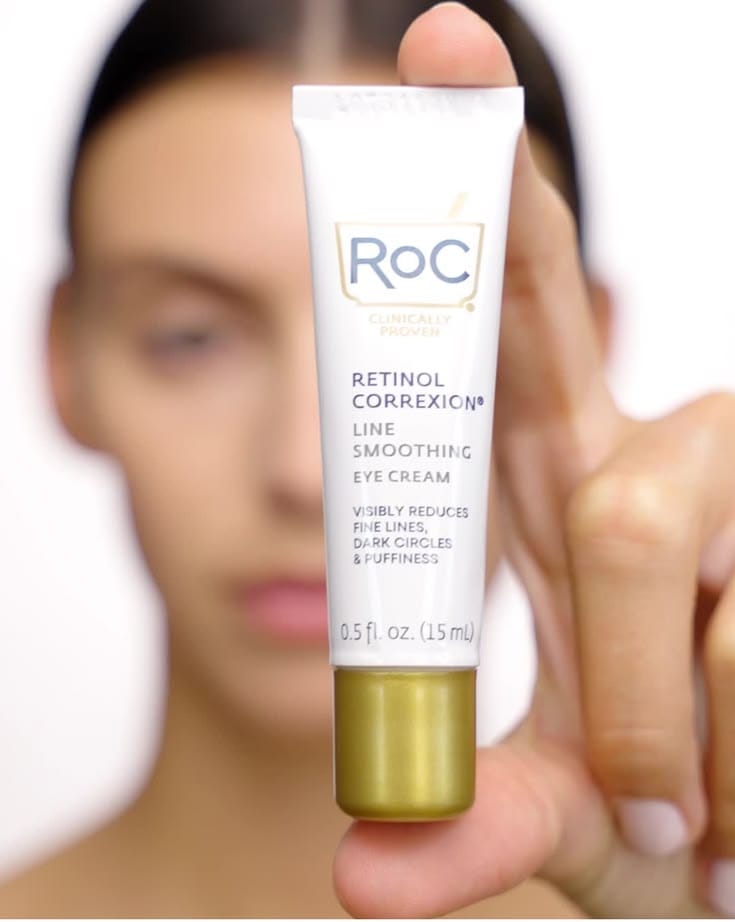
Retinol’s anti-aging effects aren’t just marketing. A published clinical study on a retinoid eye cream formulated specifically for the periorbital region found meaningful improvements across multiple concerns after consistent use. A 12-week clinical study on a hydrating retinoid eye cream designed for the periorbital area found significant improvements from baseline in the appearance of lines and wrinkles, under-eye darkness, and puffiness after nightly application.
That same research noted something worth flagging for anyone setting expectations: results for puffiness and dark circles typically show up around week 4, while deeper wrinkle improvement takes closer to 12 weeks. The research found measurable improvements in under-eye darkness and puffiness by week 12, with texture and hydration changes appearing earlier in the study timeline.
This timeline matches almost exactly what RoC claims on its own packaging, which is a reassuring sign. It means the brand isn’t promising something the underlying research doesn’t support.
Mayo Clinic also confirms that retinol, while milder than prescription retinoids, still delivers visible smoothing and discoloration benefits over an extended period of consistent use. Mayo Clinic notes that retinol is a milder type of retinoid made from vitamin A, used in skin care to help smooth wrinkles and reduce discoloration, though it can cause irritation that often lessens with continued use.
Separately, longer-term research into topical retinol has shown that its benefits compound over time at a molecular level, rather than plateauing quickly. Longitudinal research tracking retinol’s effects on skin over a full year found that its impact unfolds as an ongoing, orchestrated molecular process rather than a single short-term change. This supports the idea that sticking with a retinol eye cream for several months, not just a few weeks, is where the real payoff happens.
How to Use RoC Retinol Correxion Eye Cream
Application matters more with retinol than with almost any other ingredient. Here’s the exact routine we followed during testing.
- Cleanse and fully dry the under-eye area first
- Use a rice-grain-sized amount for both eyes combined
- Gently tap (never rub) around the orbital bone
- Apply at night only, 2–3 times per week to start
- Increase to nightly use only once your skin tolerates it
- Always follow with SPF the next morning
Retinol makes skin more sun-sensitive, so skipping sunscreen while using this product will undo most of the benefit you’re working toward. This is one of the most repeated pieces of advice from dermatologists when it comes to introducing any retinoid.
A Simple Ramp-Up Schedule
- Weeks 1–2: Every third night
- Weeks 3–4: Every other night
- Week 5 onward: Nightly, if no irritation appears
Rushing this timeline is the most common reason people abandon retinol products early, assuming the product “doesn’t work for them” when really their skin just needed more time to adjust.
Our Testing Experience: Week by Week
Week 1–2
The texture impressed us immediately. It’s lightweight, sinks in fast, and doesn’t leave any greasy residue under concealer.
There was mild tightness on the first two applications, which is normal for a retinol product in this area. It faded by day four, and by the end of week two, application felt completely comfortable.
Week 3–4
This is where things got interesting. Morning puffiness noticeably decreased, and the overall under-eye area looked less “heavy,” especially after short sleep.
Dark circles didn’t disappear, but they looked slightly less pronounced in natural light — consistent with what the clinical data suggested we should expect around this timeframe.
Week 5–6
Texture continued improving steadily. Makeup started sitting noticeably smoother in the mornings, without settling into fine lines the way it had before.
Week 7–8
This is where fine lines at the outer corners (classic crow’s feet territory) started softening. Nothing dramatic, but a visible difference showed up in photos taken under the same lighting conditions each time.
Week 9–10
Skin tone in the under-eye area looked more even overall. This was subtle, but noticeable enough that a few people asked if we’d “changed something” without being able to pinpoint what.
Week 11–12
By the three-month mark, the improvement in texture and overall smoothness was the most noticeable change of the entire test. Skin looked more even, more awake, and makeup application in the morning became genuinely easier.
Pros
- Budget-friendly compared to prestige retinol eye creams
- Lightweight, fast-absorbing texture
- Fragrance-free and non-comedogenic
- Backed by decades of RoC clinical retinol research
- Works on three concerns at once: lines, puffiness, dark circles
- Widely available at drugstores, Target, Walmart, and Amazon
- Layers well under concealer without pilling
- Noticeable texture improvement by the two-month mark
Cons
- Mild initial tightness for retinol-sensitive users
- Results take patience — this isn’t an overnight fix
- Jar/tube size is small (0.5 oz), so it doesn’t last as long as face products
- Not the strongest option for deep, established wrinkles
- Some users report a slightly watery consistency
- Requires diligent SPF use to protect results
If you have very reactive or rosacea-prone skin, it’s worth reading our guide on best skincare brands for sensitive skin before introducing any retinol product around the eyes.
Who Should (and Shouldn’t) Use This
Good fit for:
- Anyone in their late 20s to 50s dealing with early fine lines
- People wanting an affordable entry point into retinol
- Those with mild-to-moderate puffiness or dark circles
- Combination or normal skin types
- Anyone already using retinol on their face who wants a matching eye-safe formula
Probably not ideal for:
- Pregnant or nursing individuals (retinol is generally avoided during this time)
- Extremely sensitive or actively irritated skin
- People wanting fast, dramatic results in under 2 weeks
- Those specifically targeting deep, static wrinkles (a stronger option may work faster)
- Anyone unwilling to commit to consistent daily SPF use
Packaging and Sensory Experience
The tube is small and travel-friendly, though the narrow opening makes it slightly tricky to dispense the exact rice-grain amount recommended. A little practice fixes this quickly.
The formula itself has a light, almost gel-cream hybrid consistency. It’s not as rich as some prestige eye creams, but that’s part of why it absorbs so quickly without leaving residue.
How It Compares to Other Drugstore Eye Creams
RoC Retinol Correxion competes in a crowded space. Compared to non-retinol options like our top-rated CeraVe Eye Repair Cream, RoC leans harder into active anti-aging results rather than pure hydration and barrier repair.
If your main concern is fine lines and texture, RoC has the edge. If your priority is calming, ceramide-based hydration with zero irritation risk, CeraVe is the gentler route.
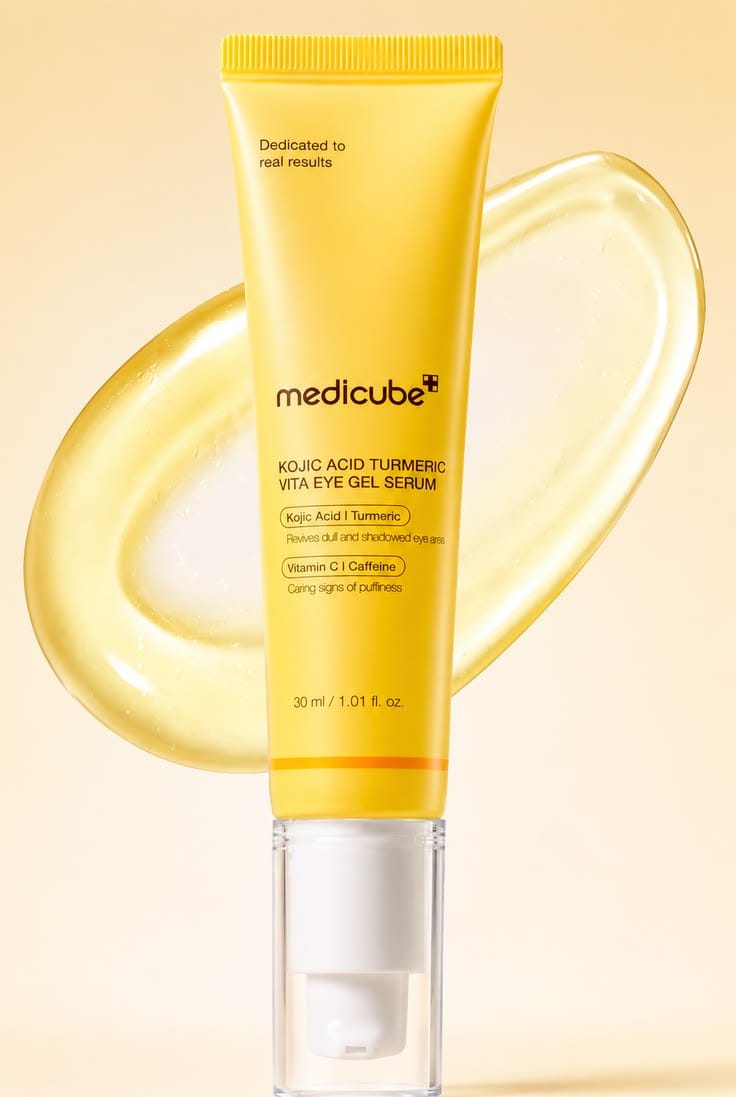
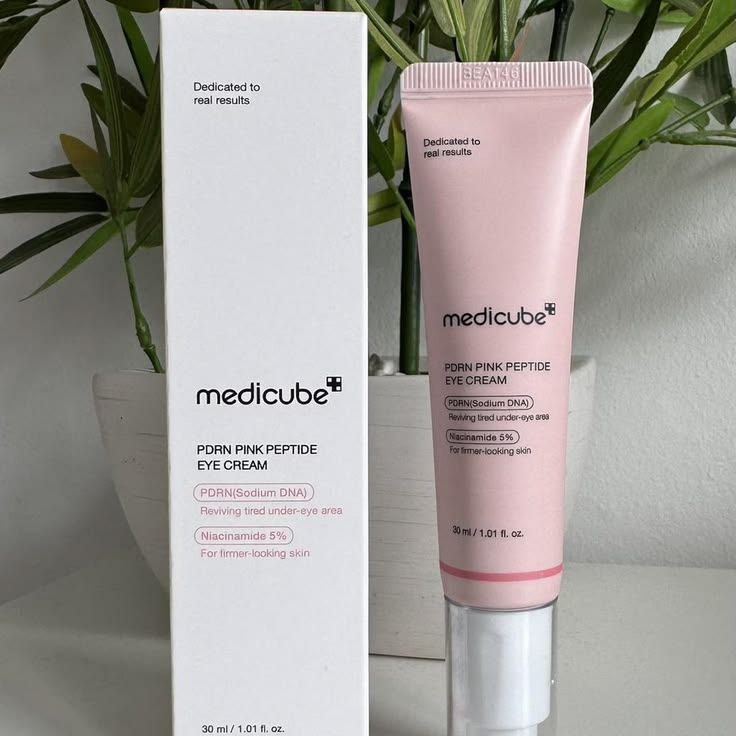
For those exploring Korean-inspired PDRN technology instead of retinol, our Medicube PDRN Eye Cream review covers a very different, regenerative approach to the same under-eye concerns.
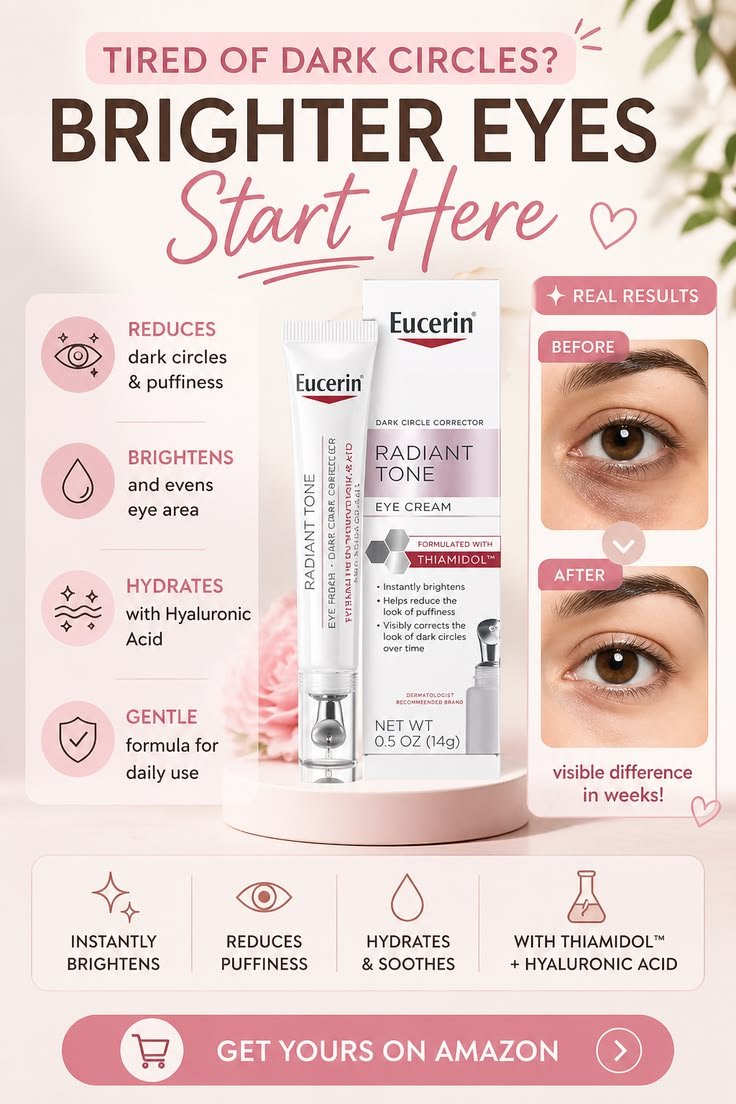
And if brightening is your bigger priority over firming, our Eucerin Radiant Tone Eye Cream review is worth comparing side by side with this one.
Price and Value
At under $25, this is one of the more accessible clinically backed retinol eye creams on the market. Compared to prestige options that cost 3–5x more for similar slow-release retinol technology, the value here is genuinely strong.
The only downside is portion size — the 0.5 oz tube lasts roughly 2–3 months with nightly use, so budget accordingly if you’re planning to commit long-term.
For the price point, though, it’s hard to find a comparable formula backed by this much retinol research history.
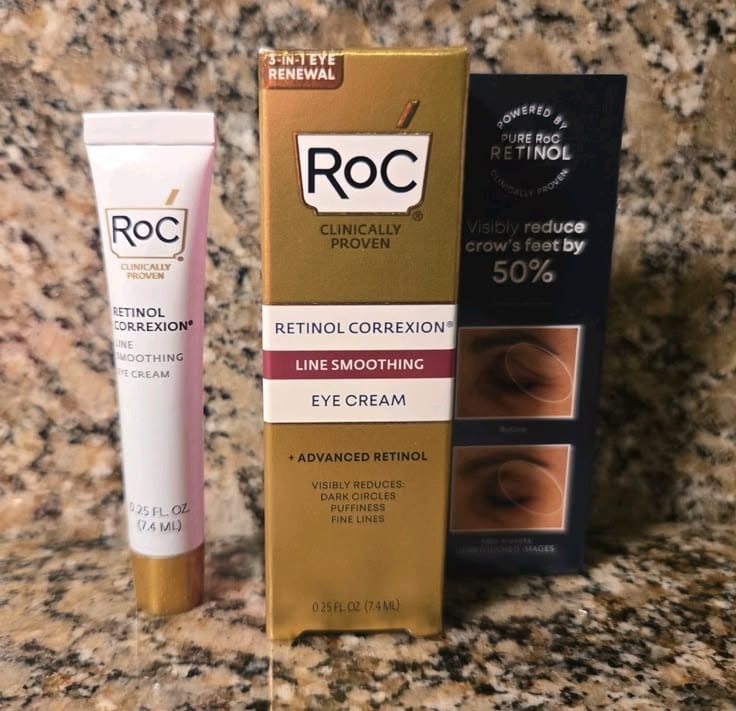
Tips to Maximize Your Results
- Apply on completely dry skin — retinol on damp skin can increase irritation
- Store it away from direct sunlight and heat, which can degrade retinol potency
- Pair it with a hydrating serum underneath if your skin runs dry
- Never combine with strong acids (AHAs/BHAs) in the same routine
- Be consistent — skipping several nights in a row resets your tolerance progress
3 Great Alternatives Worth Considering
Not every under-eye concern calls for retinol. Here are three alternatives from our library that tackle the same problem areas through different approaches.
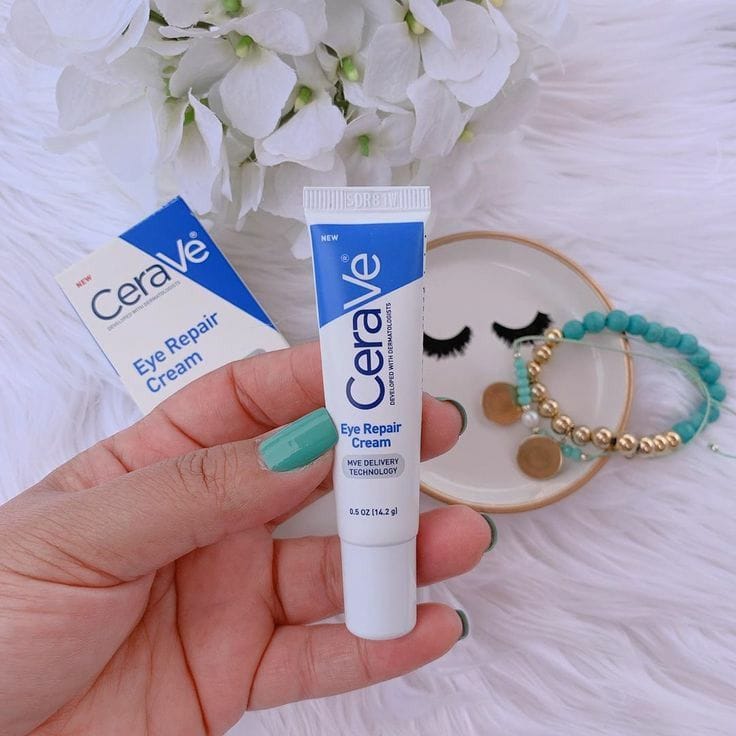
1. CeraVe Eye Repair Cream
If irritation is a concern or you have very sensitive skin, this ceramide and hyaluronic acid formula offers hydration-first results without any retinol-related adjustment period. Read the full CeraVe Eye Repair Cream review for our complete breakdown.
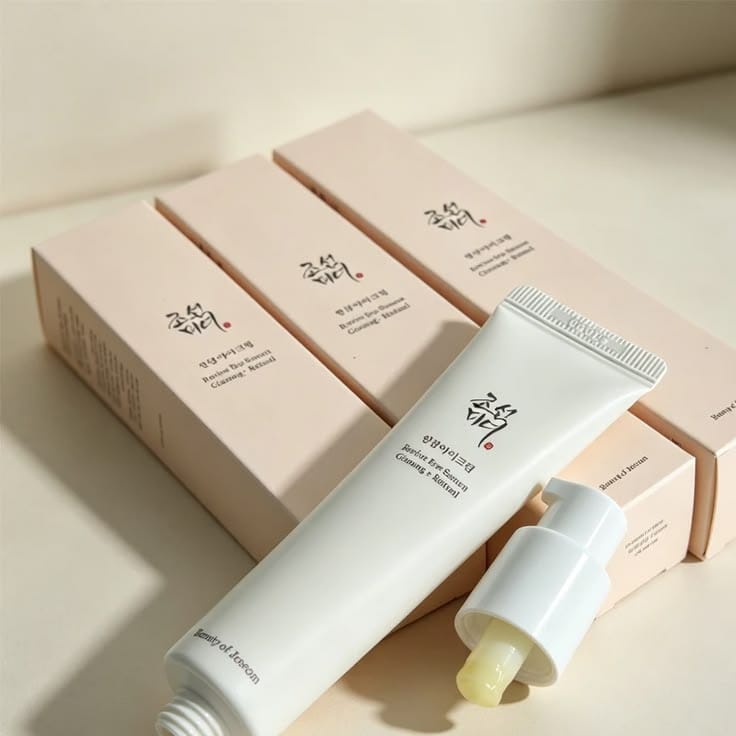
2. Beauty of Joseon Eye Cream
For those who prefer a gentler, K-beauty approach with a lighter texture and lower irritation risk, this is a favorite among our readers with combination or normal skin. See our full Beauty of Joseon Eye Cream review.
3. Medicube PDRN Eye Cream
If dark circles and skin regeneration are your bigger priority over fine lines specifically, PDRN technology offers a completely different mechanism worth exploring. Check out our Medicube PDRN Eye Cream review for the full testing results.
Frequently Asked Questions
How long does RoC Retinol Correxion take to work?
Most users see reduced puffiness and dark circles around week 4, with fine line improvement typically appearing between weeks 8–12 of consistent nightly use.
Can I use this every day?
Not immediately. Start 2–3 times per week and build up to nightly use once your skin adjusts, following standard retinol introduction guidelines.
Is it safe for sensitive skin?
It’s formulated to be gentler than face retinol, but very reactive skin types should patch test first or consider a non-retinol alternative.
Do I need sunscreen while using this?
Yes, always. Retinol increases sun sensitivity, so daily SPF is non-negotiable while using this product.
Can I use it with vitamin C or other actives?
It’s best to separate retinol from strong acids and vitamin C to avoid irritation. Many people use vitamin C in the morning and save retinol products for nighttime only.
Will it help with severe under-eye bags?
It can visibly reduce mild-to-moderate puffiness, but it won’t address structural fat pad changes that cause severe, persistent under-eye bags — that typically requires a dermatologist consultation.
Final Verdict
RoC Retinol Correxion Under Eye Cream earns its reputation. It’s not flashy, it’s not expensive, and it doesn’t overpromise — it simply delivers steady, clinically-supported improvement over 8 to 12 weeks.
It won’t replace a dermatologist-strength retinoid for serious photoaging, and it’s not the gentlest formula on the market. But as a drugstore retinol eye cream for dark circles, puffiness, and early fine lines, it remains one of the smartest budget picks available in 2026.
If patience isn’t a problem and your main concerns are prevention and early correction, this is an easy recommendation.