The Inkey List Eye Cream Review (2026): Cheap Skincare Miracle?
Under-eye skin is thin; it has almost no oil glands, and it shows every late night you’ve had. So when a $12 eye cream promises to fix puffiness, dark circles, and fine lines in one tube, it’s fair to be skeptical. We tested The Inkey List’s Caffeine Eye Cream against the clinical research behind its actual ingredients to see if the hype holds up — or if this is just clever marketing on a cheap formula.
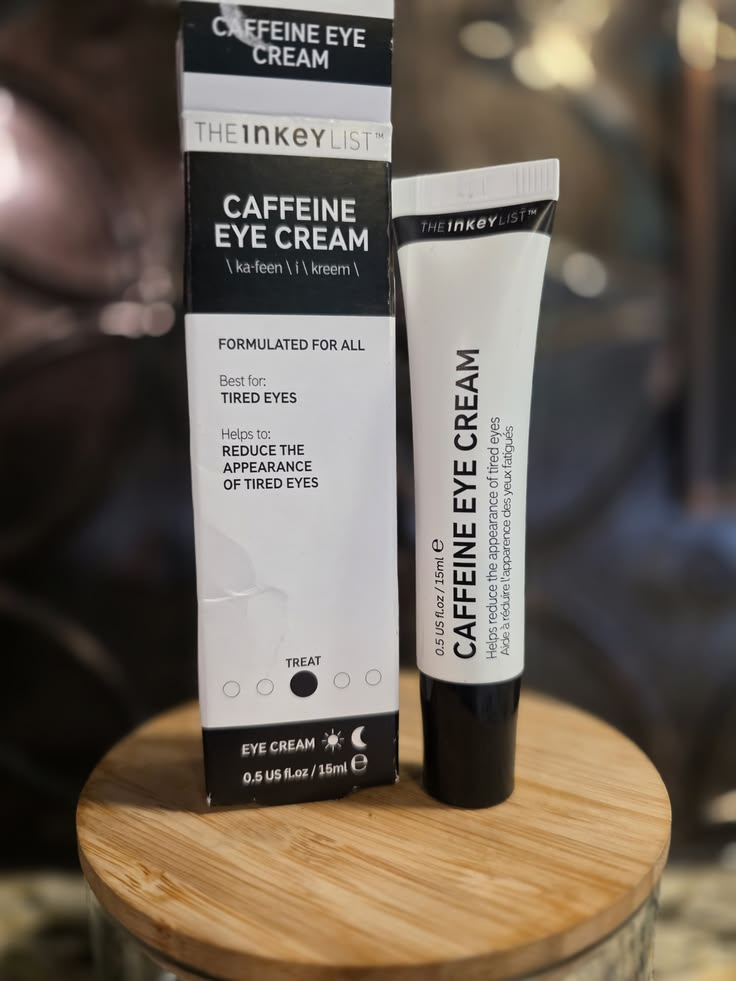
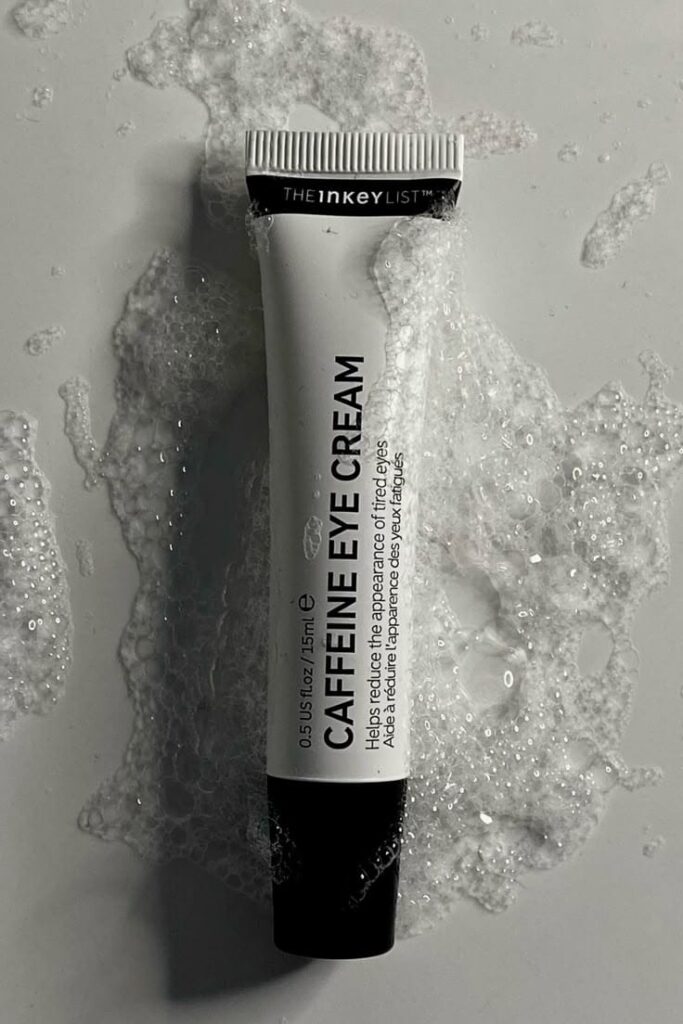
This The Inkey List eye cream review covers the full ingredient list, what the science says about each active, real usage results, pricing, and how it compares to pricier alternatives already on our site.
Affiliate Disclosure and Editorial Team
Review Dermatica is reader-supported. If you purchase through links in this article, we may earn a small commission at no extra cost to you. This doesn’t affect our testing process or conclusions. Every ingredient claim in this review has been cross-checked against published clinical research, not brand marketing copy alone. This article was researched and written by the Review Dermatica editorial team, with clinical and formulation input from co-founder Tahmina Zannat Lamya.
Quick Summary The inkey list eye cream Review
- Product: The Inkey List Caffeine Eye Cream (0.5 fl oz / 15ml)
- Price: Around $12–$14 USD
- Key actives: 0.3% caffeine, Matrixyl 3000 (palmitoyl tripeptide-1 + palmitoyl tetrapeptide-7), Albizia Julibrissin Bark Extract, hyaluronic acid, squalane
- Best for: Puffiness, morning tiredness, mild dark circles, early fine lines
- Not ideal for: Deep-set hollows or genetic pigmentation (no ingredient here treats structural volume loss)
- Verdict: A genuinely well-formulated budget eye cream, with two of its three hero ingredients backed by real clinical data
What Is The Inkey List Caffeine Eye Cream?
The Inkey List built its whole brand around one idea: skip the marketing fluff, show the ingredient percentages, keep prices low. The Caffeine Eye Cream is one of their bestsellers, and it’s aimed squarely at the most common under-eye complaint people search for — looking tired even when you’re not.
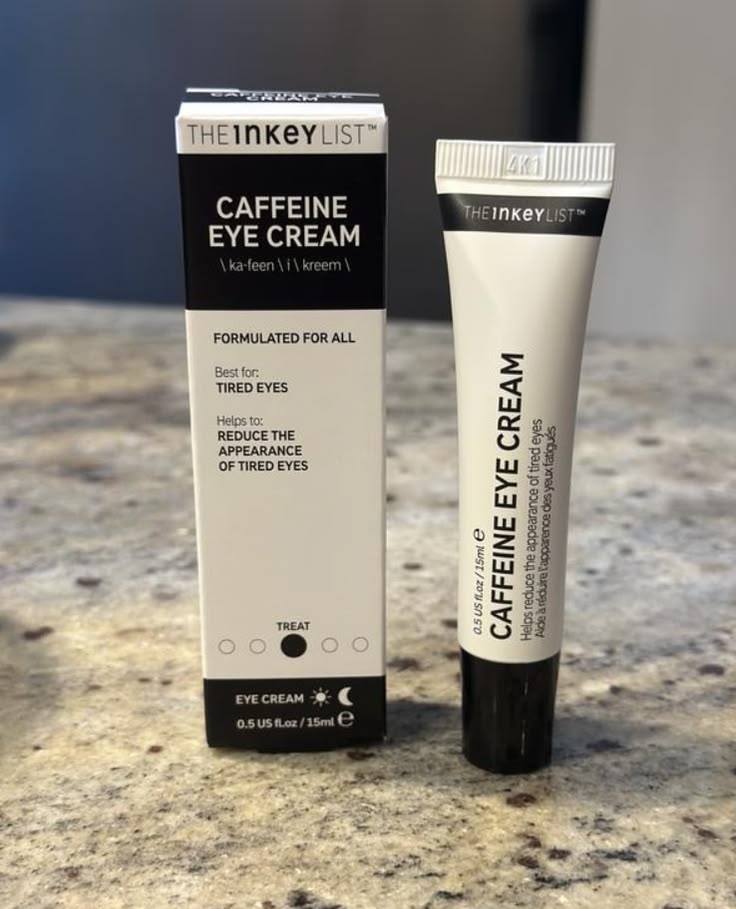
It comes in a 15ml tube, which is standard for eye cream but goes a long way given how little product this area actually needs. The texture is lightweight and cooling on application, which matters for a product you’re meant to use twice a day, every day.
At under $15, it sits in the same price bracket as drugstore eye creams, but the formula reads more like something from a mid-range clinical skincare line. That gap between price and ingredient list is really the whole story of this review.
Full Ingredient Breakdown
Caffeine (0.3%)
Caffeine is the headline ingredient, and it’s doing real work here rather than sitting on the label for marketing purposes. Topically applied caffeine causes temporary vasoconstriction — it narrows the blood vessels sitting just under that thin under-eye skin. Since dilated capillaries are a big part of why dark circles and morning puffiness show up, tightening them reduces the visible shadowing and swelling.
Caffeine also penetrates the skin barrier fast, reaching the dermis within minutes, and it has independent antioxidant activity against UV-generated free radicals on top of its vasoconstrictive effect.
Matrixyl 3000 (Palmitoyl Tripeptide-1 + Palmitoyl Tetrapeptide-7)
This is the ingredient that pushes the formula from “de-puffing cream” into “actual anti-aging product.” Matrixyl 3000 pairs two peptides with different jobs. Palmitoyl tripeptide-1 mimics a fragment of collagen and signals fibroblasts to produce more type I and III collagen. Palmitoyl tetrapeptide-7 works on the inflammation side, reducing interleukin-6 activity, which is one of the pathways that breaks collagen down in the first place.
Together, they’re designed to address both new collagen production and collagen protection at once — which is a more complete approach than most single-peptide formulas.
Albizia Julibrissin Bark Extract
Less talked about, but genuinely relevant to under-eye fatigue. This botanical extract is often included specifically to target the look of tired, stressed skin, and it pairs well with caffeine’s de-puffing effect rather than duplicating it.
Hyaluronic Acid, Squalane & Other Supporting Ingredients
The rest of the formula is built around hydration and barrier support: hyaluronic acid to pull in moisture, squalane and soybean-derived emollients to prevent water loss, and darutoside for its soothing properties. None of these are flashy, but they’re exactly what thin, delicate under-eye skin needs so the active ingredients don’t cause irritation.
If you want a deeper look at how humectants like hyaluronic acid actually behave on skin compared to other hydrators, our breakdown of hyaluronic acid vs glycerin covers that in more detail.
Does the Clinical Research Actually Back This Up?
This is where a lot of eye creams fall apart under scrutiny. Here, the research holds up reasonably well.
A study published in Advanced Biomedical Research tested a 3% caffeine and vitamin K eye pad on 11 women over four weeks. Every participant showed a measurable reduction in dark circles and wrinkle depth on the treated side compared to the placebo side (PMC, National Institutes of Health). Separately, a 12-week open-label study on 3% caffeine cream found a statistically significant reduction in melanin index — meaning it measurably lightened periorbital pigmentation, not just made it look temporarily better.
The Inkey List’s formula uses 0.3% caffeine, well below the 3% used in those specific trials, so results will likely be more gradual and subtle than what’s reported in the studies above. That’s a fair trade-off for a product meant for daily long-term use on sensitive skin, rather than a short, high-concentration trial.
On the peptide side, a 2021 review in the MDPI journal Pharmaceuticals covering synthetic peptides for sensitive skin identified palmitoyl tetrapeptide-7 and palmitoyl tripeptide-1 among the key anti-aging actives with documented multi-mechanism action at low cosmetic dosages. A separate 2017 study in the MDPI journal Cosmetics found that Matrixyl-based treatments produced statistically significant reductions in wrinkle length, depth, and skin roughness over the study period.
So the two lead ingredients here aren’t trend-driven additions. They’re backed by data, even if the concentrations in a $12 tube are conservative compared to lab conditions.
How to Use The Inkey List Eye Cream
Apply after cleansing and any water-based serums, but before your moisturizer. A pea-sized amount is more than enough for both eyes — this is one product where more is not better, since over-application near the eye area increases irritation risk without adding benefit.
Pat it in gently with your ring finger, following the orbital bone rather than rubbing directly on thin skin. Use it AM and PM for consistent results; caffeine’s de-puffing effect is partly immediate but builds with regular use over several weeks.
It layers fine with retinol used elsewhere in your routine, though The Inkey List recommends keeping retinol eye treatments to a few nights a week if you’re combining actives around the eye area.
Real Before-and-After Results: What Users Are Actually Seeing
Across user reviews and independent ingredient trackers, the most consistently reported result is the immediate de-puffing and cooling effect — that’s the caffeine working within minutes of application, which lines up with the published research on topical caffeine absorption speed.
The dark circle improvement is reported as more gradual, typically noticeable somewhere between two and four weeks of consistent twice-daily use, which again tracks closely with the clinical study timelines above. Fine line softening around the crow’s feet area is the slowest-reported change, usually showing up closer to the six-to-eight week mark, consistent with how collagen-stimulating peptides work — they need time to actually build new collagen, not just plump the surface.
What it doesn’t do, based on both the ingredient list and user reports, is fix deep structural hollows or genetic-based pigmentation. No amount of caffeine or peptides will replace lost volume the way a filler would. That’s an important expectation to set before buying.
The Inkey List Eye Cream Price: Is It Worth the Hype at This Price?
At roughly $12–$14 for 15ml, this sits well below most eye creams carrying a Matrixyl 3000 and caffeine combination. Comparable formulas from other brands with similar peptide technology often run $30–$60 or more.
The value case here isn’t complicated: you’re getting research-backed actives at drugstore pricing, with none of the fillers or fragrance that sometimes bulk out cheaper formulas. The trade-off is lower active concentrations than a premium formula might use, so if you have more advanced under-eye concerns, this may work better as a maintenance product than a corrective one.
Pros and Cons
What We Liked
- Two clinically studied active ingredients (caffeine and Matrixyl 3000) in one affordable formula
- Fast-absorbing, lightweight texture that doesn’t pill under makeup
- Fragrance-free and formulated for the sensitive eye area
- Genuinely noticeable de-puffing effect within minutes
- Price point makes consistent daily use realistic long-term
What Could Be Better
- Caffeine concentration (0.3%) is lower than the concentrations used in most clinical trials
- Won’t address structural hollows, deep tear troughs, or stubborn genetic pigmentation
- Results on fine lines take longer to show than the de-puffing effect, which may frustrate first-time buyers expecting instant change
Caffeine Eye Cream vs Brighten-i Eye Cream: Which Inkey List Eye Cream Should You Buy?
The Inkey List actually sells two different eye creams, and it’s easy to grab the wrong one. The Caffeine Eye Cream, reviewed here, is built for puffiness, circulation, and general tiredness.
The Inkey List Brighten Eye Cream (sold as Brighten-i) is a different formula entirely, built around 2% Brightenyl, a brightening compound the brand markets as more effective than vitamin C at evening out tone, plus a mineral-based blurring technology for an instant illuminating finish.
If your main concern is puffiness and morning fatigue, the Caffeine Eye Cream is the better fit. If tone and pigmentation are your bigger issue and you want more of an instant, makeup-primer-like brightening effect, the Brighten-i formula is worth looking at instead. Some users in our research even layer the Caffeine formula in the morning with the Brighten-i version reserved for days they want extra radiance under makeup.
Who Should (and Shouldn’t) Use This Eye Cream
This works well for anyone dealing with morning puffiness, mild dark circles from poor sleep or screen fatigue, or early fine lines who wants an affordable entry point into peptide skincare. It’s gentle enough for most skin types, including sensitive skin, given the fragrance-free formulation.
It’s less suited to anyone expecting dramatic change in deep-set hollows, significant volume loss, or stubborn hyperpigmentation that’s more structural or melanin-driven than circulation-driven. Those concerns typically need in-office treatment or a much higher concentration of targeted actives.
Best Alternatives to The Inkey List Eye Cream
If this formula isn’t quite the right fit, here are three alternatives worth considering, each covered in more depth on our site.
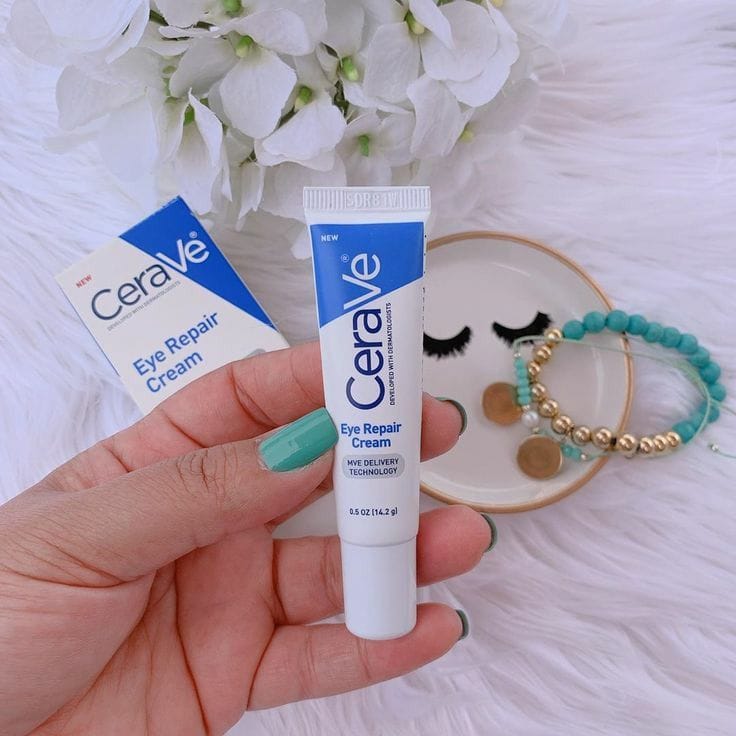
CeraVe Eye Repair Cream
A strong pick if barrier repair and ceramides matter more to you than peptide-driven collagen support. It leans on niacinamide and CeraVe’s signature ceramide complex rather than caffeine. Read our full breakdown in the CeraVe Eye Repair Cream review.
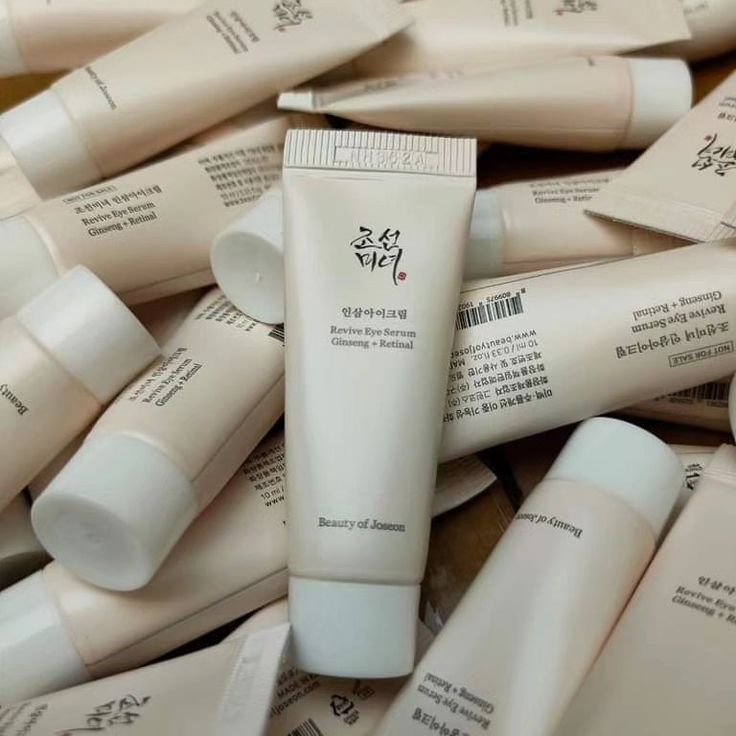
Beauty of Joseon Eye Cream
A K-beauty alternative that takes a more traditional hydration-first approach, useful if your priority is softness and plumpness over active de-puffing. See our full Beauty of Joseon Eye Cream review for the ingredient breakdown.
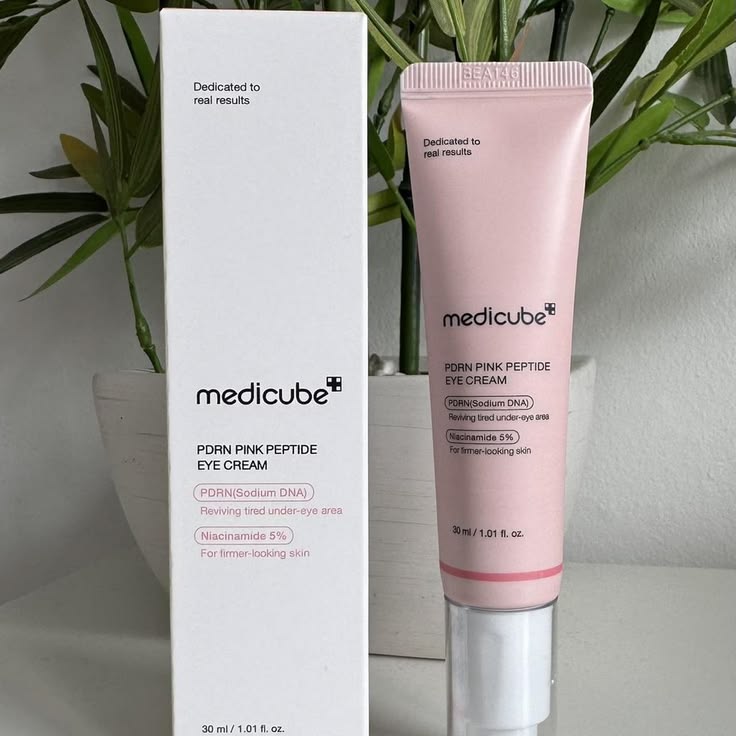
Medicube PDRN Eye Cream
If you want to go further into regenerative actives, this formula uses PDRN instead of peptides, targeting skin repair through a different mechanism entirely. We cover how it performs in our Medicube PDRN Eye Cream review.
How This Fits Into Your Routine
Eye cream is only one piece of an under-eye routine, and pairing it correctly matters more than most people realize. If you’re already using retinol elsewhere in your routine and want to understand how it stacks up against peptide-based approaches like Matrixyl 3000, our Peptides vs Retinol comparison breaks down which one suits which skin concern.
For anyone building a full routine around sensitive under-eye skin, it’s also worth checking our guide to the best skincare brands for sensitive skin, since eye cream irritation is often a downstream effect of harsher products used earlier in the routine.
FAQ
1. Does The Inkey List Eye Cream actually reduce dark circles?
Based on clinical research behind topical caffeine, yes — provided you maintain realistic expectations. Caffeine acts as a vasoconstrictor to narrow tiny blood vessels under thin under-eye skin, directly targeting hyperpigmentation and fluid buildup over time.
However, because this formula features a balanced 0.3% caffeine concentration, results build progressively rather than overnight. Consistent twice-daily application over several weeks is required to achieve noticeable, long-term brightening effects.
2. What is The Inkey List eye cream price, and is it worth buying?
Retailing between $12 and $14 (£10–£12 / €11–€13) for a 15ml tube, it stands out as one of the most cost-effective active-ingredient eye treatments available on the market.
Considering it pairs active caffeine with Matrixyl 3000 peptides, the formulation delivers a price-to-performance ratio rarely matched in budget skincare. It is undeniably worth buying if you want clinically proven ingredients without high-end markup.
3. Is The Inkey List Brighten Eye Cream better than the Caffeine Eye Cream?
Neither is objectively superior; rather, they target entirely different skin concerns. The Brighten Eye Cream utilizes Brightenyl and micro-reflectors to enhance surface tone and instant luminosity.
In contrast, the flagship Caffeine Eye Cream focuses on microcirculation, fluid drainage, and persistent puffiness. Selecting the ideal version depends entirely on whether your main concern is dullness or physical swelling and shadow fatigue.
4. Can I use this eye cream with retinol or active serums?
Yes, you can safely integrate it with retinol, provided you stagger your application routine properly. We recommend applying the Caffeine Eye Cream during your morning regimen to combat overnight swelling and awaken tired eyes.
For active retinol treatments, reserve them for your evening routine a few nights per week. Separating your actives minimizes potential skin barrier irritation while optimizing collagen stimulation during sleep.
5. How long does it take to see visible results from this eye cream?
Immediate de-puffing effects often appear within 10 to 15 minutes of morning application due to caffeine’s swift vasoconstrictive action and cooling delivery tip.
For structural improvements, noticeable reductions in dark circles typically manifest between 2 to 4 weeks of consistent use. Fine line smoothing via Matrixyl 3000 peptides generally requires 6 to 8 weeks, aligning with natural cellular renewal cycles.
6. Can this eye cream be used on sensitive eyes or under makeup?
Yes, the lightweight, serum-fluid texture absorbs rapidly into delicate periorbital skin without leaving an oily or heavy residue behind. This makes it an excellent, non-pilling primer base prior to concealer application.
Furthermore, its fragrance-free formulation minimizes the risk of watering or irritation. However, users with hyper-reactive skin should still perform a 24-hour patch test on the inner arm before applying near the eye area.
7. How should I apply The Inkey List Eye Cream for maximum absorption?
Dispense a small, pine-nut-sized droplet onto your ring finger, which naturally applies the lightest pressure to avoid tearing delicate skin tissues.
Gently tap—never drag or rub—the cream along the orbital bone, moving from the inner eye outward toward the temple. Allow 60 seconds for complete absorption before layering moisturizer or sunscreen over top.
Final Verdict
The Inkey List Caffeine Eye Cream earns its reputation. It’s not reinventing eye cream formulation, but it’s using two genuinely researched ingredients — caffeine and Matrixyl 3000 — at a price point where most brands cut corners. For anyone dealing with everyday puffiness and early fine lines, this is one of the rare budget products where the science and the marketing actually line up.