La Roche Posay Cicaplast vs Avene Cicalfate: Winter Winner
You know the feeling. You wash your face, and by the time you’ve dried your hands, your cheeks already feel tight. The heating is on, the wind outside is sharp, and your usual moisturizer suddenly isn’t enough.
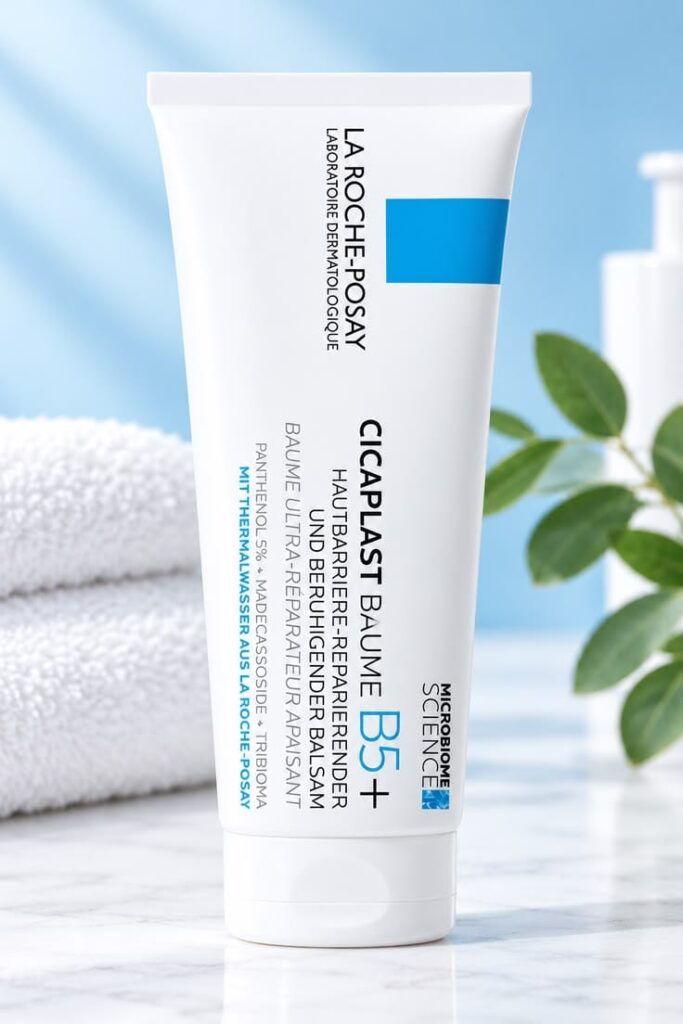
That’s usually when two small French pharmacy tubes enter the conversation. La Roche-Posay Cicaplast vs Avene Cicalfate is one of the most common barrier-cream debates in skincare, and for good reason. Both are fragrance-free, both are reasonably priced, and both are sold as the thing you reach for when skin is dry, irritated, or just worn out.
V/S
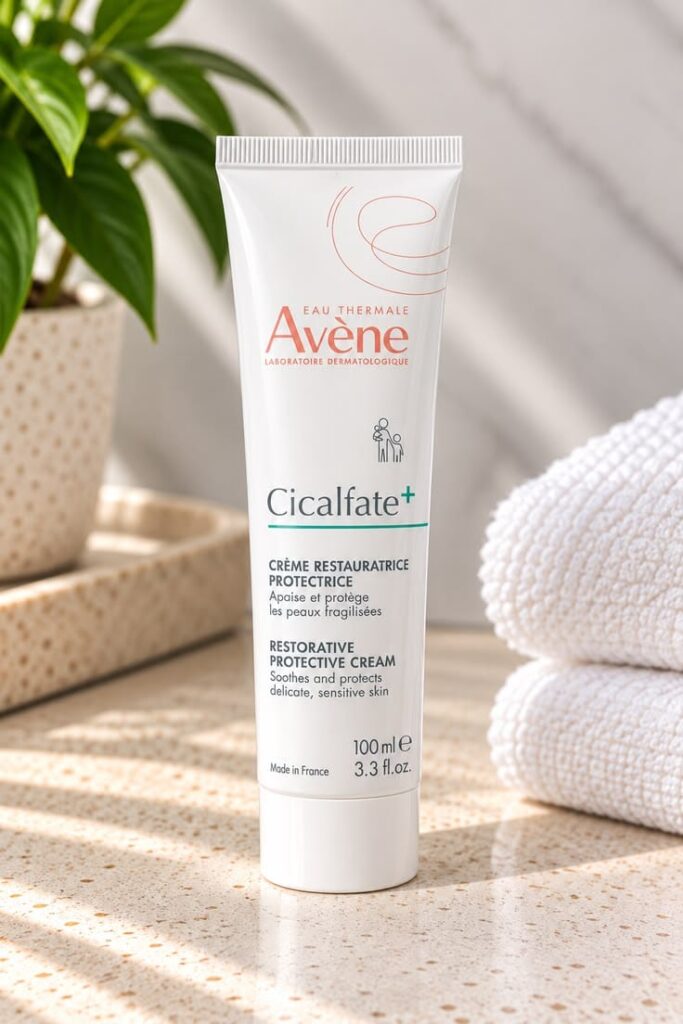
The catch is that they’re built differently. One leans on 5% panthenol and madecassoside. The other leans on a postbiotic, copper-zinc sulfates, and a thicker, wax-rich base. Same job, different tools.
In this guide, we compare the two formulas ingredient by ingredient and look at the research behind the key actives. We also break down Cicaplast Baume B5 vs. Cicalfate+ on texture, price, and skin type. Face and dry skin get their own sections, because the answer changes depending on where you apply the balm.
By the end, you’ll know which tube belongs in your winter routine, and which one you can leave on the shelf.
Quick Summary
- Choose Cicaplast Baume B5+ if you want an everyday balm for face, hands, and lips that spreads easily and has a long track record of research behind its main active, panthenol.
- Choose Avène Cicalfate+ if your skin is cracked, raw, or very compromised and you want a thicker, more protective layer, mostly at night.
- For the face, Cicaplast is the easier daily pick for most people. Cicalfate+ works better as a spot or overnight treatment.
- For very dry skin, the two work well together: Cicaplast during the day, Cicalfate+ on the worst patches before bed.
- Both are fragrance-free, and both carry the National Eczema Association seal of acceptance according to the brands.
- Price is close. Most 40 ml tubes cost somewhere between the mid-teens and about twenty dollars, depending on the retailer.
- Our overall call: Cicaplast wins for most faces this winter, while Cicalfate+ wins for the most damaged skin.
Affiliate Disclosure and Editorial Team
This article was researched and reviewed by the Review Dermatica editorial team, with formulation and ingredient-safety input from our co-founder, whose background is in cosmetic formulation and clinical skincare research.
Review Dermatica is a reader-supported site. If you buy through links on this page, we may earn a commission at no extra cost to you. It never changes our verdicts.
This comparison is based on formulation analysis, published research, and verified ingredient lists, not on a laboratory test. It is general information, not medical advice.
Why Winter Is So Hard on Your Skin Barrier
Your skin barrier is the outermost layer of your skin. It’s a mix of flattened cells and fats that keeps water in and irritants out. When humidity drops, that layer loses water faster than it can replace it.
The American Academy of Dermatology notes that cold air outside, hot air inside, and dry air everywhere can disrupt the skin’s barrier in winter. Their practical advice is simple. Apply moisturizer right after washing to seal in existing moisture, and choose an ointment or cream over a lotion because those formats are more effective and less irritating. aaduspharmacist
That’s the whole reason barrier balms exist. They aren’t fancy serums. They’re a protective layer you add so water stays where it belongs.
A few habits make any balm work better:
- Keep showers short and lukewarm, and pat your skin dry instead of rubbing. The AAD says rubbing can irritate extremely dry skin, and its dry skin guide walks through bathing tips. aad
- Cut back on strong actives. Many dermatologists suggest minimizing glycolic acid, salicylic acid, and retinol in winter. If you’ve been peeling, our guide to the best at-home chemical peels explains how to protect your barrier afterwards. aad
- Look at your water. Hard water can leave skin feeling tight, and our comparison of a shower filter vs water softener shows what actually helps.
- Don’t forget your lips. A night mask like the one in our Laneige Lip Sleeping Mask review covers what balms can’t always reach.
If your base moisturizer isn’t cutting it, you can also check our list of the best moisturizers for dehydrated skin before adding a balm on top.
Meet the Two Contenders
La Roche-Posay Cicaplast Baume B5+
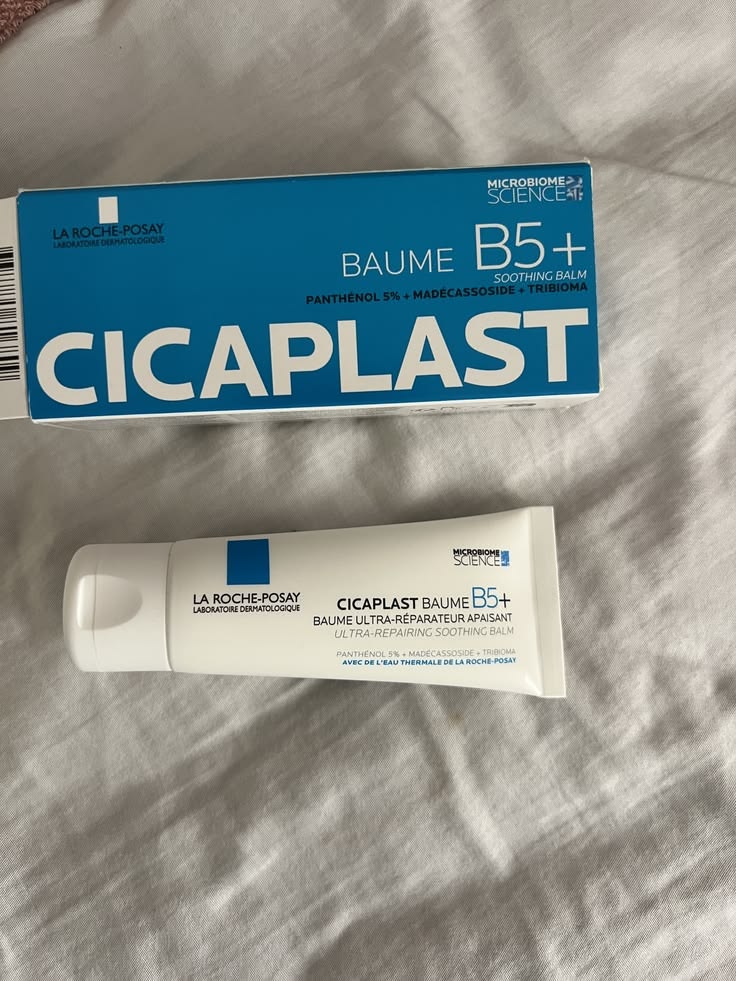
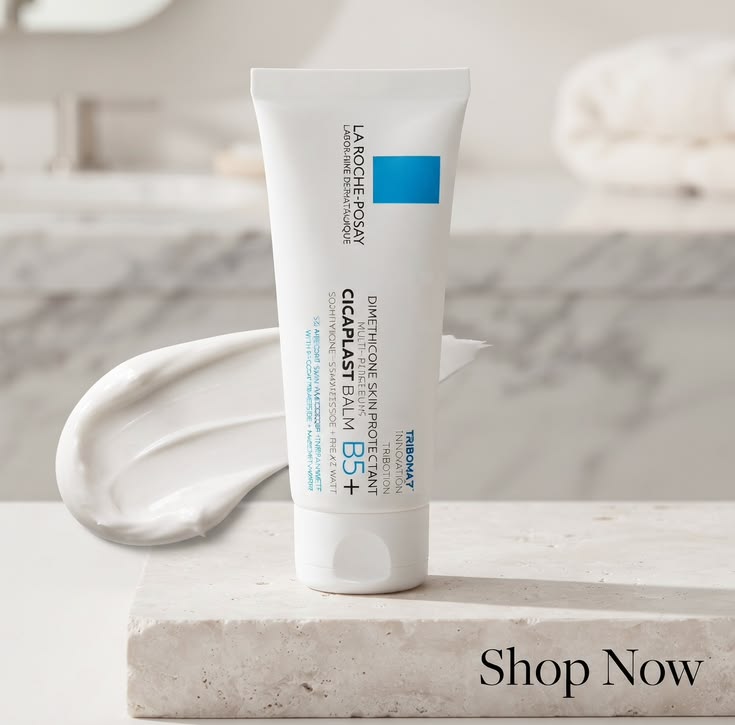
Cicaplast Baume B5+ is La Roche-Posay’s multi-purpose balm. It combines 5% panthenol, madecassoside, a copper-zinc-manganese complex, and a prebiotic complex called Tribioma. La Roche-Posay
The base is built from dimethicone, hydrogenated polyisobutene, glycerin, and shea butter. That gives it a smooth, slippery feel on skin rather than a waxy one.
La Roche-Posay says it’s accepted by the National Eczema Association and safe for babies one week and older. If you’re confused about the older Baume B5 and the newer B5+, our dedicated Cicaplast Baume B5 vs B5+ breakdown explains what changed. laroche-posay
Avène Cicalfate+ Restorative Protective Cream
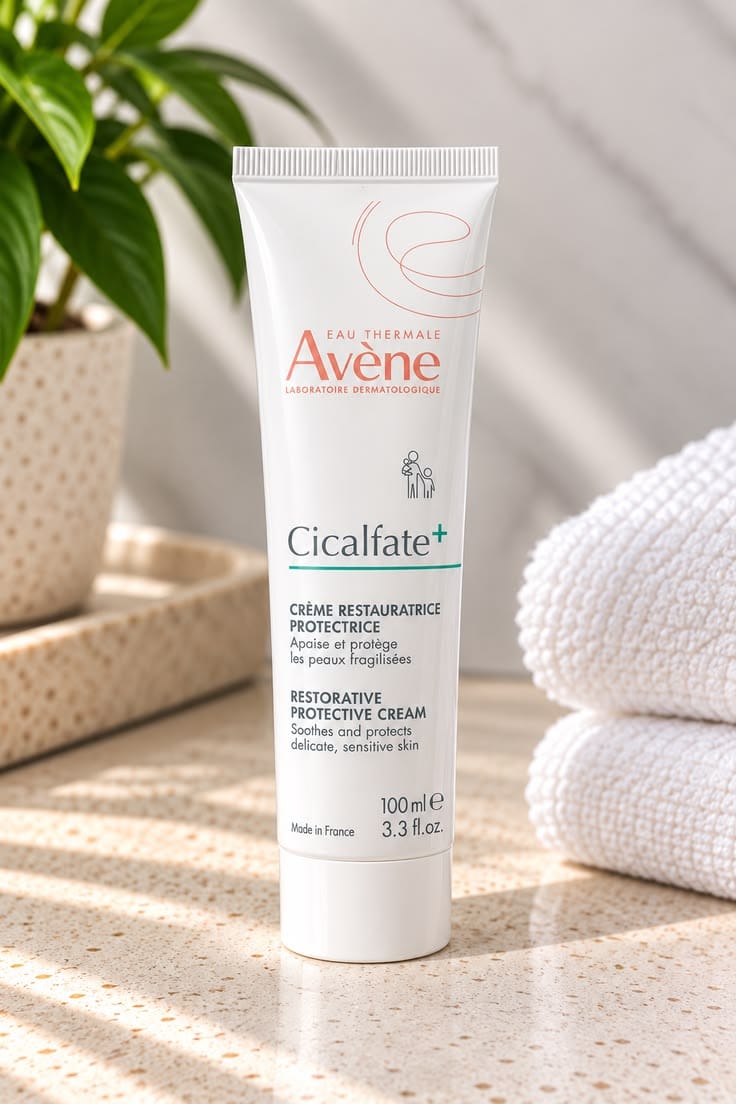
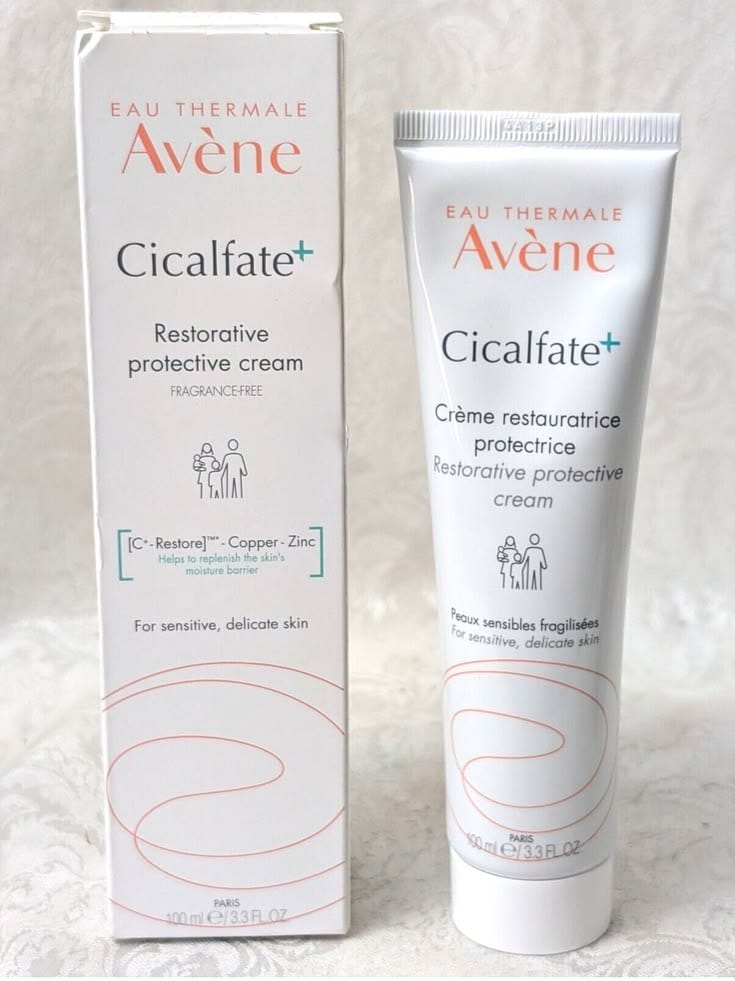
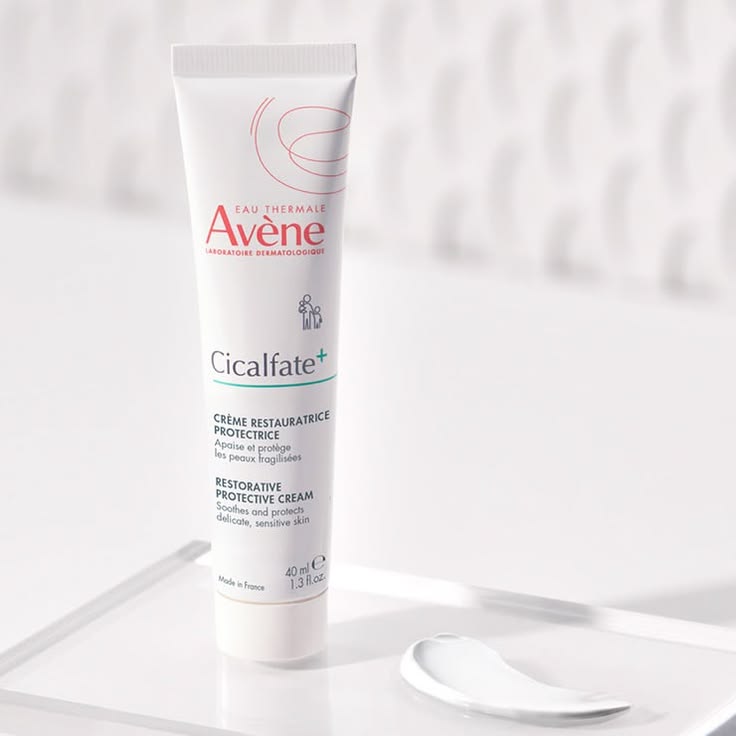
Cicalfate+ takes a different route. Its key ingredients are C+ Restore, a postbiotic ingredient, a copper-zinc sulfate complex, and Avène Thermal Spring Water. avenederm
The base is where it differs most. The ingredient list includes mineral oil, hydrogenated vegetable oil, zinc oxide, beeswax, and microcrystalline wax, which is why this cream feels more like a protective film than a lotion.
It’s formulated without fragrance, parabens, and alcohol, and the retailer listing says it’s accepted by the National Eczema Association. You can read the brand’s own description on the Avène product page. ulta
Ingredient Breakdown: How Each Formula Actually Works
This is where the La Roche-Posay Cicaplast vs Avène Cicalfate question gets interesting. The products look alike on a shelf. Inside the tube, they’re doing different things.
Panthenol: Cicaplast’s Main Active
Panthenol is the alcohol form of vitamin B5. It’s one of the better-studied ingredients in barrier care.
In a randomized, double-blind, placebo-controlled trial, seven days of dexpanthenol treatment improved stratum corneum hydration and reduced transepidermal water loss compared with the vehicle. You can read the abstract on PubMed. nih
Another review points out that a 5% dexpanthenol cream enhanced barrier repair and hydration in experimentally damaged human skin when applied twice daily for seven days. That matches the 5% concentration La Roche-Posay uses. A broader PubMed review of topical dexpanthenol adds that it acts like a moisturizer and helps maintain softness and elasticity. tandfonline
The honest caveat is that these trials tested panthenol in specific research creams. They don’t prove that this exact product performs the same way. They do show the ingredient is well supported.
Cicalfate+ doesn’t list panthenol. That’s the biggest gap between the two formulas.
Madecassoside: The “Cica” in Cicaplast
Madecassoside comes from Centella asiatica, often called cica. A PMC review on Centella asiatica in wound healing describes how the plant’s active compounds influence collagen synthesis, inflammation, and antioxidant protection.
An MDPI review of madecassoside lists wound-healing, scar-healing, and anti-inflammatory properties, mostly from lab and animal work.
Here’s the part marketing rarely mentions. A recent lab study notes that madecassoside has long been used in cosmetics with doubtful effects and tests its wound-healing role in skin cells. The PubMed abstract is worth a read. So madecassoside is promising and plausible, but its evidence in finished creams is thinner than panthenol’s. nih
Zinc, Copper and Manganese: A Shared Strategy
Both products use trace minerals, and that’s the real overlap in this comparison.
Cicaplast uses zinc, copper, and manganese gluconates. Cicalfate+ uses copper sulfate and zinc sulfate, plus zinc oxide in the base.
La Roche-Posay presents its copper-zinc-manganese complex as part of optimal skin barrier recovery. Avène frames its copper-zinc sulfates as supporting a healthy skin environment. These are brand claims, and independent human trials on the exact complexes are limited. Treat them as a supporting feature rather than the reason to buy. laroche-posay-me
Zinc oxide is the other difference. It’s a classic skin protectant, which partly explains Cicalfate+’s thicker feel. Don’t confuse it with sun protection, though, because this cream isn’t a sunscreen.
Postbiotic vs Prebiotic: C+ Restore and Tribioma
Both brands market microbiome-friendly technology, and the wording is easy to mix up.
Cicalfate+ uses C+ Restore, a postbiotic ingredient derived from Avène Thermal Spring Water. Cicaplast B5+ uses Tribioma, a prebiotic complex, which aims to feed helpful skin bacteria instead of supplying their by-products. avene
Both ideas are interesting. Neither is a proven reason to choose one tube over the other, because independent comparison trials are scarce.
The Occlusive Base: Where Texture Comes From
The AAD lists glycerin, lanolin, mineral oil, petrolatum, and shea butter among ingredients that work well for dry skin. You can see that list on the AAD winter skin survival kit page. aad
Cicaplast uses glycerin, shea butter, and dimethicone. Cicalfate+ uses glycerin, mineral oil, hydrogenated vegetable oil, beeswax, and wax. Both cover the bases dermatologists recommend, with different textures as the result.
Ingredients Worth Checking Before You Buy
- Cicalfate+ contains propylene glycol and beeswax, which a small number of sensitive people react to.
- Cicaplast contains shea butter and silicones, which some people with acne-prone skin find heavy.
- Neither contains fragrance, but fragrance-free doesn’t mean allergy-proof. Patch test first.
Cicaplast Baume B5 vs Cicalfate+: Side-by-Side Comparison
Here’s the quick view for anyone scanning:
Core actives: Cicaplast uses 5% panthenol, madecassoside, and Cu-Zn-Mn gluconates. Cicalfate+ uses C+ Restore, Cu-Zn sulfates, and thermal spring water.
Base: Cicaplast is silicone- and shea-based. Cicalfate+ is mineral oil, wax, and zinc oxide-based.
Texture: Cicaplast is a smooth balm. Cicalfate+ is thicker and more film-forming.
Fragrance: Neither has any.
Eczema seal: Both are listed as National Eczema Association accepted by their brands.
Best use: Cicaplast works as a daily balm for face, hands, and lips. Cicalfate+ works as an overnight or spot protectant.
Typical price: Both sit in the same range for a 40 ml tube.
If you’re comparing Cicaplast Baume B5 vs Cicalfate+ purely on ingredients, Cicaplast has the stronger supporting science. On pure protection, Cicalfate+ has the heavier base.
Texture and Feel: What Reviewers Say
Reviewers don’t fully agree on texture, which is worth saying openly.
One comparison describes Cicalfate as a rich, occlusive, thick cream that leaves a slightly greasy feel, better suited to a night routine. Another says Cicalfate+ has a slightly thicker, more paste-like texture because of its zinc oxide and copper sulfate content. gopickyvicnic
A few sources claim the opposite, calling Cicaplast the thicker balm. The formulas lean toward the first view. Zinc oxide, mineral oil, and wax add up to a heavier film than dimethicone and glycerin do.
Cicaplast isn’t light either. Aggregated Skinsort review tags show about half of reviewers describing Cicaplast B5+ as heavy. So think of Cicaplast as a rich balm and Cicalfate+ as a richer one. skinsort
In practice, that means Cicaplast usually works under a night routine or alone in the morning, while Cicalfate+ is usually kept for after sunset.
Cicaplast vs Cicalfate for Face
This is the section most readers searching cicaplast vs cicalfate for face want.
For daily face use, Cicaplast is the easier pick. The silicone-based glide makes it simpler to spread over cheeks, around the nose, and across the jaw, and it’s less likely to feel like a mask. It also suits layering. Apply a hydrating serum first, then a thin layer of Cicaplast to seal everything in.
If you’re building out that routine, our comparison of hyaluronic acid vs glycerin explains which humectant suits your skin before you lock it in.
Cicalfate+ works on the face too, but with limits:
- It’s best at night or on isolated dry, red, or flaky patches.
- Use a thin layer only. A thick coat can feel like a film and can trap sweat or oil.
- If you’re prone to clogged pores, test it on a small area for several nights first.
For oily or breakout-prone faces, neither is an ideal full-face moisturizer. Our list of the best non-comedogenic moisturizers offers lighter options, and you can keep a balm only for the driest areas.
Mature skin: Dryness shows up as fine lines in winter. The AAD says people aged fifty and older should be using a cream-based moisturizer. Our guide to the best skincare for mature skin covers building the rest of that routine. aad
Cicaplast vs Cicalfate for Dry Skin
Dry skin is where this La Roche-Posay Cicaplast vs Avene Cicalfate comparison matters most, because the stakes are higher than a little tightness. Cracked or flaky skin is damaged skin. The AAD says plainly that dry skin is damaged skin, and that a cream or ointment should be applied right after bathing. aad
Here’s how the two compare for Cicaplast vs Cicalfate for dry skin:
- Mild to moderate dryness: Cicaplast is usually enough. Panthenol and glycerin handle hydration, and the balm base holds it in.
- Severe dryness, cracking, or windburn: Cicalfate+ gives a heavier protective film, which helps when skin needs time to recover.
- Dry hands and cuticles: Both work. Cicaplast spreads more easily during the day; Cicalfate+ works under cotton gloves overnight.
- Lips and corners of the mouth: Cicaplast is the easier, less greasy option.
- Dry skin on the body: Both work, but the 100 ml sizes are better value.
For very dry skin, you can also try layering. Use Cicaplast through the day and Cicalfate+ on the worst patches at night.
If your dryness comes with persistent itching, oozing, or patches that don’t improve after a couple of weeks, stop experimenting and see a dermatologist. Barrier balms support healthy skin, but they don’t treat medical conditions.
For a thicker traditional option, see our look at a beef tallow moisturizer. If you prefer a simple ceramide cream, our CeraVe Moisturizing Cream review is a solid starting point.
Which Skin Type Should Pick Which?
Sensitive and Redness-Prone Skin
Both are fragrance-free and carry eczema-friendly seals, so either can work. Start with Cicaplast because the panthenol-led formula has the longer research history. If you already know you tolerate zinc oxide and mineral oil, Cicalfate+ is fine too. Our guide to the best products for sensitive skin and our list of the best skincare brands for sensitive skin cover the rest of a gentle routine.
Combination Skin
Use Cicaplast only on the dry zones, usually cheeks and around the mouth. Leave the T-zone alone unless it feels tight.
Oily and Acne-Prone Skin
Be cautious with both. Rich balms can feel congesting on oily skin. If you want to try one, use a small amount on dry patches and watch for new bumps over a week or two.
Very Dry or Eczema-Prone Skin
Cicalfate+ gives the heavier protection, while Cicaplast is the lighter daily layer. Because both are listed as accepted by the National Eczema Association, they suit this group on paper. Persistent eczema still needs medical advice.
Skin After Active Treatments
If you use retinoids, acids or peels, winter is the time to pause or reduce them. For recovery, our comparison of peptides vs retinol can help you decide what to restart and when. A fragrance-free balm in the meantime is a sensible choice. After clinical procedures, follow your dermatologist’s instructions instead of ours.
How to Use a Barrier Balm in a Winter Routine
Whichever tube you pick, the method matters as much as the product.
- Wash gently with lukewarm water and a mild cleanser.
- Pat your skin dry. Leave it slightly damp.
- Apply a hydrating serum or essence if you use one.
- Apply your normal moisturizer if you need it, or go straight to the balm.
- Smooth on a thin layer of balm. A pea-sized amount covers the face.
- In the morning, finish with sunscreen. Winter UV still reaches your skin.
Two tips most guides skip:
- Don’t over-apply. More balm doesn’t mean more repair. A thick layer can feel sticky and trap debris.
- Pair carefully with newer actives. If you use peptide or PDRN products, apply them first and the balm last. Our comparison of Rejuran Turnover Ampoule vs Anua PDRN Cream and our Anua PDRN Hyaluronic Acid 100 review show how to layer them without overloading skin.
A lighter option for the daytime is an oat-based gel. Our look at the Aveeno Oat Gel Moisturizer ingredients shows how it fits underneath a balm.
Price and Value
Prices change by country, retailer, and size, so use the button for today’s number. Still, the pattern is consistent. One comparison puts Cicaplast at about fifteen dollars and Cicalfate at about eighteen on average, with both sold in 40 ml and 100 ml sizes. Another retailer lists the 40 ml tubes at roughly sixteen dollars for Cicaplast and fifteen for Cicalfate+.
Who Should Skip Either Product
- If you have a known allergy to beeswax, propylene glycol, shea butter, or zinc, check the ingredient list first.
- If your skin is infected, weeping, or has open wounds, don’t treat it with a cosmetic balm alone. See a doctor.
- If you’re buying for a newborn, check with a pediatrician. The brands give different age guidance.
- If you’re acne-prone and your face breaks out under rich creams, a full-face balm isn’t a good idea.
Final Verdict: Which Barrier Balm Wins Winter 2026-27?
So where does the La Roche-Posay Cicaplast vs Avene Cicalfate debate land?
For most people, Cicaplast Baume B5+ is the better everyday winter balm. It has stronger research behind its lead active, it spreads more comfortably over the face, and it works across face, hands, and lips. If you only want one tube, this is the one we’d pick.
Avène Cicalfate+ wins for skin that’s really struggling. If you’re dealing with cracked, raw, or windburned patches, its thicker mineral-oil-and-zinc base gives a heavier protective layer, and it’s best at night.
If your budget allows, using both isn’t excessive. Cicaplast in the morning, Cicalfate+ on trouble spots before bed, and a regular moisturizer in between.
Whichever you choose, remember that the balm is only half the job. Keep showers short, avoid harsh actives, pat your skin dry, and moisturize right away. That’s what protects your skin through the coldest months.
Frequently Asked Questions
Is Cicaplast or Cicalfate better for dry skin?
For mild to moderate dryness, Cicaplast is usually enough. For cracked or very damaged skin, Cicalfate+ gives a heavier protective film. Many people with severe dryness use both.
Can I use Cicaplast and Cicalfate together?
Yes. A common approach is Cicaplast through the day and Cicalfate+ on the driest patches at night. Apply only a thin layer of each.
Do Cicaplast and Cicalfate contain fragrance?
Neither lists fragrance. Still, patch test any new product on a small area for a few days.
Can they cause breakouts?
Any rich balm can feel congesting on oily or acne-prone skin. Use a small amount on dry areas only, and stop if you notice new bumps.
Are they safe for babies?
La Roche-Posay says Cicaplast B5+ is suitable for babies older than one week, while Avène describes Cicalfate+ as suitable for the whole family. Always check with a pediatrician for newborns.