
Rejuran Turnover Ampoule vs Anua PDRN Cream: Best Choice 2026
If you’ve spent any time in Korean skincare circles this year, you’ve seen the letters “PDRN” everywhere. It’s the ingredient dermatology clinics have quietly used for over a decade, and now it’s sitting on drugstore and Sephora shelves in serum and cream form, minus the needle. Two products keep coming up in every comparison thread: the Rejuran Turnover Ampoule and the Anua PDRN Hyaluronic Acid 100 Moisturizing Cream.
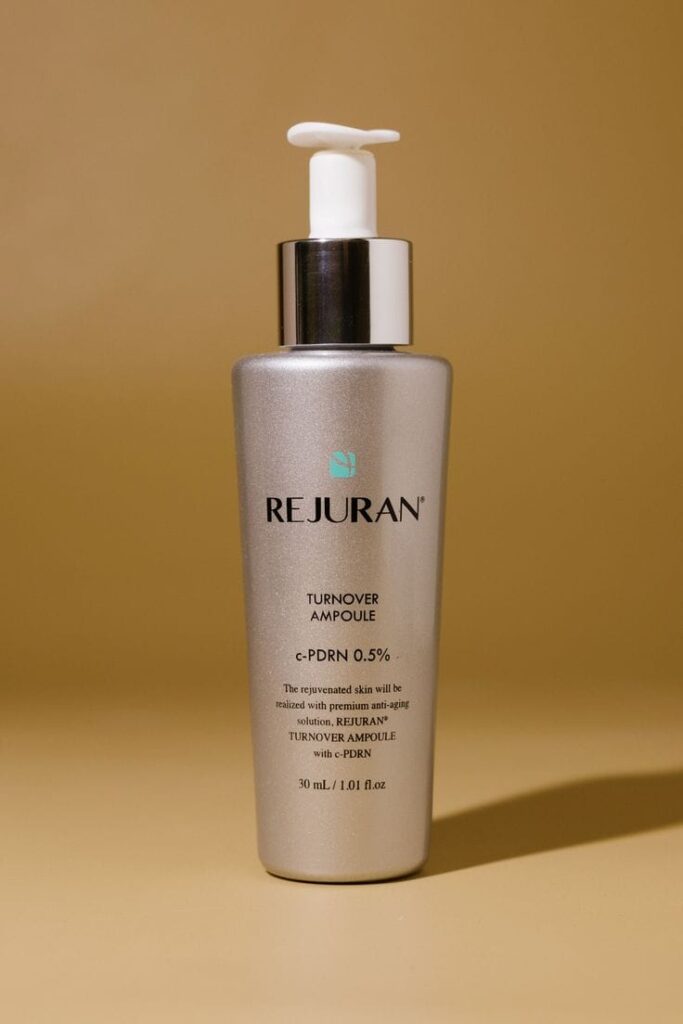
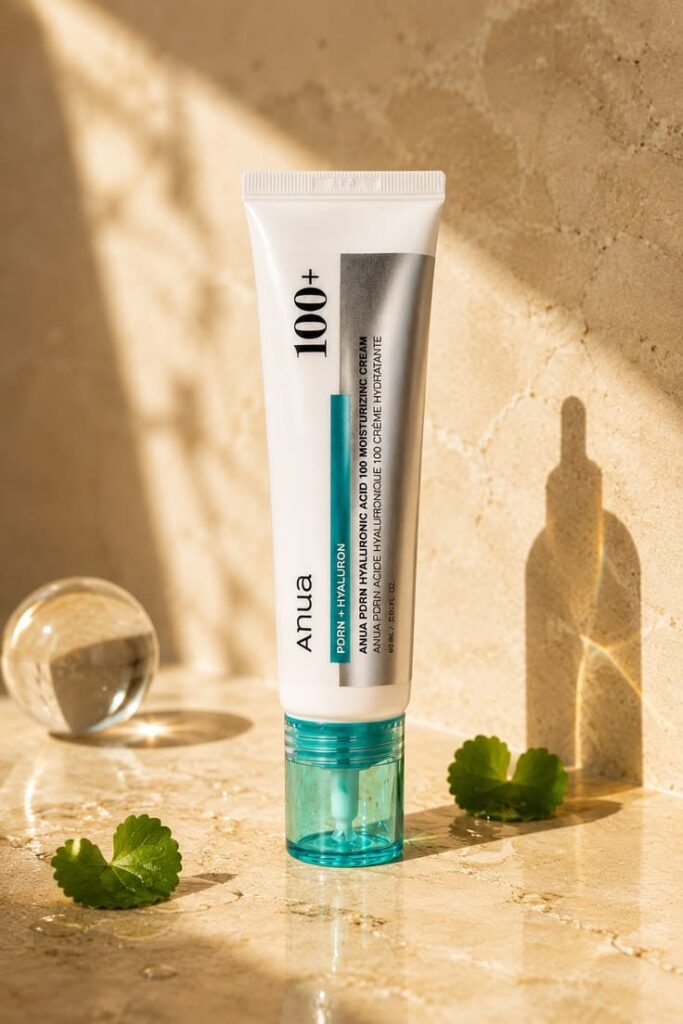
One is a clinic-adjacent, higher-concentration ampoule built like a treatment. The other is a budget-friendly, everyday moisturizer built around a gentler PDRN dose and a heavy hydration complex.
This Rejuran Turnover Ampoule vs Anua PDRN Cream comparison breaks down the actual formulas, the clinical science behind PDRN, real ingredient concentrations where they’re disclosed, and which product fits which skin goal, so you’re not guessing with your money. We pulled ingredient lists directly from brand and retailer listings, cross-referenced peer-reviewed PDRN research, and built this out the same way we approach every side-by-side on this site.
Affiliate Disclosure
Review Dermatica is reader-supported. When you buy through links on this page, we may earn an affiliate commission at no extra cost to you. This does not influence our testing process or our opinions.
Editorial Team
This article was researched and fact-checked by the Review Dermatica editorial team, combining hands-on product testing with a review of peer-reviewed dermatological literature.
Quick Verdict at a Glance
Choose Rejuran Turnover Ampoule If:
- You need a targeted, higher-concentration PDRN treatment.
- Your main focus is repairing acne scars, post-procedure recovery, or fixing uneven texture and pigmentation.
- You want intensive cellular-level repair over basic daily moisture.
Choose Anua PDRN Hyaluronic Acid 100 Cream If:
- You want an everyday moisturizing cream with steady hydration and gentle skin barrier support.
- You are budget-conscious and looking for a cost-effective option.
- You have sensitive skin and prefer a lower risk of potential sensitivity or irritation.
Pro Tip (The Hybrid Approach):
You don’t necessarily have to choose just one—many users combine both in the same routine (using the Rejuran Ampoule as a targeted treatment serum, followed by the Anua Cream to lock in moisture).
What Is PDRN, and Why Is Everyone Talking About It?
PDRN stands for polydeoxyribonucleotide, a DNA fragment most commonly extracted from salmon or trout milt, then purified into chains ranging roughly from 50 to 2,000 base pairs. In skincare and aesthetic medicine, it works primarily by activating adenosine A2A receptors on skin cells, which triggers a cascade of repair signals: fibroblast proliferation, increased collagen type I synthesis, and improved angiogenesis, the formation of new blood vessels that feed damaged or aging tissue.
This isn’t influencer science. A review of 25 years of PubMed literature on the ingredient found that PDRN improves wound healing by promoting cell migration and growth, boosting angiogenesis, and reducing inflammation across in vitro, in vivo, and clinical studies. Separate mechanistic research found that PDRN significantly increases collagen synthesis by influencing COL1A1 gene expression, while also activating ERK, AKT, and STAT3 signaling pathways tied to tissue repair. ResearchGate
PDRN’s benefits extend well beyond generic “anti-aging” marketing language, too. A 2025 pharmaceutical sciences review summarized that PDRN’s activation of adenosine A2A receptors supports collagen synthesis, fibroblast growth, angiogenesis, and DNA repair, with clinical evidence pointing to improvements in skin elasticity, wrinkle depth, wound healing, acne scarring, and hyperpigmentation.
It’s also been shown to calm the inflammation tied to visible scar formation: in a rat incisional wound model, PDRN reduced scar formation partly by suppressing the inflammatory protein HMGB-1, which drives excessive scarring when chronically elevated. PDRN has separately demonstrated anti-melanogenesis activity, meaning it may help calm the post-inflammatory pigmentation left behind by breakouts, not just the texture. Juniper Publishers
Injectable PDRN vs Topical PDRN — An Important Distinction
One nuance that gets lost in most skincare marketing: the strongest clinical data on PDRN comes from injectable, clinic-administered formulations—not the serums and creams sold at Amazon or Sephora. Injectables like Rejuran Healer deliver PDRN past the skin’s outer barrier straight into the dermis, boosting collagen remodeling right where fibroblasts live.
Topical products work through the same receptor mechanisms in theory, but penetration through intact skin is naturally more limited. That doesn’t make topical PDRN pointless—surface-level hydration and valuable cell signaling still happen—but dramatic “clinic results in a bottle” claims should be read with a healthy dose of skepticism. If you’re new to the ingredient, exploring our Anua PDRN Hyaluronic Acid 100 deep-dive or Medicube PDRN Eye Cream review will give you a clear baseline for how PDRN performs across different price points.
Rejuran Turnover Ampoule: Full Breakdown
Key Ingredients & c-PDRN Concentration
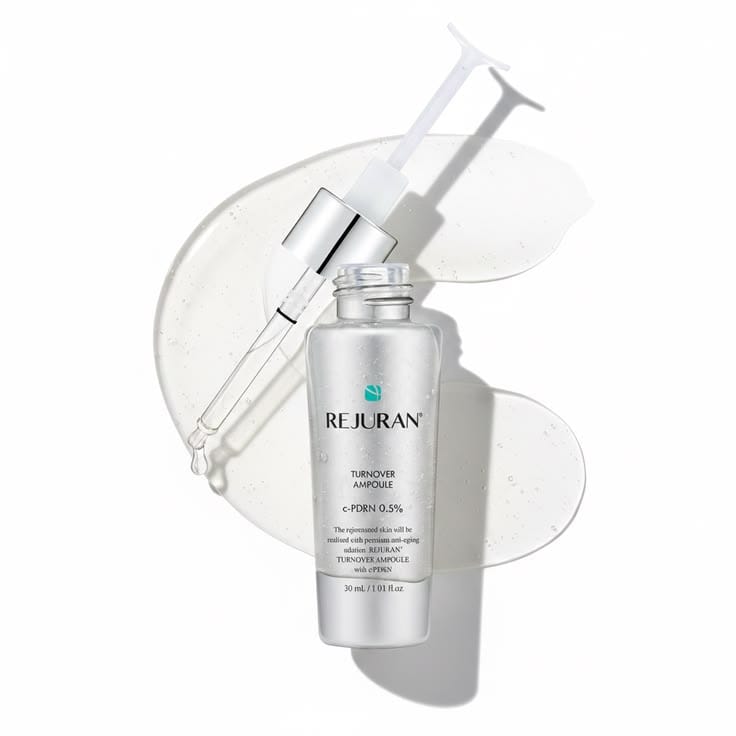
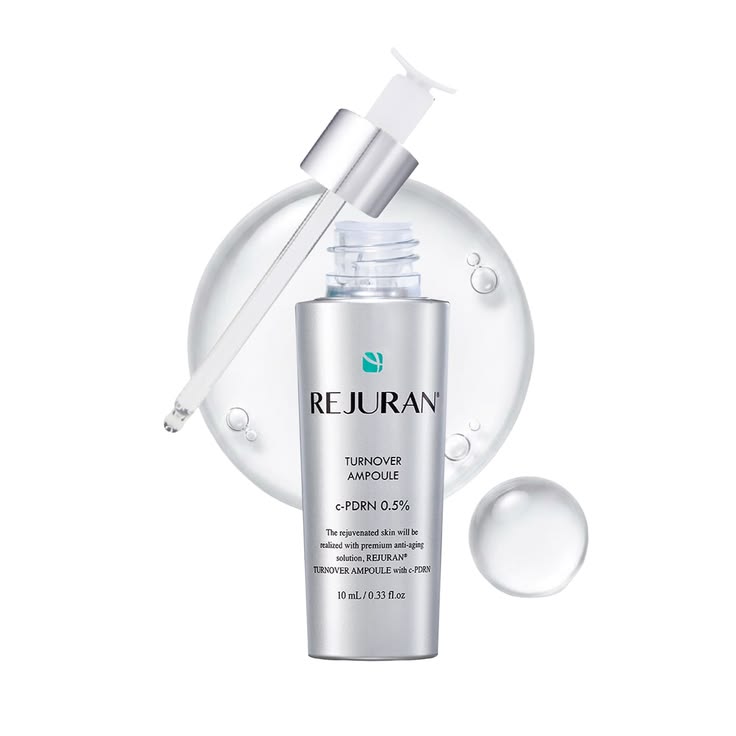
The Rejuran Turnover Ampoule features the brand’s proprietary c-PDRN complex at the highest concentration available in their at-home lineup. While distinct from their clinical injectable, it offers serious skin-repair support by blending PDRN with a well-rounded set of supporting actives:
- Hydration & Barrier: Sodium Hyaluronate combined with Niacinamide to restore moisture and smooth out tone.
- Anti-Aging & Brightening: Adenosine to smooth fine lines, along with Licorice Root Extract for post-acne mark brightening.
- Soothing Antioxidants: Blackberry Leaf and Calendula extracts to calm stressed skin.
- Sensitivity Note: While free of added perfumes, it contains Benzyl Alcohol in its preservative system, which is worth keeping in mind if you have highly reactive skin.
Texture, Packaging & Application
Packaging plays a critical role when handling delicate actives. The ampoule comes with a high-quality glass dropper, which shields the PDRN formula from frequent air exposure and oxidation.
In terms of feel, it has a lightweight water-gel consistency that absorbs rapidly without leaving a sticky film or causing pilling. This fast absorption makes it remarkably easy to layer beneath your daily moisturizer or suncream.
Price & Market Positioning
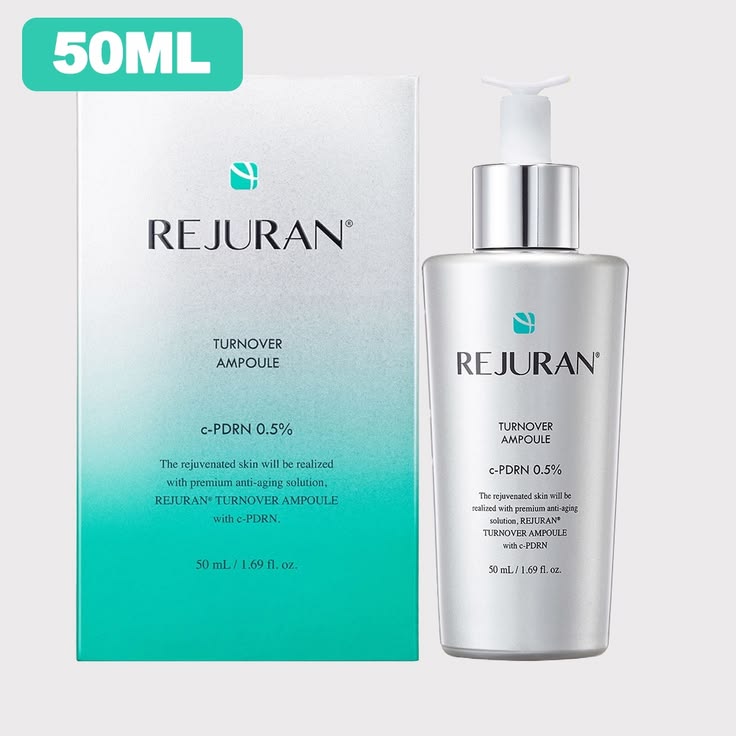
Retailing between $45 and $52 for a 30ml bottle, the Rejuran Turnover Ampoule sits firmly in the mid-to-premium Korean skincare tier. It is priced more like a dermatologist-grade serum than a basic drugstore product, reflecting its specialized concentration.
Pros & Cons
Pros:
- Delivers the highest concentration of c-PDRN in Rejuran’s consumer line.
- Glass dropper packaging protects the formula from air degradation and allows precise dosing.
- Specifically engineered to accelerate healing for visible scarring, texture, and post-procedure skin.
- Backed by a brand with authentic medical heritage in injectable PDRN treatments.
Cons:
- Premium price point relative to the 30ml volume.
- Includes Benzyl Alcohol and active botanical extracts, which may trigger very sensitive skin.
- The 30ml bottle empties quickly if used twice daily over large areas.
Who It’s Best For
This ampoule is best suited for anyone dealing with stubborn post-acne marks (PIE), textural damage, early fine lines, or skin recovering from treatments like microneedling and chemical peels. If your main goal is deep structural repair rather than basic daily moisture, this is the stronger formula to pick.
Anua PDRN Hyaluronic Acid 100 Moisturizing Cream: Full Breakdown
Key Ingredients & Formula Strategy
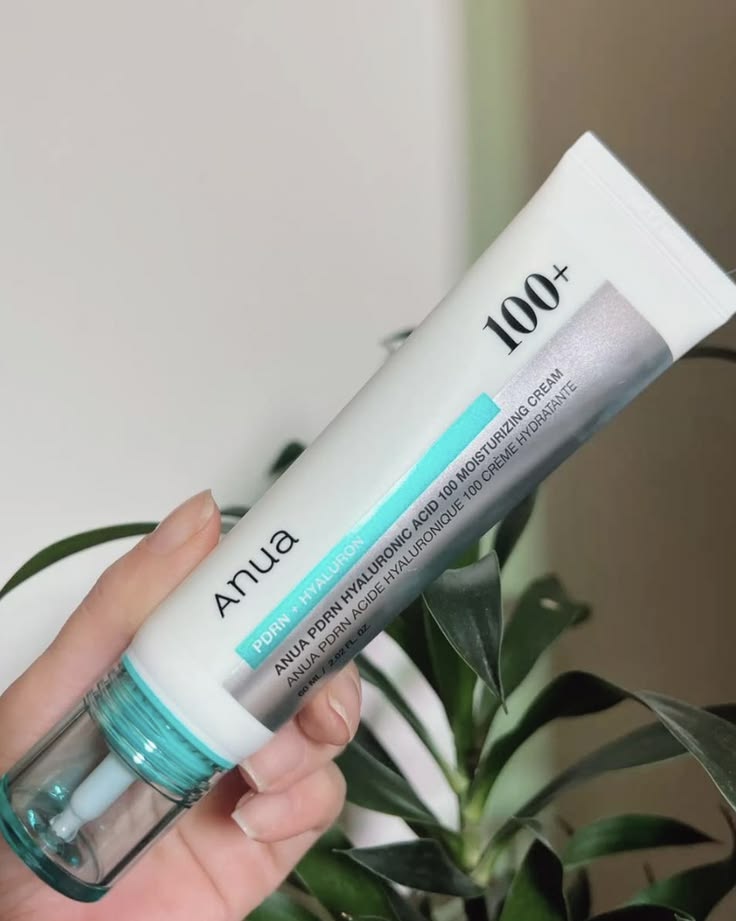
Anua takes a multi-layer hydration approach by pairing low-molecular-weight PDRN (listed as Sodium DNA) with hydrolyzed collagen and a 10-type Hyaluronic Acid complex designed to penetrate multiple skin depths. While Rejuran focuses heavily on concentrated cellular repair, Anua builds a complete barrier-support system around its active core:
- Deep Hydration & Barrier: Squalane and Niacinamide work alongside the multi-weight Hyaluronic Acid to lock in moisture and reinforce skin elasticity.
- Soothing & Calming: Infused with Centella Asiatica derivatives (Madecassoside and Asiaticoside), shifting the formula’s focus toward calming inflammation rather than aggressive scar correction.
- Formula Profile: A gentle, non-comedogenic formulation engineered for daily moisture retention without triggering breakouts.
Texture, Packaging & Application
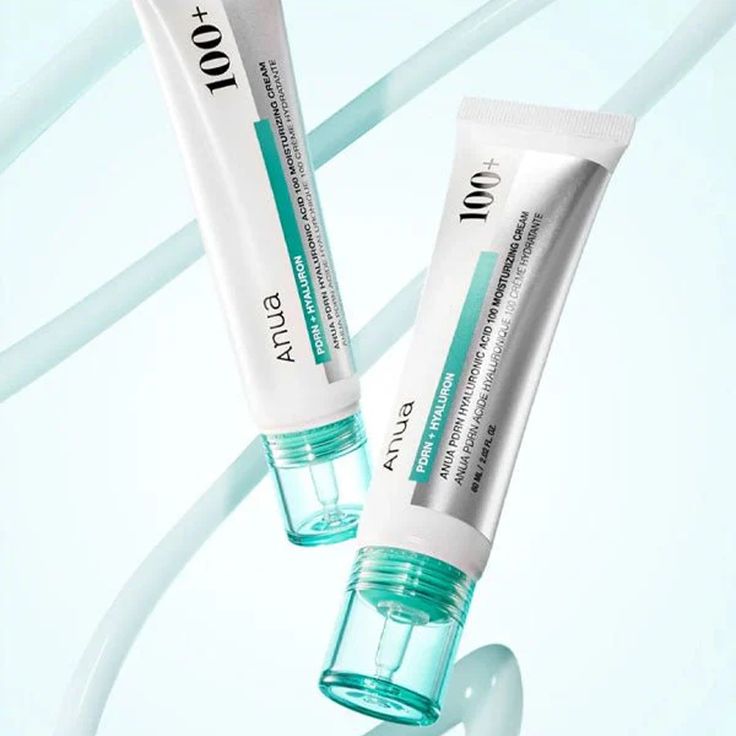
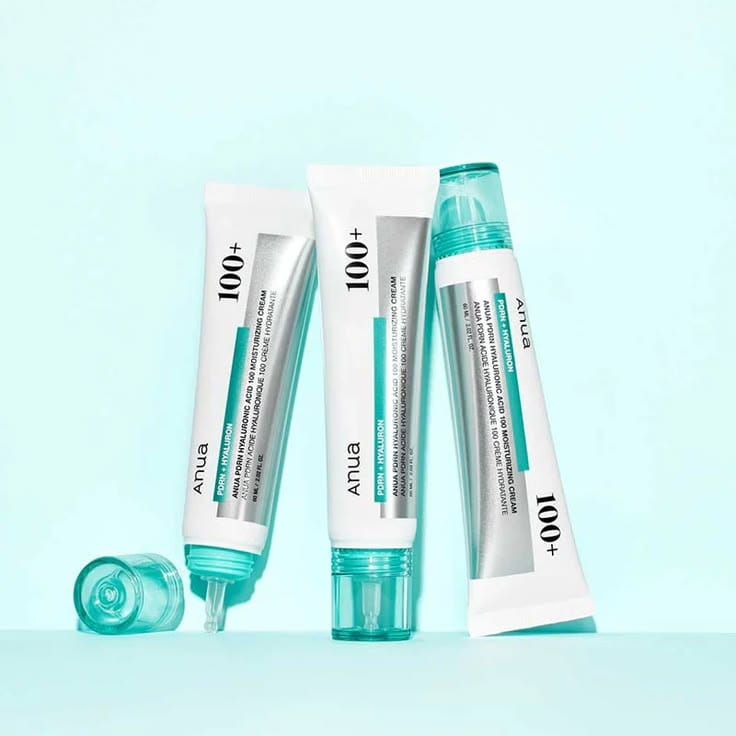
Depending on your region, Anua’s cream comes in a tube or standard jar. The texture is noticeably richer, cushiony, and more substantial than Rejuran’s watery ampoule, feeling much closer to a classic restorative night cream.
Because of its rich, occlusive consistency, it is designed to serve as the final sealing step in your skincare routine—locking in all your lighter treatment serums underneath.
Price & Market Positioning
Priced between $22 and $30 for a generous 60ml container, Anua offers double the volume of Rejuran for nearly half the price. This positions it as an accessible, everyday staple within the K-beauty market rather than a high-cost clinical treatment.
Pros & Cons
Pros:
- Highly budget-friendly entry point for testing topical PDRN.
- Multi-weight Hyaluronic Acid complex delivers sustained, multi-layer hydration.
- Centella derivatives provide strong anti-inflammatory and barrier-calming benefits.
- Non-comedogenic profile with broad availability across Amazon, Ulta, and ASOS.
Cons:
- Lower overall PDRN concentration compared to Rejuran’s ampoule.
- Rich texture may feel overly heavy for oily or combination skin in humid climates.
- Functions primarily as a moisturizer—will not deliver rapid results for deep acne scars or severe texture.
Head-to-Head: Rejuran Turnover Ampoule vs Anua PDRN Cream
Ingredient Concentration & Formulation Philosophy
This is the real core of the Rejuran Turnover Ampoule vs Anua PDRN Cream decision. Rejuran leads with a proprietary, higher-dose c-PDRN complex designed to function like a treatment serum, PDRN first, everything else supporting. Anua’s cream uses PDRN as one strong supporting ingredient alongside hydrolyzed collagen and a multi-type hyaluronic acid complex, functioning more like a hydration-forward daily moisturizer that happens to include PDRN, rather than a PDRN-first treatment product.
Texture & Application Order
The Rejuran ampoule has a lightweight, near water-gel texture applied via dropper in small three-to-five drop doses, meant to be used early in a routine so it can absorb before heavier products go on top. The Anua cream is noticeably richer and more emollient, applied as a final moisturizing step. If you’re building a routine around actives like The Ordinary’s Buffet peptide serum or a retinoid, the Rejuran ampoule layers in earlier alongside or after those actives, while the Anua cream slots in as your last step, similar to how you’d finish an evening routine with something like First Aid Beauty’s Ultra Repair Cream or a richer barrier moisturizer.
Price-to-Value
On a cost-per-milliliter basis, Anua is the clear value pick, and it isn’t close. But value depends entirely on what you’re optimizing for. If you need concentrated PDRN for scar recovery, paying more per mL for Rejuran’s stronger formula isn’t wasted money; it’s the difference between a cosmetic product and a genuine treatment step. If your goal is general hydration and long-term barrier maintenance, Anua delivers comparable everyday benefits at a fraction of the price, in the same spirit as our Hyaluronic Acid vs Glycerin comparison, where the more expensive or trendier ingredient isn’t always the one your skin actually needs.
Skin Type Suitability
For sensitive or reactive skin: Anua’s centella-forward formula and simpler preservative system make it the gentler starting point. If you’re also dealing with redness or a compromised barrier, pairing it with a soothing toner like Round Lab 1025 Dokdo Toner or I’m From Mugwort Essence rounds out a calming routine nicely.
For acne-scarred or textured skin: Rejuran’s higher PDRN concentration and treatment-serum format make it the better tool for visible scarring, especially when paired with a gentle exfoliant like COSRX BHA Blackhead Power Liquid used on separate nights to avoid over-exfoliating alongside an active treatment.
For dry or dehydrated skin: Anua’s ten-type hyaluronic acid complex plus squalane makes it a genuinely strong daily moisturizer, comparable in intent to the products we cover in Neutrogena Hydro Boost vs CeraVe, but with PDRN layered in as a bonus regenerative ingredient.
For combination or oily skin: neither product is ideal as a heavy daily layer, but if choosing one, Rejuran’s lighter ampoule texture is the more breathable option; save Anua’s richer cream for colder months or nighttime use only.
Clinical Backing
Both products rely on the same underlying PDRN science, but as is standard for cosmetic, non-pharmaceutical PDRN products, neither has published independent, product-specific clinical trials on the exact retail formula. The strongest data supporting the ingredient class itself comes from peer-reviewed dermatology and pharmaceutical literature on PDRN broadly, rather than brand-commissioned studies, which is why we’ve linked the primary research above rather than relying on either brand’s marketing claims alone. This is the same standard we hold every ingredient claim to on this site, whether we’re reviewing a serum or breaking down sunscreen SPF 30 vs SPF 50.
Building a Full Routine Around PDRN

Morning Routine
Cleanser, a hydrating toner such as Paula’s Choice Skin Balancing Toner, your PDRN product of choice, a lightweight moisturizer if needed, and always sunscreen. PDRN itself doesn’t increase sun sensitivity the way retinoids or acids do, but new skin cells generated through any regenerative process benefit from consistent SPF protection. Compare your options in our EltaMD UV Clear vs Supergoop Unseen Sunscreen breakdown, or if you prefer mineral formulas, our mineral vs chemical sunscreen guide walks through the difference. Families looking for a gentle mineral option can also check our Thinkbaby Sunscreen review.
Evening Routine
Double cleanse, treatment actives (retinoid or exfoliating acid, on alternating nights), the Rejuran ampoule if you’re using it, then seal everything in with the Anua cream or another rich moisturizer like Kiehl’s Ultra Facial Cream. If your lips need extra overnight recovery too, our Laneige Lip Sleeping Mask review is a good add-on for a full nighttime routine.
Common Mistakes When Using PDRN Products
Layering too many actives at once. PDRN is generally well-tolerated, but introducing it alongside a new retinoid, a strong acid, and a fresh vitamin C serum all in the same week makes it impossible to identify what’s causing irritation if something goes wrong. Introduce one new product at a time.
Expecting injectable-level results from a topical product. As covered above, the clinical data behind PDRN is strongest for clinic-administered formulations. Topical products offer real, measurable benefits, but calibrate your expectations accordingly, especially for deep, established acne scarring, which usually needs professional treatment for meaningful change.
Skipping the patch test. Both products contain multiple potentially sensitizing ingredients, including preservative systems and, in Rejuran’s case, benzyl alcohol. Patch test on your inner arm for 48 hours before applying either to your full face, especially if you have a history of reactive skin.
Use a rich moisturizer like Anua’s cream in a hot, humid climate without adjusting frequency. If your skin feels congested rather than hydrated, scale back to nighttime use only, or switch to a lighter PDRN format for daytime.
Which One Should You Choose?
Choose the Rejuran Turnover Ampoule if you have visible acne scarring, post-procedure skin, or early textural aging and want a higher-concentration, treatment-style PDRN product worth the investment.
Choose the Anua PDRN Hyaluronic Acid 100 Cream if you want daily hydration with a barrier-support ingredient list, you’re working with a tighter budget, or you have sensitive skin that reacts to fragrance-adjacent botanicals.
If your skin barrier is already visibly compromised, with tightness, flaking, or reacting to normally well-tolerated products, it’s worth stabilizing that first before introducing either PDRN product. Our guide on what beta-glucan does for skin and the iUNIK Beta-Glucan Power Moisture Serum review are good starting points for barrier-first routines, as is our overview of non-comedogenic moisturizers if you’re rebuilding a routine from scratch.
Can You Use Both Together?
Yes, and it’s actually a popular approach among dedicated PDRN users. A common routine looks like this: apply the Rejuran Turnover Ampoule after cleansing and toning as a targeted treatment step, let it fully absorb, then seal everything in with the Anua PDRN cream as your final moisturizer. This layers a higher concentration of active PDRN with a richer, barrier-supportive finish, without duplicating the exact same ingredient function twice. Introduce one product at a time, roughly a week apart, so you can identify what’s causing any reaction if your skin doesn’t tolerate something well.
Frequently Asked Questions
Is Rejuran Turnover Ampoule the same as clinic-grade Rejuran Healer injections?
No. The Turnover Ampoule is a topical, over-the-counter product designed for at-home use. Rejuran Healer injections are administered by licensed professionals and use a fundamentally different delivery method, going straight into the dermis, with deeper and more consistent tissue penetration than any topical product can achieve.
Does Anua PDRN Cream work for acne scars?
It can support overall skin texture, hydration, and general barrier resilience, but its PDRN concentration is lower than treatment-focused products like the Rejuran ampoule. For active, visible scar treatment, the ampoule is the more targeted, appropriate option.
Can PDRN products cause purging or breakouts?
PDRN itself isn’t exfoliating and doesn’t accelerate cell turnover the way retinoids do, so it shouldn’t cause classic purging. Reactions are more likely tied to other ingredients in the formula, such as fragrance components, benzyl alcohol, or the richer emollients used in cushion-style creams.
How long until you see results from topical PDRN?
Most users report visible hydration and plumping improvements within 2 to 4 weeks of consistent use, with texture and scarring improvements, where they occur, typically taking 8 to 12 weeks.
Is PDRN safe to use during pregnancy?
There isn’t enough dedicated safety research on topical PDRN specifically during pregnancy to make a confident recommendation either way. As with any active ingredient in this situation, check with your doctor or OB-GYN before adding it to your routine.
Final Verdict
The Rejuran Turnover Ampoule vs Anua PDRN Cream decision really comes down to treatment versus maintenance. Rejuran is the concentrated, scar-focused option worth the higher price if you have a specific concern to correct, and its clinical PDRN heritage gives it real credibility beyond marketing language. Anua is the smarter everyday pick if hydration and gentle barrier support are your priority, and its lower price makes it easy to keep in long-term rotation without a second thought. Either way, you’re getting a genuinely research-backed ingredient rather than another passing K-beauty buzzword, and for a lot of people, the smartest routine uses both, just in different roles.
Clinical Insights Cited From: This article references peer-reviewed research from PubMed Central (NCBI), including studies on PDRN’s mechanisms in wound healing, collagen synthesis, and scar reduction. Ingredient formulation context reviewed by Tahmina Zannat Lamya, Review Dermatica’s co-founder and clinical/formulation research lead. Review Dermatica is not affiliated with Rejuran, Anua, or any cited research institution; this is an independent, editorially reviewed comparison.

5 thoughts on “Rejuran Turnover Ampoule vs Anua PDRN Cream: Best Choice 2026”