Can Clinic-Grade Eye Cream Help Prevent Drooping Eye Skin as You Age?
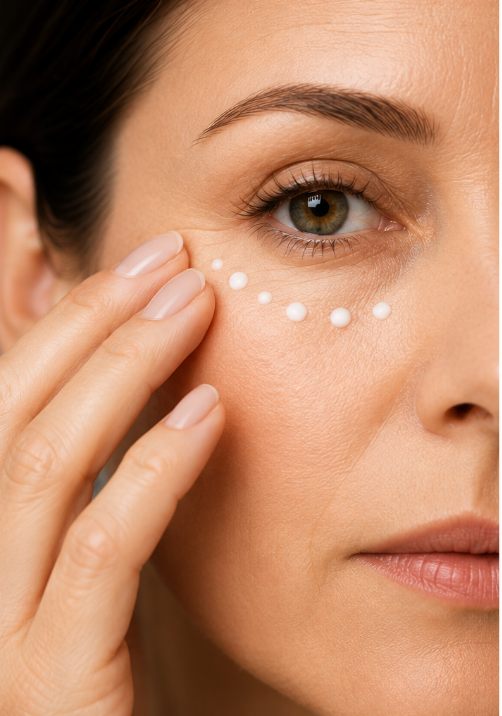
Clinic-grade eye cream may help slow the visible appearance of drooping eye skin when it supports collagen activity, skin density, hydration, and long-term repair before structural weakening becomes more advanced. Results are usually most noticeable during the earlier stages of eye aging, when skin thinning and mild hooding are beginning to develop rather than after severe laxity has already formed.
The eye area ages differently from the rest of the face. Eyelid skin is thinner, constantly moving, and more vulnerable to collagen and elastin decline over time. While no eye cream can replace surgery for severe sagging, targeted skincare like CALECIM® Professional may help support firmer-looking skin and improve crepey texture, dryness, puffiness, and early heaviness around the eyes.
Drooping eye skin can sometimes be slowed when skincare supports collagen signaling, skin thickness, and long-term repair before structural weakening becomes advanced
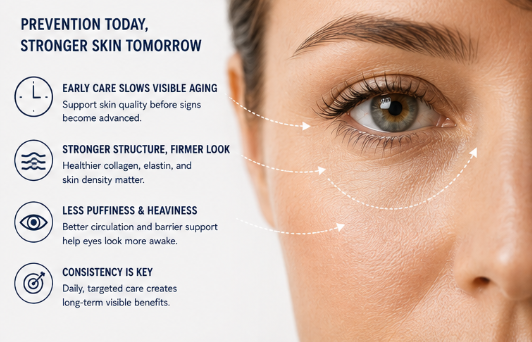
Early prevention matters because eyelid skin often starts weakening before visible hooding becomes obvious. Supporting skin quality earlier may help slow the progression of thinning, creasing, and loss of firmness over time.
Collagen fragmentation and disorganization are hallmarks of the aging human dermis and can compromise skin structural integrity. That matters around the eyes because the skin is already naturally delicate and thin.
Why prevention matters more for eyelids than many people realize
The eye area has less structural support than thicker facial areas like the cheeks. Once laxity becomes severe, topical skincare has more limited improvement potential.
Hormonal aging can also accelerate visible thinning. International Journal of Women’s Dermatology reports that up to 30% of dermal collagen may be lost in the first five years after menopause.
Why eye aging often starts long before visible hooding appears
Early eye aging usually begins subtly:
- thinner-looking upper eyelids
- crepey texture
- makeup creasing more easily
- mild heaviness near the lash line
- increased puffiness or tired-looking eyes
These changes can appear years before pronounced hooding develops.
The eye area ages differently because the skin is thinner, under constant movement, and less supported over time
Eyelid skin is structurally different from most facial skin. Constant blinking, rubbing, sun exposure, and collagen decline gradually weaken elasticity and support.
Skin Health and Disease reports age-related alterations in elastin fibre structure in human eyelid skin. Elastin is important for resilience and skin recoil.
Many people mistake dehydration and puffiness for drooping when the real issue is weakening skin support underneath
Not every tired-looking eye is truly drooping. Puffiness, dehydration, crepey texture, and early hooding can look similar but develop for different reasons.
How to tell the difference between puffiness, crepey skin, and early hooding
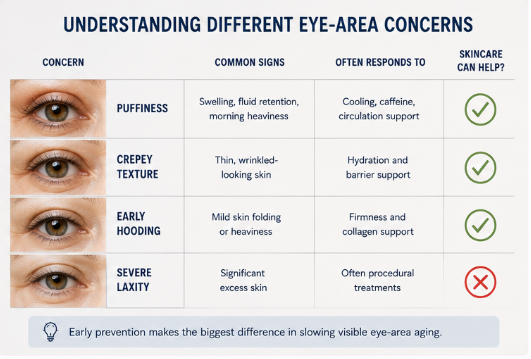
Concern | Common Signs | Often Responds to |
Puffiness | Swelling, fluid retention, morning heaviness | Cooling, caffeine, circulation support |
Crepey texture | Thin, wrinkled-looking skin | Hydration and barrier support |
Early hooding | Mild skin folding or heaviness | Firmness and collagen support |
Severe laxity | Significant excess skin | Often procedural treatments |
Why some “tightening” eye creams create only temporary surface effects
Hydration can temporarily make fine lines appear softer, but that does not necessarily mean structural lifting is occurring.
Moisturizers can temporarily reduce the appearance of some fine lines by trapping water in the skin.
The best prevention-focused eye creams target multiple pathways involved in aging eye skin rather than hydration alone
Eye-area aging is multifactorial. Products focused only on hydration may improve dryness temporarily but may not address firmness, barrier support, circulation, or collagen-related changes.
Why collagen support matters differently around the eyes
The eyelids have less dermal thickness and fewer oil glands than many other facial areas. Supporting hydration alone is often not enough for aging eyelid skin.
Prevention-focused formulas may include:
- growth-factor-related ingredients
- barrier-supporting ingredients
- circulation-support ingredients
- antioxidants
How peptides, growth factors, and exosome signaling may support firmer-looking skin
Frontiers in Medicine reports that oral and topical peptides may improve some skin-aging markers, including hydration, elasticity, wrinkles, and brightness.
Meanwhile, PMC describes extracellular vesicles as mediators involved in skin repair and wound-healing processes. While this does not prove cosmetic eyelid lifting, it helps explain why exosome signaling is gaining interest in regenerative skincare research.
Why circulation and barrier repair also affect how heavy or tired the eyes look
Poor circulation and weakened barrier function can contribute to puffiness, dryness, and fatigued-looking eyes.
PMC notes that small clinical studies have explored topical caffeine for dark, puffy eyes.
Some changes around the eyes respond well to skincare, while others may eventually need procedural support
Skincare works best for prevention, mild hooding, texture concerns, and maintaining healthier-looking skin quality. Severe laxity and significant excess skin often require procedural evaluation.
One reason clinic-grade eye creams may perform differently is that they are designed to support biological repair activity instead of only cosmetic smoothing
Clinic-grade skincare often focuses on targeted active ingredients, delivery systems, and repair-support pathways rather than surface hydration alone.
What separates clinic-grade formulations from standard cosmetic eye creams
Clinic-grade products may include:
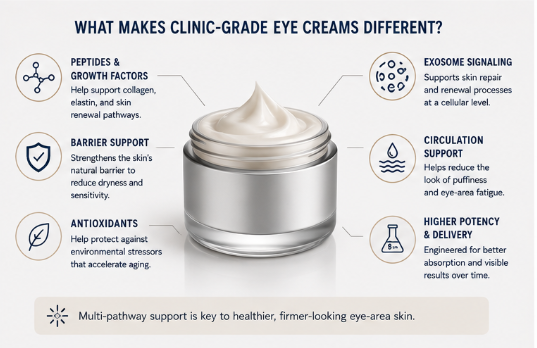
- higher concentrations of active ingredients
- peptide complexes
- repair-support ingredients
- professional formulation technologies
That does not automatically make every clinic-grade product superior, but it can affect how targeted the formulation is.
Why ingredient delivery and signaling pathways matter
Some ingredients work mainly at the skin surface, while others are designed to support signaling pathways associated with hydration, elasticity, or repair activity.
CALECIM® Professional Eye Contour Lifting Cream is formulated for thinning, fragile, and aging skin around the eyes
CALECIM® Professional Eye Contour Lifting Cream is formulated with PTT-6® and is intended for thinning, crepey, aging skin around the eyes.
How PTT-6® supports skin renewal signaling through growth factors, cytokines, and exosomes
CALECIM® Professional’s PTT-6® was associated with increased hyaluronic acid and elastin expression in lab-treated fibroblasts and a small 5-week volunteer case series.
Calecim also states that PTT-6® contains growth factors, cytokines, and exosomes involved in regeneration signaling.
Why combining collagen support, circulation support, and barrier protection matters for aging eyelids
The formula combines several pathways commonly associated with eye-area aging:
- peptides for visible firmness support
- guarana-derived caffeine for puffiness-related appearance
- niacinamide for barrier support
- matrikines for visible discoloration concerns
- cucumber extract for soothing support
How ingredients like matrikines, hesperidin, niacinamide, and cucumber extract support different visible concerns
Rather than targeting only one concern, the formula is designed to address:
Visible improvement around the eyes usually happens gradually because skin renewal and collagen remodeling take time
Most eye creams do not create overnight lifting. Texture and hydration changes often appear earlier than firmness-related changes.
What changes people often notice first
Early visible improvements may include:
- softer texture
- less dryness
- smoother makeup application
- reduced puffiness
- brighter-looking skin
Consistency matters more than short-term use, especially for prevention-focused skincare.
Frequently Asked Questions
Can eye cream actually prevent hooded eyes?
Eye cream may help slow the visible progression of early hooding by supporting hydration, firmness, and skin quality, but it cannot completely prevent genetic or advanced age-related changes.
At what age should you start using eye cream for prevention?
Many people begin preventive eye skincare in their late 20s to 30s, especially if they notice dryness, creasing, or early heaviness around the eyes.
Can peptides help strengthen thinning eyelid skin?
Peptides may help support hydration, elasticity, and visible firmness. Evidence is promising, but results vary depending on formulation and consistency.
Do exosome eye creams work differently from regular eye creams?
Exosome-related skincare focuses more on signaling and repair-support concepts rather than simple hydration alone, though cosmetic evidence is still evolving.
Can eye cream replace blepharoplasty or eyelid surgery?
No. Eye creams cannot remove excess skin or recreate surgical lifting effects.
Is it safe to apply eye cream on the upper eyelids?
Products specifically designed for the eye area are generally intended for careful upper-eyelid application, but irritation is still possible in sensitive individuals.
Why do my eyelids suddenly look heavier as I age?
Collagen decline, elastin changes, fluid retention, sun exposure, and structural weakening can gradually make eyelids appear heavier over time.
How long does it usually take to see improvement from clinic-grade eye cream?
Hydration and texture changes may appear within weeks, while firmness-related improvements usually take longer and depend on consistent use.
Conclusion
Clinic-grade eye cream may help support firmer-looking skin and slow some visible signs of drooping eye skin when used consistently during the earlier stages of aging. The best results usually come from long-term prevention, realistic expectations, and formulas designed to support multiple pathways involved in eye-area aging.
CALECIM® Professional Eye Contour Lifting Cream is a clinic-grade skincare option for thinning, crepey, aging eye-area skin, combining PTT-6®, peptides, circulation-support ingredients, and barrier-support ingredients in one formula. While no eye cream can replace surgery for severe laxity, targeted skincare may help support healthier-looking, more resilient skin around the eyes over time.