COSRX Eye Patch Review: Proven, Surprising 30-Day Results
Under-eye puffiness has a way of showing up right when you can least afford it. A red-eye flight, a stretch of bad sleep, a salty dinner the night before — and suddenly your face looks ten years more tired than you feel.
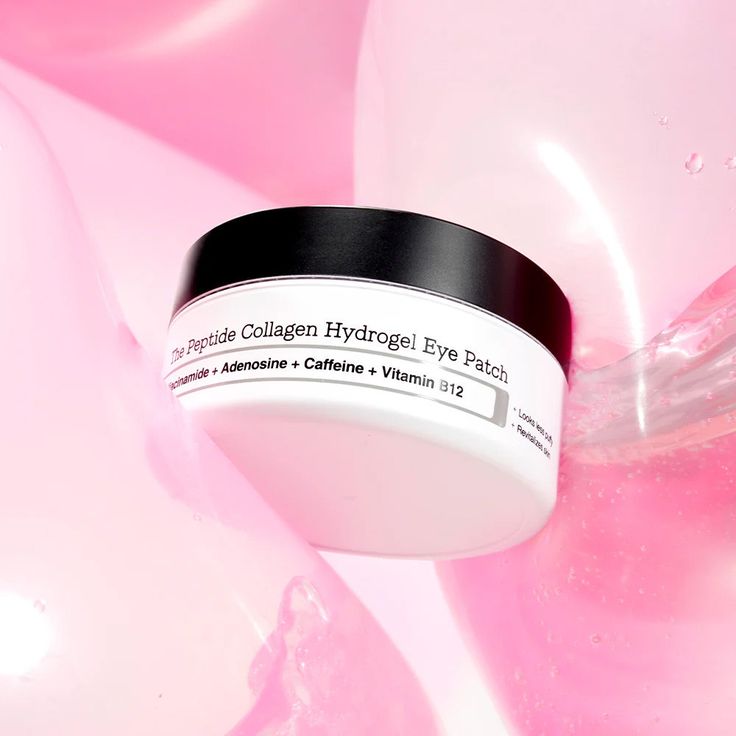
That’s the exact problem the COSRX Peptide Collagen Hydrogel Eye Patch claims to solve. It’s currently one of the most talked-about eye treatments on TikTok Shop, and it’s been sitting at the top of COSRX’s own bestseller list for months.
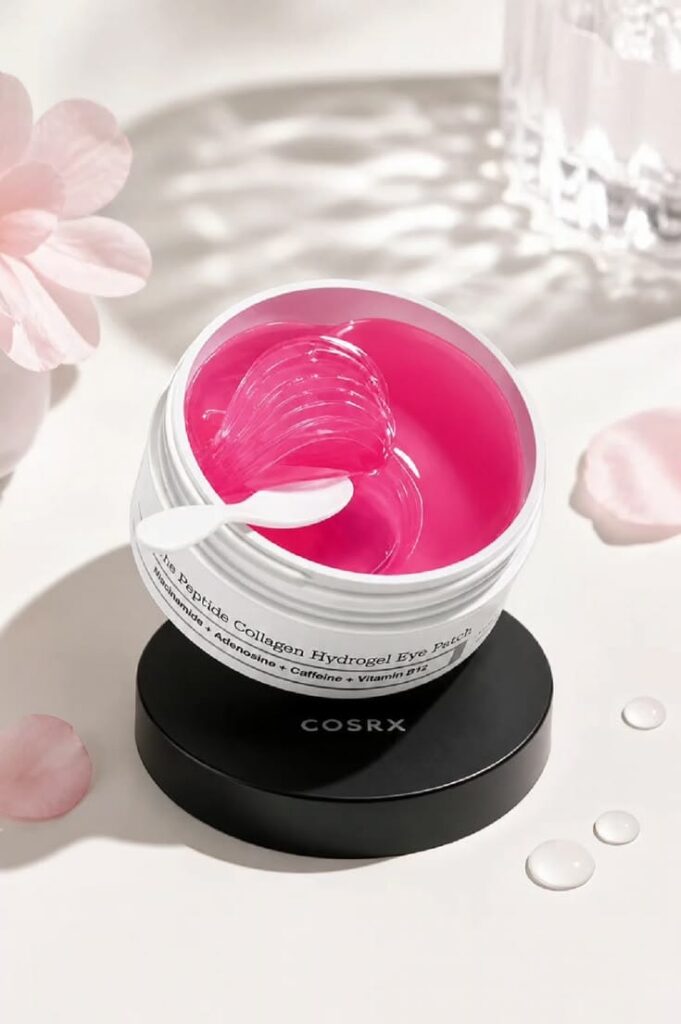
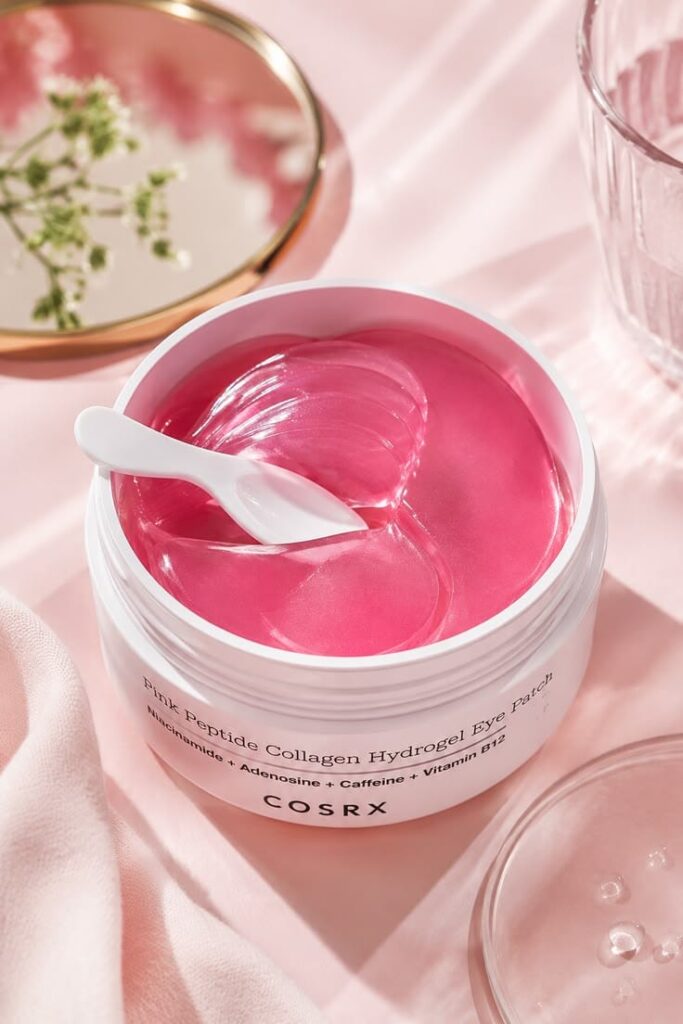
We picked up a full box and wore these patches almost every day for 30 days straight. No skipped days unless travel got in the way, no other new products introduced mid-test, and no filters on the photos we took to track progress.
This COSRX eye patch review covers everything: the ingredient list, what actually happened week by week, the clinical research behind the key actives, and whether this product is worth adding to your routine. We’re not going to tell you it erased a decade off our face. We’re going to tell you what really happened.
Editorial Team & Affiliate Disclosure
This review was written by the Review Dermatica editorial team, with formulation and ingredient analysis input from co-founder Tahmina Zannat Lamya, who reviewed the INCI list for irritant potential and ingredient function before testing began.
Review Dermatica may earn a commission if you purchase through links on this page, at no extra cost to you. This never affects which products we choose to review or how honestly we report our results. We only recommend what we’d genuinely use ourselves.
Quick Summary
Short on time? Here’s the whole review in a few lines.
What it is: A hydrogel under-eye patch loaded with 4 peptides, low-molecular-weight collagen, caffeine, niacinamide, and hyaluronic acid
Best for: Morning puffiness, mild dehydration lines, and dullness under the eyes
Not ideal for: Deep static wrinkles, structural eye bags, or anyone expecting permanent results from a single-use patch
Time to see a difference: Immediate cooling and de-puffing within 10–20 minutes; visible texture and tone changes after roughly 2 weeks of consistent use
Price range: Mid-range, sits comfortably between drugstore gel masks and premium eye creams
Our rating: A strong, well-formulated eye treatment with real short-term payoff, though the anti-aging claims deserve realistic expectations
What Is the COSRX Peptide Collagen Hydrogel Eye Patch?
COSRX built this product to sit at the intersection of two very different under-eye needs — instant de-puffing and longer-term collagen support. That’s a harder combination to pull off than it sounds, because ingredients that work fast (like caffeine) aren’t usually the same ones that work slowly (like peptides).
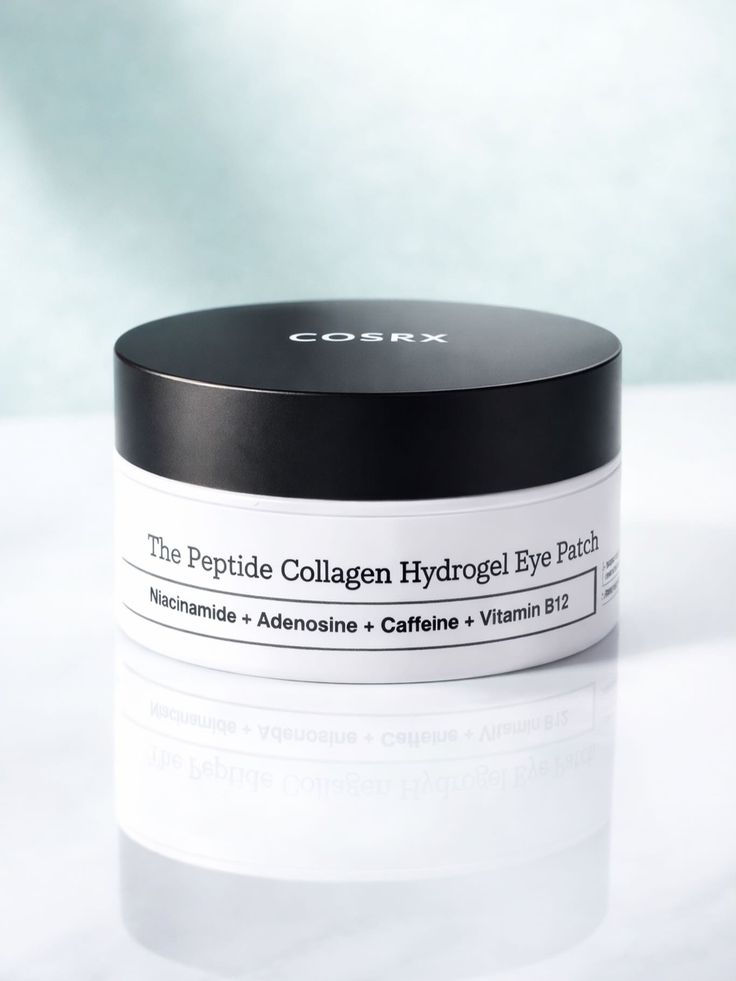
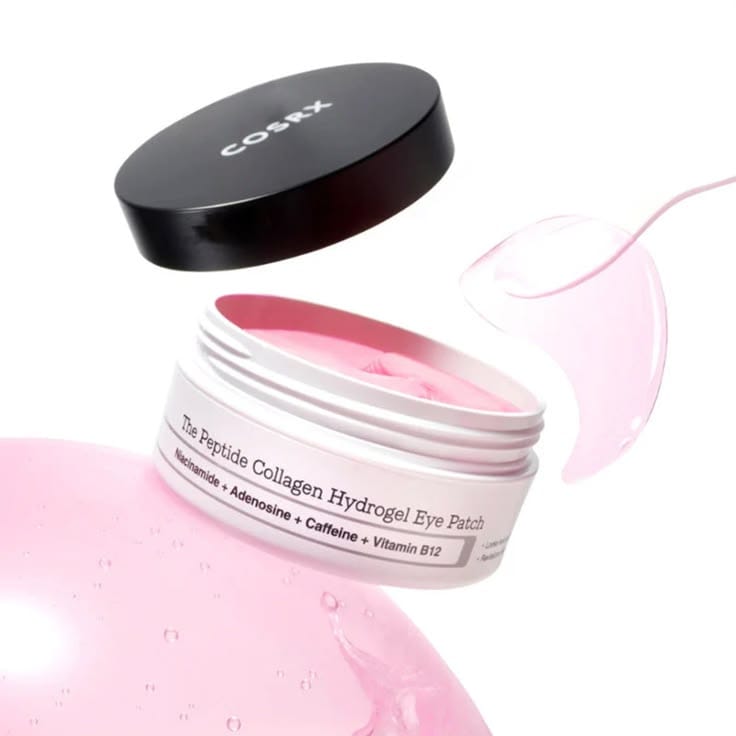
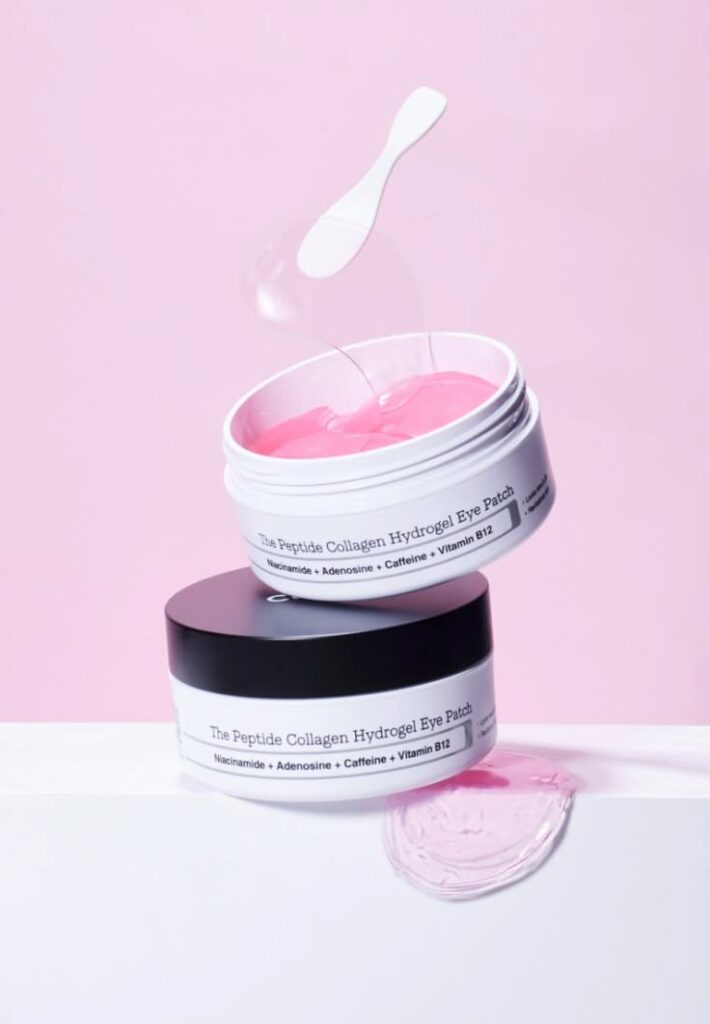
Each box comes with 60 patches, enough for 30 uses if you apply one pair per session. The hydrogel texture is thick but not sticky, and it stays put without sliding down your cheek the way thinner sheet patches sometimes do.
Key Ingredients Breakdown
The full ingredient list is long, but a handful of actives are doing most of the work.
Acetyl Hexapeptide-8 and Palmitoyl Tripeptide-5 are the two peptides driving the “collagen” part of the name. These are signal peptides, meaning they don’t add collagen directly — they tell your skin’s fibroblasts to produce more of it.
Hydrolyzed collagen and hydrolyzed hyaluronic acid sit lower on the ingredient list but contribute to the plumping, hydrated look the patches give immediately after removal.
Caffeine is the ingredient responsible for that instant de-puffing sensation. It’s a vasoconstrictor, meaning it temporarily tightens the tiny blood vessels under the eyes.
Niacinamide rounds things out with brightening and barrier support, which is useful if dullness is part of your under-eye concern alongside puffiness.
How It’s Meant to Work
The idea is layered timing. Caffeine gives you the fast, visible win in the first 10 minutes. Peptides and collagen work in the background over repeated use to support firmness and texture. Niacinamide and hyaluronic acid handle hydration and tone throughout.
That’s a reasonable formulation strategy on paper. Whether it holds up in real use is what the next sections cover.
My 30-Day Testing Method
We wanted this test to reflect how a real reader would actually use the product, not a lab-controlled scenario.
Skin Type & Starting Concerns
Our main tester has combination skin with mild under-eye puffiness that’s worse in the mornings, plus some dehydration-related fine lines that show up more by evening. No history of eczema or rosacea around the eye area, and no recent use of retinoids near the eyes in the four weeks before starting.
Application Routine
Patches went on first thing in the morning, straight after cleansing, five to six mornings a week for 30 days. Each session ran the recommended 10 to 15 minutes.
We took photos every Monday morning under the same lighting, before applying makeup or any other product. No other new eye treatment was introduced during the test window, so any change could reasonably be traced back to this product.
Week-by-Week Results
Week 1: The Immediate Effect
The first thing you notice isn’t subtle — it’s the cooling sensation the second the hydrogel touches skin. Within 10 minutes, the puffiness from a short night’s sleep visibly softened.
This matches what caffeine is known to do. It’s a fast, temporary effect rather than a lasting change, but for a morning routine before video calls or photos, it’s genuinely useful.
By day 5, we noticed the skin felt slightly firmer to the touch even after removing the patch, though this early firmness reads more like hydration than actual collagen change.
Week 2: Texture Starts Shifting
This is where things got more interesting. The fine dehydration lines that usually appeared by late afternoon were less pronounced, and the under-eye area held moisture longer through the day.
Dark circles didn’t disappear — and we didn’t expect them to, since the caffeine and niacinamide combination here mainly targets the vascular and dullness components of dark circles, not deep pigmentation.
Week 3-4: The Cumulative Payoff
By the third week, the improvement felt less like a temporary patch effect and more like a baseline shift. Morning puffiness was consistently milder even before applying the patch, which suggests the daily habit itself was contributing something beyond the single-use cooling effect.
By day 30, side-by-side photos showed smoother under-eye texture and a visibly less tired look in the morning. Fine lines were softer, though not gone — which lines up with what the clinical research on these ingredients would predict for a four-week window.
The Science Behind the Claims
We didn’t want to just report what happened. We wanted to check whether the ingredients here actually have research behind them, so we went digging.
Peptides & Collagen Support
Signal peptides like the ones in this formula are among the more evidence-backed anti-aging actives in skincare. A systematic review published in Skin Pharmacology and Physiology found that peptides similar to the ones used here promote synthesis of multiple extracellular matrix components, including type I and III collagen, in a double-blind placebo-controlled trial.
A separate randomized, double-blind clinical trial on low-molecular-weight collagen peptides, published via the National Library of Medicine, also found measurable improvements in skin elasticity and hydration after consistent use, which supports the collagen-support angle of this patch, even though that particular study used an oral supplement rather than a topical.
Peptides are a slow-build ingredient category, not an overnight one. If you’re comparing how peptides stack up against faster actives, our breakdown on Peptides vs Retinol goes deeper into realistic timelines.
Caffeine for Puffiness
This is the best-researched claim in the whole product. A review in the International Journal of Women’s Dermatology found that topical caffeine has been shown to stimulate lipolysis and significantly improve lower eyelid puffiness, with additional evidence for improved blood circulation and skin luminescence after a month of use.
A clinical study published in the Journal of the American Academy of Dermatology evaluated an eye cream containing caffeine and blueberry extract and found statistically significant improvements in fine lines and wrinkles as early as a single application, with continued improvement through 12 weeks.
That immediate cooling effect we felt in week 1 isn’t just a sensory trick — it’s consistent with how caffeine is documented to behave.
Niacinamide & Hyaluronic Acid
These two are workhorse ingredients across skincare generally, not eye-specific superstars, but they matter here for hydration and tone. If you’re curious how hyaluronic acid stacks up against other humectants in general, our Hyaluronic Acid vs Glycerin comparison covers that in detail.
Pros and Cons
What We Liked
The immediate de-puffing effect is real and noticeable, not just marketing language. The hydrogel texture stays in place well, even if you move around while wearing it. Sixty patches per box means 30 uses, which is a fair amount of runway for the price. The ingredient list is genuinely well thought out, pairing a fast-acting active with slower, cumulative ones.
What Could Be Better
Results plateau for anyone expecting real structural change to eye bags or deep static wrinkles — this is a supportive treatment, not a medical-grade intervention. Ten to fifteen minutes a day is a small ask, but it’s still a step some people will skip on busy mornings. The patches can feel slightly cool and damp for sensitive skin during the first few uses.
Who Should (and Shouldn’t) Use This
Best For
This product makes the most sense if your main complaint is morning puffiness, mild dehydration lines, or a generally tired look under the eyes. It also suits anyone who wants a low-commitment way to add peptides and caffeine into their routine without a full eye cream regimen.
If your skin leans sensitive and reactive, it’s worth reading our guide on Best Skincare Brands for Sensitive Skin before introducing a new eye product, just to cross-check formulation red flags.
Skip If
If your primary concern is deep, structural under-eye bags caused by fat pad protrusion, this patch won’t meaningfully change that — that’s a concern better addressed with a dermatologist or in-office treatment. Anyone with active eye-area irritation, recent eye surgery, or known sensitivity to caffeine-based topicals should also hold off or patch test cautiously first.
COSRX Eye Patch vs Other Eye Treatments
Eye patches and eye creams solve slightly different problems, and it’s worth knowing where this one fits. Compared to a PDRN-based eye cream like the one covered in our Medicube PDRN Eye Cream Review, the COSRX patch leans more toward immediate de-puffing, while PDRN formulas tend to focus more on longer-term skin regeneration and barrier repair.
If you already use a peptide serum elsewhere in your routine, like the one in our The Ordinary Buffet Peptide Serum Review, this patch layers in nicely as an eye-specific booster rather than a duplicate step.
And if you’re already a COSRX user for other concerns, our COSRX BHA Blackhead Power Liquid Review and our COSRX vs Beauty of Joseon comparison both give a broader sense of how the brand’s formulation philosophy holds up across categories.
How to Use It for Best Results
Start with clean, dry skin, ideally right after cleansing and before the rest of your routine. Place the patches under each eye, following the natural curve of the orbital bone, and leave them on for 10 to 15 minutes.
Remove gently and pat the leftover essence into the skin rather than wiping it away — that residual serum is doing real work. Follow immediately with your regular moisturizer or eye cream to lock in the hydration.
For best results, use it consistently rather than occasionally. The de-puffing effect is instant, but the texture and tone improvements we saw built up gradually over two to three weeks of near-daily use.
Before adding any new eye treatment to your routine, a quick patch test is worth the extra day. The American Academy of Dermatology’s guidance on testing new skincare products recommends applying a small amount to a discreet area first and waiting 24 to 48 hours before full use, especially for products going near the eyes.
Price & Where to Buy
The COSRX Peptide Collagen Hydrogel Eye Patch sits in the mid-range for K-beauty eye treatments — more than a basic drugstore gel patch, less than most premium Western eye creams, and reasonable given you’re getting 30 full applications per box.
Final Verdict
After 30 days, this is one of the more honestly formulated eye patches we’ve tested. The instant de-puffing from caffeine is backed by real clinical research, and the peptide-collagen combination gave a gradual, believable improvement in texture and fine lines rather than an overnight miracle.
It won’t fix structural eye bags, and it won’t replace a full anti-aging routine on its own. But as a daily or near-daily habit for tired, puffy mornings, it earns its spot in the routine.
Frequently Asked Questions
How often should I use the COSRX eye patch?
Daily use gives the most consistent results, though three to four times a week is enough to notice a difference in puffiness and hydration over time.
Can I use this with retinol or other actives?
Yes, but apply the patch on a separate step from strong actives like retinol, and avoid layering caffeine-based products with active exfoliants on the same day if your skin is sensitive.
Does it help with dark circles?
It helps with the vascular, bluish component of dark circles through caffeine’s vasoconstricting effect. Brown, pigmentation-based dark circles need a different approach, such as vitamin C or niacinamide-focused treatments.
Is it safe for sensitive skin?
Generally yes, but caution is still required.
Formulated without common culprits like synthetic fragrances, essential oils, and drying alcohols (e.g., alcohol denat), this formula minimizes the core triggers responsible for contact dermatitis, redness, and sting sensations. By leaving out these high-risk irritants, it respects the delicate cutaneous barrier and maintains low irritation potential.
However, a patch test is still strongly recommended before full application for two key reasons:
- Under-Eye Anatomical Vulnerability: The skin surrounding the orbital region is up to 4 times thinner than the rest of the face. Due to this extreme delicacy and high density of blood vessels, it absorbs ingredients much faster and reacts significantly quicker to active compounds or botanical extracts.
- Individual Ingredient Sensitivity: Even well-formulated, fragrance-free products can contain specific active ingredients or emulsifiers that may not align with your unique skin biology.
How to Patch Test Safely: Apply a pea-sized amount along your jawline or behind your ear and monitor the area for 24 to 48 hours. If no redness, itching, or inflammation occurs, gently pat the product onto the outer orbital bone, keeping it clear of the immediate lash line.