
Honest Torriden Dive-In Serum Review 2026: Worth the Hype for Dry Skin?
Every time I scroll through Korean skincare recommendations, one blue-tinted serum keeps showing up in the same breath as cult favorites like Anua and Beauty of Joseon. That serum is Torriden Dive-In. After weeks of testing it myself and digging through its full ingredient list, I wanted to write the Torriden Dive-In Serum review I wish I had found before buying it — no fluff, no exaggerated claims, just what actually happens when this serum meets dry, dehydrated skin.
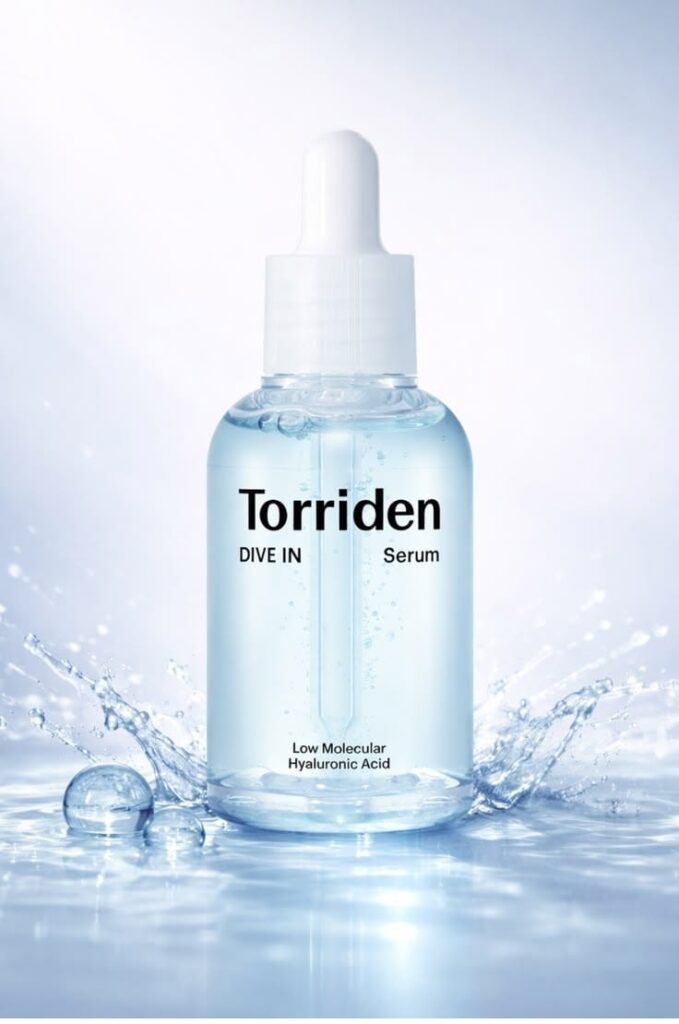
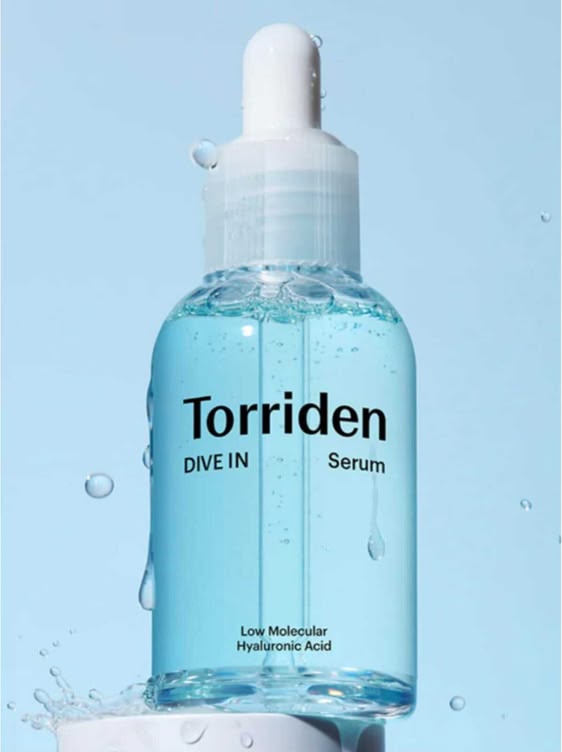
If you have been searching “torriden dive in serum review” hoping for a straight answer on whether it lives up to the hype, you are in the right place. This review breaks down the Torriden Dive-In Serum ingredients, the Torriden Dive-In Serum price across different regions, and how it performed in real daily use.
Affiliate Disclosure & Editorial Note: This Torriden Dive-In Serum review may contain affiliate links. If you purchase through them, Review Dermatica may earn a small commission at no extra cost to you. Ingredient analysis for this article was reviewed with input from our co-founder Tahmina Zannat Lamya, who has a background in cosmetic formulation research. All clinical references are cited directly to their original sources.
Quick Article Summary
- Core Focus: An in-depth clinical audit and real-world test of the Torriden Dive-In Low Molecule Hyaluronic Acid Serum for dry, dehydrated, and sensitive skin.
- Key Science (5D System): Combines five different molecular weights of Hyaluronic Acid. High molecular weights lock moisture on the surface, while low molecular weights (5–8 kDa) penetrate the epidermis for deeper hydration.
- Soothing & Barrier Support: Formulated with Madecassoside and Centella Asiatica to reduce inflammation, along with Ceramide NP, Beta-Glucan, and Cholesterol to prevent trans-epidermal water loss (TEWL).
- Texture & Experience: Lightweight, fast-absorbing, non-sticky formula that layers seamlessly under moisturizers and makeup without pilling.
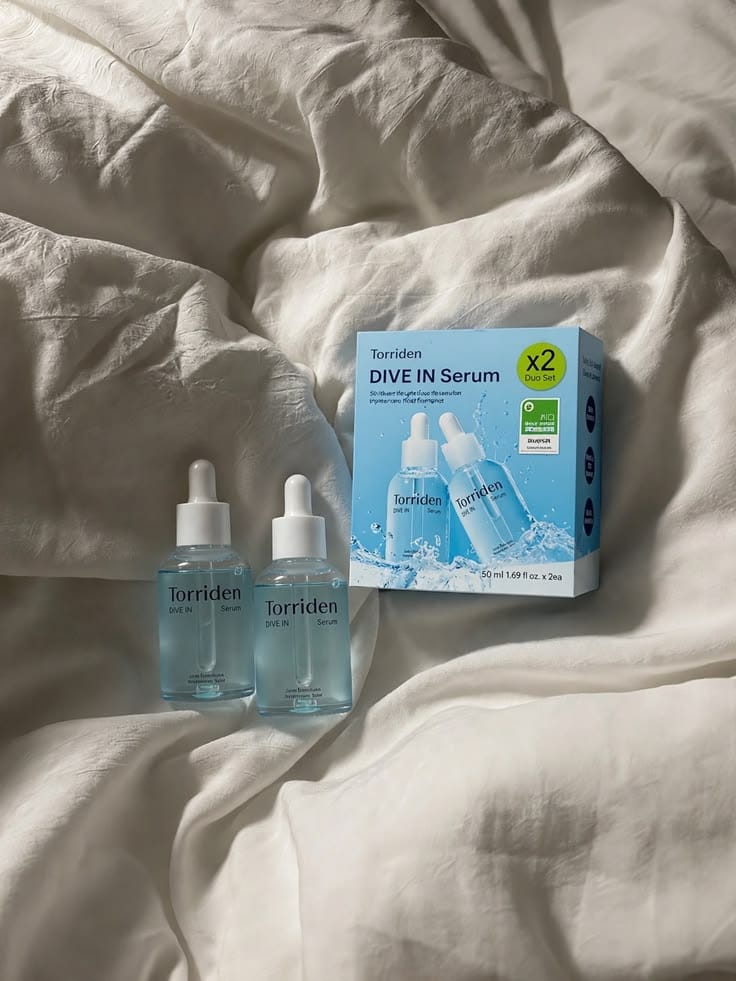
- Price Range: Mid-range affordability, typically between $13–$22 (US) / £28–£29 (UK) / $24–$25 AUD for a standard 50ml bottle.
- Best Suited For: Dehydrated, combination, and sensitive skin types looking for an effective humectant step. Needs to be followed by an occlusive moisturizer to seal in hydration.
- Final Verdict: Highly recommended for its research-backed multi-weight HA formulation, clean fragrance-free profile, and added skin-barrier lipids.
What Is the Torriden Dive-In Serum?
Torriden is a Korean skincare brand best known for one thing: hydration that does not feel heavy. The Dive-In Serum, officially called the Dive-In Low Molecule Hyaluronic Acid Serum, is the product that built the brand’s reputation outside Korea.
Unlike a single-hyaluronic-acid formula, this serum uses what Torriden calls a “5D” hyaluronic acid system, meaning five different molecular weights of hyaluronic acid working together. The idea behind this approach is straightforward: larger HA molecules sit on the surface and hold moisture there, while smaller, low molecular weight versions are small enough to move into deeper layers of skin.
That layered hydration concept is really the entire selling point of the Torriden Dive-In Serum, and it is worth understanding before we get into whether it actually works.
Torriden Dive-In Serum Ingredients Breakdown
This is usually the part people skip, but it is the part that actually determines whether a serum works for your skin. Here is the full Torriden Dive-In Serum ingredients list, broken into groups that actually matter.
The 5D Hyaluronic Acid Complex
The formula includes Sodium Hyaluronate, Hydrolyzed Hyaluronic Acid, Sodium Acetylated Hyaluronate, Sodium Hyaluronate Crosspolymer, and Hydrolyzed Sodium Hyaluronate. Together, these cover a range from high molecular weight (which sits on the skin’s surface and forms a moisture film) down to low molecular weight forms capable of reaching deeper layers.
This is not just marketing language. Independent penetration testing on low molecular weight HA (in the 5 to 8 kDa range) has shown it can pass through the stratum corneum barrier and reach the epidermis and dermis, while larger HA molecules stay trapped at the surface. Low molecular weight HA in that size range was shown to cross the stratum corneum and enter the epidermis and dermis, while its high molecular weight counterpart stayed trapped at the surface. PubMed
There is also human clinical evidence specifically on dry skin. A double-blind, randomized controlled trial on elderly participants with diagnosed xerosis (clinically dry skin) compared low and high molecular weight hyaluronic acid moisturizers. Low molecular weight HA is believed to more effectively replenish skin hydration in aging, dry skin compared with high molecular weight HA, largely because of its ability to penetrate the stratum corneum. That is essentially the same science Torriden is leaning on with its 5D approach, just packaged into a single serum instead of a single-weight formula. PubMed
If you want a deeper explainer on how HA compares to another common humectant, our hyaluronic acid vs glycerin breakdown covers that in more detail.
Centella Asiatica and Madecassoside
The serum’s soft blue tint actually comes from Malachite Extract, but the real functional centella ingredients here are Madecassoside and Madecassic Acid. These are not filler ingredients pulled from a trend list.
Madecassoside has documented anti-inflammatory and hydrating activity. Research on madecassoside from Centella asiatica has shown it significantly reduces pro-inflammatory signaling in skin cells while also enhancing skin hydration. For anyone with reactive or barrier-compromised skin, this is a meaningful addition rather than a decorative one. PubMed
Barrier-Supporting Ingredients
The formula also includes Ceramide NP, Beta-Glucan, and Cholesterol. This trio matters because hyaluronic acid alone draws water into the skin, but without lipids to reinforce the barrier, that water can evaporate right back out. Ceramide NP and Cholesterol are two of the key lipids your skin barrier naturally relies on. If you want to understand beta-glucan specifically, we cover it in depth in what is beta-glucan for skin, and if you are curious how it performs in a dedicated formula, our iUNIK Beta-Glucan Power Moisture Serum review is a useful comparison point.
Rounding things out are Panthenol and Allantoin, both well-established soothing agents, plus Trehalose and Betaine as secondary humectants.
Torriden Dive-In Serum Price
One of the most searched questions is simply “how much does the Torriden Dive-In Serum cost?” Pricing varies slightly depending on region and retailer, but here is a realistic range for the standard 50ml bottle:
United States: roughly $13 to $22
United Kingdom: around £28 to £29
Australia: approximately $24 to $25 AUD
Compared to Western drugstore hyaluronic acid serums, the Torriden Dive-In Serum price sits in a similar mid-range bracket, but it includes a five-molecule HA system plus centella and barrier lipids, which is more formulation complexity than most serums at this price point offer.
How It Feels — My Real Experience Testing It
On paper, ingredient lists only tell half the story. Texture and how a product behaves on actual skin is the other half.
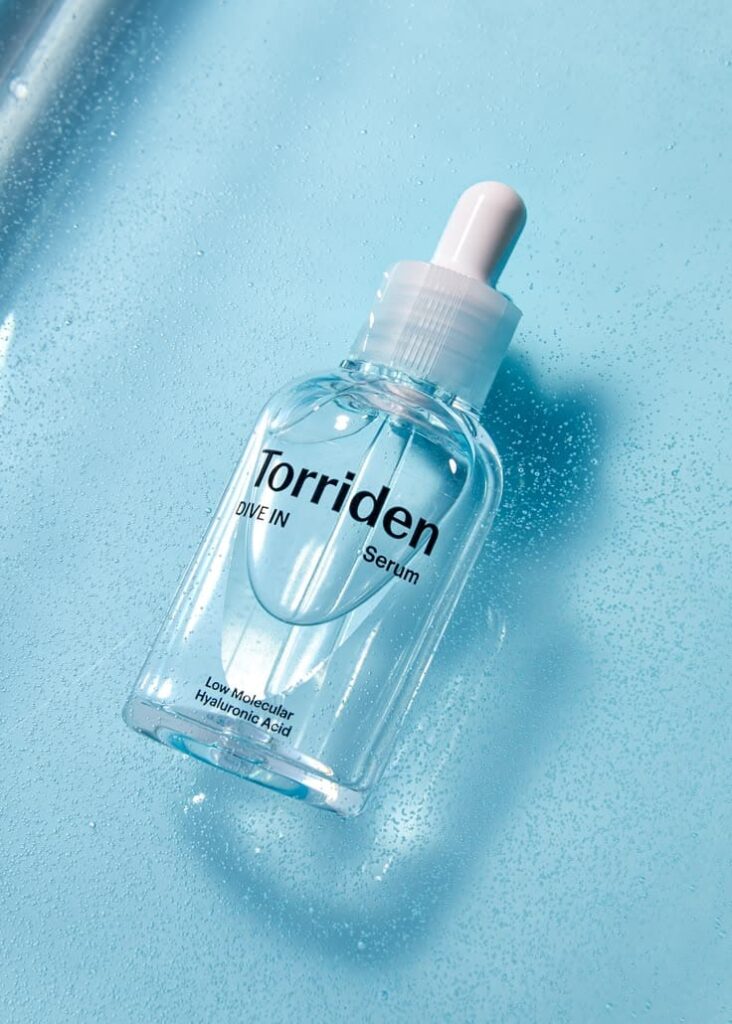
The Torriden Dive-In Serum has a thin, almost watery consistency with a faint blue tint. It is not sticky, and it does not pill when layered under other products, which is one of the most common complaints people have with hyaluronic acid serums.
On dry, slightly dehydrated skin, the first thing I noticed was how quickly it absorbed. Within about thirty seconds, there was no residue left, just a soft, slightly plump feeling. That plumping sensation is consistent with what you would expect from a well-balanced multi-weight HA formula rather than a single-type HA serum that can sometimes feel like it just sits on top of skin.
Where it genuinely stood out was layering. It worked well underneath a heavier moisturizer without breaking down or rolling. If your routine already includes something like the Vanicream Enhanced Moisturizer, this serum slots in easily as a hydration step before that final barrier-sealing layer.
Is Torriden Dive-In Serum Good for Dry Skin?
This is the exact question in the title, so let’s answer it directly: yes, with one caveat.
Humectant-based serums like this one draw water into the skin, but they need something to lock that moisture in afterward, especially if your skin barrier is already compromised. Dermatologists consistently point out that hyaluronic acid works best as part of a layered routine rather than as a standalone fix. Applying moisturizer while skin is still slightly damp, and gently massaging it in, is one of the core recommendations dermatologists give for healing very dry skin. AAD
In practice, that means the Torriden Dive-In Serum genuinely helps dry skin, but pairing it with an occlusive moisturizer on top makes a noticeable difference, especially in colder or drier climates. If your skin needs something gentler still, our guide to the best skincare brands for sensitive skin is worth a look before you commit to a full routine overhaul.
Pros and Cons
What worked well:
Lightweight texture that layers under makeup or other actives without pilling
Five-molecule HA system backed by real penetration and hydration research
Madecassoside and centella extract for added soothing benefit
Fragrance-free and reasonably affordable for the formulation complexity
Ceramide and beta-glucan included for barrier support, not just surface hydration
Where it falls short:
Very dry or eczema-prone skin will still need a heavier moisturizer layered on top.
The pump dispenser on some batches can be inconsistent
Results build gradually; it is not an overnight fix for severely dehydrated skin
Who Should (and Shouldn’t) Use This Serum
This serum is a strong fit if you have dry, dehydrated, or combination skin and want a lightweight hydration step that will not clog pores or interfere with actives like retinol or vitamin C. It is also a good option for anyone building a simplified K-beauty-inspired routine, since it pairs naturally with toners and moisturizers already common in that category.
It is less necessary if your skin is already well-balanced and you are using a moisturizer with strong humectant content, since you may end up doubling up on hydration without much added benefit. Oily, acne-prone skin can still use it, but a lighter follow-up moisturizer is usually a better pairing than something heavy.
How to Use the Torriden Dive-In Serum
Apply after cleansing and toning, while skin is still slightly damp. Use three to five drops, patting rather than rubbing it in. Follow with a moisturizer to seal everything in.
If you are layering actives, this serum works well before something like The Ordinary Buffet Peptide Serum or before a barrier cream. For an evening routine, following it with a hydrating overnight step like the Laneige Lip Sleeping Mask on lips specifically rounds out a dryness-focused nighttime routine.
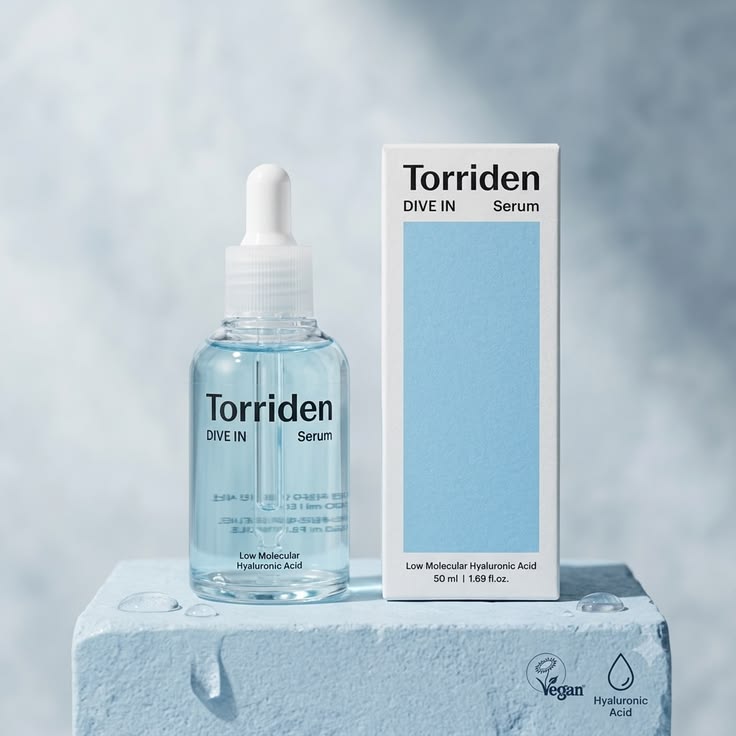
Final Verdict — Is the Torriden Dive-In Serum Worth the Hype?
After testing it directly and reviewing the clinical research behind its core ingredients, this Torriden Dive-In Serum review lands on a clear yes, particularly for dry and dehydrated skin types. The five-molecule hyaluronic acid approach is not just a marketing angle; it reflects real, published penetration and hydration research. Add centella-derived madecassoside and barrier-supporting ceramides, and you get a formula that is doing more than most single-HA serums at a similar price.
It is not a miracle product, and it will not replace a proper moisturizer for very dry or barrier-damaged skin. But as a daily hydration step, the Torriden Dive-In Serum earns its reputation.
Frequently Asked Questions
Is the Torriden Dive-In Serum good for sensitive skin?
Yes, it is exceptionally well-suited for sensitive and reactive skin types. The formula is completely free from artificial fragrances, essential oils, and harsh drying alcohols, minimizing the risk of contact dermatitis or localized irritation. Furthermore, it incorporates bioactive components derived from Centella Asiatica, specifically Madecassoside and Madecassic Acid, which work to suppress pro-inflammatory signaling pathways, calm active redness, and promote tissue repair. Paired with soothing agents like Panthenol and Allantoin, it actively soothes compromised skin barriers rather than aggravating them.
What is the Torriden Dive-In Serum price for the full-size bottle?
The retail price for a standard 50ml full-size bottle typically ranges from $13 to $22 USD in the United States, depending on regional discounts, sales events, and authorized stockists. In the United Kingdom, it generally retails around £28 to £29, while in Australia, consumers can expect to pay approximately $24 to $25 AUD. Given its multi-weight HA technology, added barrier lipids (ceramides), and clinical-grade soothing extracts, it delivers a high degree of formulation complexity relative to standard drugstore hyaluronic acid options in this mid-tier price bracket.
Can I use Torriden Dive-In Serum with retinol?
Absolutely, and pairing the two is highly advantageous. Retinoids increase cellular turnover but frequently induce side effects like trans-epidermal water loss (TEWL), desquamation, and dryness. Because the Torriden Dive-In Serum focuses strictly on humectant-based hydration and barrier maintenance without active exfoliating acids, it creates an ideal buffer. Applying this serum before or after your retinol step delivers crucial deep-layer moisture and anti-inflammatory support, helping mitigate the irritation and peeling commonly associated with retinoid acclimatization.
Does the Torriden Dive-In Serum contain fragrance?
No, the formula is 100% fragrance-free and contains no synthetic perfumes, essential oils, or masking agents. Synthetic and natural fragrances are among the leading triggers for cutaneous sensitization and barrier disruption. The signature subtle blue tint of the serum does not come from artificial dyes or fragrances either; it is naturally derived from Malachite Extract, an antioxidant-rich mineral compound that gives the product its color while remaining completely gentle on easily irritated skin.
How long until you see results from the Torriden Dive-In Serum?
Immediate surface-level plumping, increased skin elasticity, and relief from tightness are typically noticeable within 1 to 3 days of initial application, as the low and high molecular weight hyaluronic acid system immediately binds water within the upper epidermal layers. However, cumulative structural benefits—such as enhanced skin barrier resistance, reduced baseline redness, and improved overall moisture retention—generally require 3 to 4 weeks of continuous twice-daily use. This allows the Ceramide NP, Beta-Glucan, and Madecassoside to support natural lipid synthesis and cellular recovery over a full epidermal turnover cycle.

3 thoughts on “Honest Torriden Dive-In Serum Review 2026: Worth the Hype for Dry Skin?”