Best Urea Cream for Face: How to Choose the Right One
Your face feels tight by noon. The skin on your elbows catches on your sweater. You’ve tried three moisturizers this winter, and none of them made a real dent.
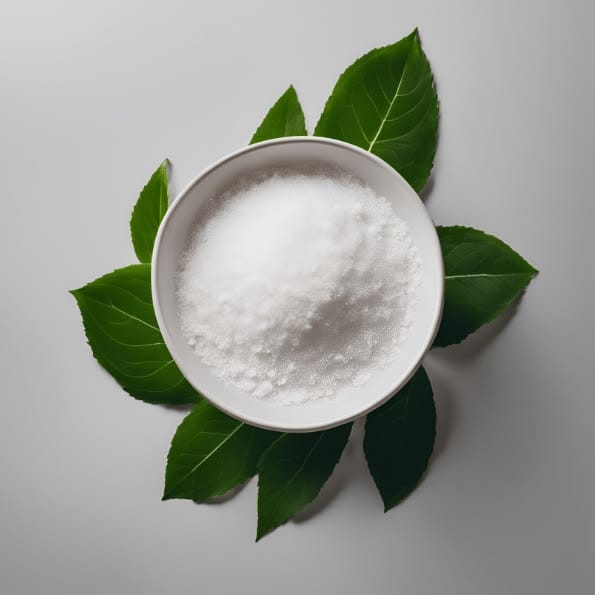
That’s usually the moment people discover urea. It shows up in dermatology offices, on pharmacy shelves, and in K-beauty routines, and for good reason: it hydrates and gently smooths rough skin at the same time. The catch is that the percentage on the label changes everything. A 5% cream and a 10% lotion do different jobs, and the best urea cream for face use is often not the one you’d put on your heels.
We went through six popular options: Eucerin, Prequel, Sebamed, JUMISO, and La Roche-Posay. For each one, we checked the ingredient list, the brand’s own claims, current pricing, and what customers keep saying, good and bad. By the end, you’ll know which urea cream percentage fits your skin and which product is worth your money.
Quick Summary For Best Urea Cream for Face & Body
Short on time? Here’s the fast version.
- Best urea cream for face overall: Eucerin UreaRepair Replenishing Face Cream 5%
- Best 10% option for face and body: Prequel Urea Advanced Relief 10%
- Best budget pick: Sebamed Extreme Dry Skin Relief Face Cream 5%
- Best for a barrier-focused routine: JUMISO Urea 5 Intensive Moisture Cream
- Best body lotion for very dry, rough skin: Eucerin UreaRepair Plus 10% Lotion
- Best for rough, bumpy body skin: La Roche-Posay Lipikar Urea 10%
The rule of thumb is simple. Stay around 5% for the face, and save 10% and above for the body. The sections below explain why.
Affiliate Disclosure and Editorial Team
Affiliate disclosure: Review Dermatica takes part in affiliate programs, including Amazon Associates. If you buy through our links, we may earn a small commission at no extra cost to you. It doesn’t change what we recommend.
Editorial team: This guide was written by Asim, founder and lead analyst at Review Dermatica, with ingredient and formulation research by co-founder Tahmina Zannat Lamya. We review labels, ingredient lists, published research, and customer feedback. We did not run lab tests on these products.
This article is for education and isn’t medical advice. If you have eczema, psoriasis, or dryness that won’t clear up, talk to a doctor or dermatologist. Last updated: November 22, 2026. Prices come from major retailers and change often, so check the current price before you buy.
What Does Urea Actually Do for Your Skin?
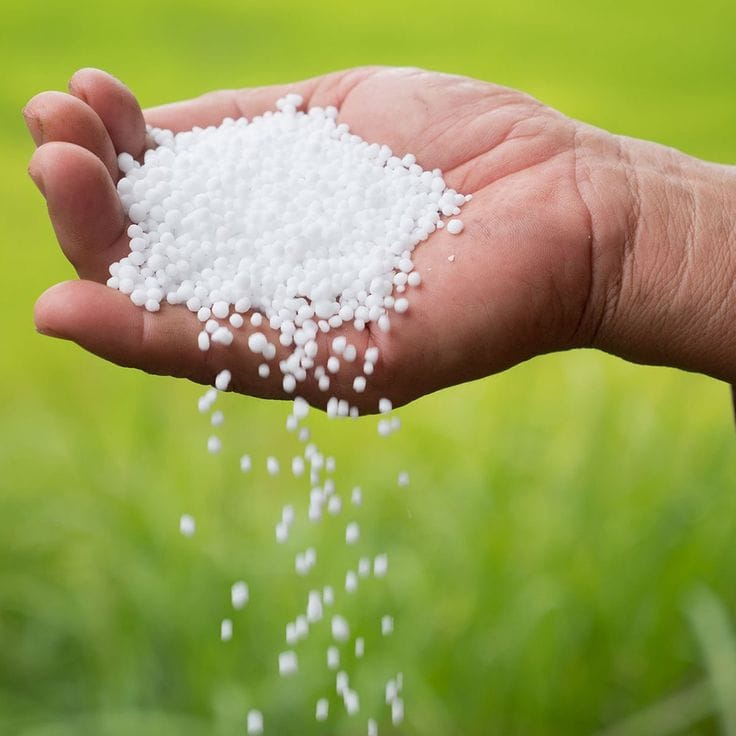
Urea is one of the most studied moisturizing ingredients in dermatology. Your skin already makes it as part of its natural moisturizing factor, the mix of compounds that keeps the top layer soft. The urea in skincare is made in a lab, not taken from urine, which is a myth that still floats around.
It Pulls Water Into the Skin
At low and moderate strengths, urea works as a humectant. It binds water in the outer layer of skin. A 2021 review in Dermatology and Therapy explains that controlled studies show topical urea reduces water loss through the skin and improves barrier function. It also appears to switch on genes that help skin cells build proteins like filaggrin, which the barrier depends on.
In plain terms, urea helps your skin hold on to the water it already has.
It Gently Loosens Rough, Flaky Skin
At higher strengths, urea acts as a keratolytic. That’s a fancy word for something that softens and breaks down the dead skin cell buildup that makes skin feel rough. It’s why urea is used for dry patches, calluses, and keratosis pilaris.
The American Academy of Dermatology lists urea among the keratolytic ingredients for keratosis pilaris self-care, and it recommends a moisturizer with urea or lactic acid to help prevent flare-ups.
Is Urea Safe?
For most people, yes. The same review says topical urea is well tolerated, and side effects are usually mild and more common at high concentrations. The most common complaint is mild stinging, especially on cracked or irritated skin.
The authors found only one reported case of allergic contact dermatitis from a urea cream, and even that was probably caused by another ingredient in the product.
Urea Cream Percentage Explained
This is the part most product pages skip. The urea cream percentage tells you whether you’re buying a moisturizer, a smoothing treatment, or something closer to a callus softener. The 2021 review breaks it down like this:
Around 2% to 10%: moisturizing and barrier support.
Around 10% to 30%: moisturizing plus keratolytic, which means exfoliating.
30% and above: strong keratolytic action, mostly for thick skin and medical use.
Those ranges overlap on purpose. The review also notes that products between 2% and 20% can work for routine skin care in people without skin disorders.
5% Urea: The Sweet Spot for Facial Skin
Five percent hydrates and softens without much sting. The review points to a study where adding 5% urea to a gel reduced water loss, dryness, and skin reactivity. Facial skin is thinner and reacts faster than body skin, so a gentler strength makes sense. That’s why the dedicated face creams in this guide all use 5%.
10% Urea: For Rough, Dry, Bumpy Body Skin
Ten percent is where urea starts working as an exfoliant as well as a moisturizer. It suits elbows, knees, shins, upper arms, and bumpy skin. Some people use it on the face, and Prequel sells a 10% milk labeled for both face and body. If you go that route, start slowly and watch how your skin reacts.
20% and Above: Heels and Calluses, Not Faces
Strengths of 20% and up are made for thick skin like heels and calluses. We don’t cover them here, and they aren’t meant for the face.
So, What’s the Best Percentage for Your Face?
Start at 5%. If your skin handles it well for a few weeks and still feels rough, you can think about stepping up, ideally with a dermatologist’s advice. Don’t jump straight to 10% or higher on sensitive or already irritated skin.
How to Choose the Best Urea Moisturizer for Face and Body
Not every urea product is built the same. Here’s what we look at before recommending one.
Check that the percentage is printed. A product named “Urea Repair” with no number on the front is vague. You want to know what you’re putting on your skin.
Go fragrance-free. The AAD’s dry skin tips recommend fragrance-free products for dry, sensitive skin. They also warn that “unscented” products can contain chemicals that mask odors, and those can irritate.
Pick the right texture. The AAD says creams and ointments add more moisture than lotions. A cream suits the face. A lotion is easier to spread over arms and legs.
Look at the supporting cast. Glycerin, shea butter, ceramides, panthenol, and niacinamide help a urea formula feel more comfortable. If you want to understand why humectants work the way they do, our breakdown of hyaluronic acid vs glycerin covers it.
Use face products on the face. Body lotions aren’t tested for facial skin. La Roche-Posay’s UK label for its 10% lotion even says not to apply it on the face.
If your skin feels dry and dull rather than rough, you may need hydration more than exfoliation. Our guide to the best moisturizers for dehydrated skin is a better starting point in that case.
Best Urea Cream for Face and Body: 6 Products Reviewed
Here are the six picks, starting with the face creams. Where a product is a body lotion, we say so.
1. Eucerin UreaRepair Replenishing Face Cream 5% (Best Overall)
This is the most straightforward urea cream for face use on our list. It combines 5% urea with lactate, another natural moisturizing compound, in a light cream made for dry to very dry skin. The brand says it’s free of fragrance and colorants, non-comedogenic, and works well under makeup or after shaving.
The texture is the big draw. It’s light and non-greasy, so it doesn’t feel like a heavy treatment cream. Eucerin also cites clinical data showing a significant boost in skin moisture within one week, though that’s the brand’s own claim.
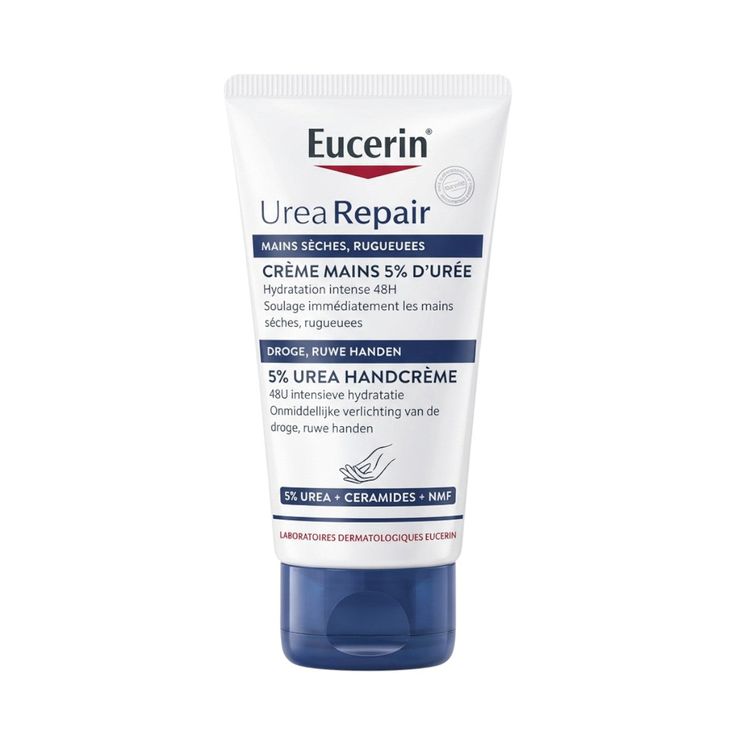
What to watch: the ingredient list in some markets includes lanolin alcohol, so skip it if you react to lanolin. Formulas also vary by country, and one UK reviewer said the newer version felt different from the old one. Read the label on the box you’re buying.
Best for: dry to very dry facial skin, daily use, wearing under makeup.
Price: about £13.50 to £18.90 for 50 ml in the UK. Check your local retailer.
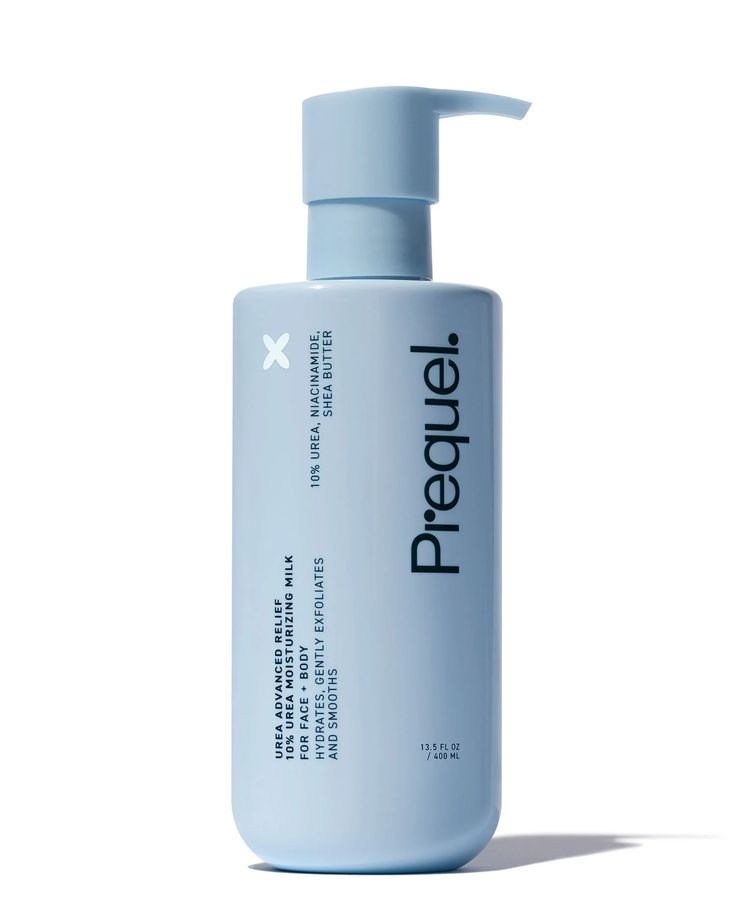
2. Prequel Urea Advanced Relief Moisturizing Milk 10% (Best 10% for Face and Body)
Prequel’s milk is a lotion-style moisturizer with 10% urea, made for face and body. The formula pairs urea with glycerin, shea butter, niacinamide, jojoba oil, and vitamin E. The brand says it’s fragrance-free, vegan, and cruelty-free. It also carries the National Psoriasis Foundation Seal of Recognition, and Prequel describes it as clinically tested for 24-hour moisture.
At 10%, it sits right where urea starts to exfoliate lightly. Prequel itself says the milk offers mild exfoliating and smoothing benefits, and that it hasn’t been formulated or tested for keratosis pilaris, so don’t buy it expecting a KP fix.
What to watch: the texture is thinner than a true cream, and 10% is higher than most people need on the face. Patch test first, and use it on your body before you bring it up to your cheeks.
Best for: people who want one bottle for face and body and have mild to moderate roughness.
Price: around $22 for the full size, and a 3.4 fl oz travel size runs about $7.99 at Target.
3. Sebamed Extreme Dry Skin Relief Face Cream 5% (Best Budget Pick)
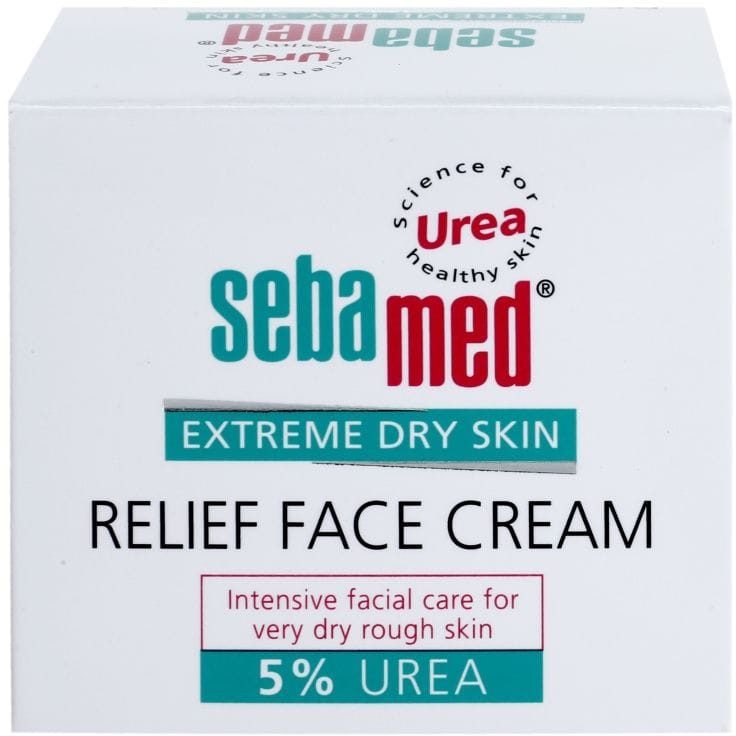
Sebamed is a German pharmacy brand, and this cream is as no-frills as it gets. It has 5% urea plus panthenol, vitamin E, and a centella-derived ingredient called asiaticoside. The brand says it helps with flaking, itching, and redness in very dry skin and can double as a makeup base. Apply it morning and evening, and keep it about 1 cm away from the edges of your eyelids.
It’s also the cheapest of the face creams here, at roughly £10.80 for 50 ml in the UK.
What to watch: fragrance. Some versions list parfum, while Sebamed also sells a perfume-free “Urea Akut” version in parts of Europe. Check the label before you buy if you’re sensitive to scent.
Best for: a simple, affordable urea cream for face use when your skin is dry, itchy, and flaky.
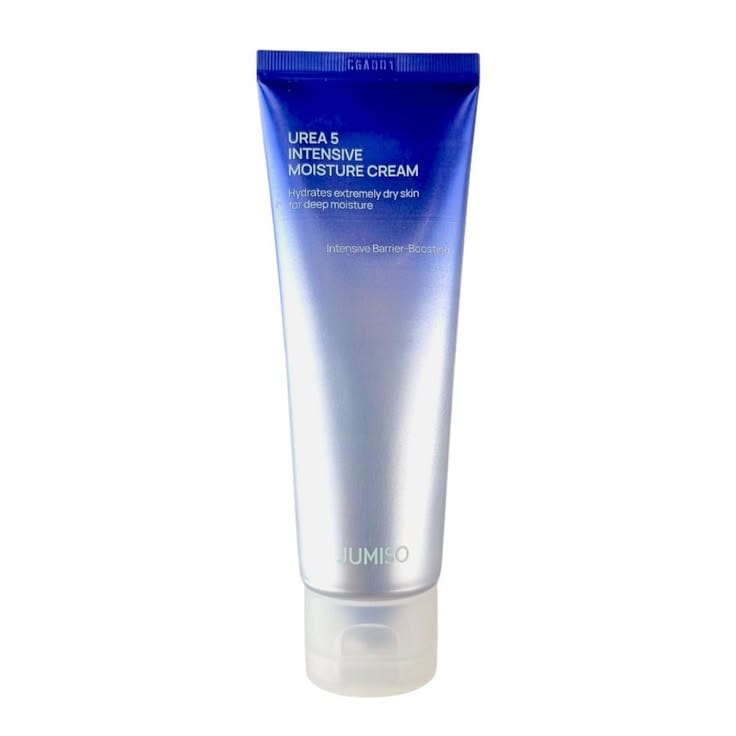
4. JUMISO Urea 5 Intensive Moisture Cream (Best for Barrier-Focused Routines)
JUMISO’s cream is the richest of the 5% options. Besides 5% urea, it has ceramide NP, panthenol, niacinamide, allantoin, and adenosine, delivered with TECA liposomes. The brand calls it a barrier-repair cream for extremely dry skin in harsh climates, and says it’s free of parabens, sulfates, and artificial fragrances.
It feels like a K-beauty moisturizer should: creamy and comforting. That makes it a good winter pick if standard gel creams don’t cut it.
What to watch: coconut oil appears in the formula, which some acne-prone people prefer to avoid. If breakouts are your main worry, see our guide to the best non-comedogenic moisturizers first.
Best for: very dry or sensitive skin in cold, dry weather.
Price: about $22 to $24 for 80 ml in the US, and around £24.99 at UK marketplace sellers.
5. Eucerin UreaRepair Plus 10% Urea Lotion (Best Body Lotion)
This one is a body lotion, and it’s built for very dry, rough skin on arms, legs, elbows, and knees. It combines 10% urea with ceramide and other natural moisturizing factors in a fragrance-free, water-in-oil formula that absorbs quickly and doesn’t feel greasy.
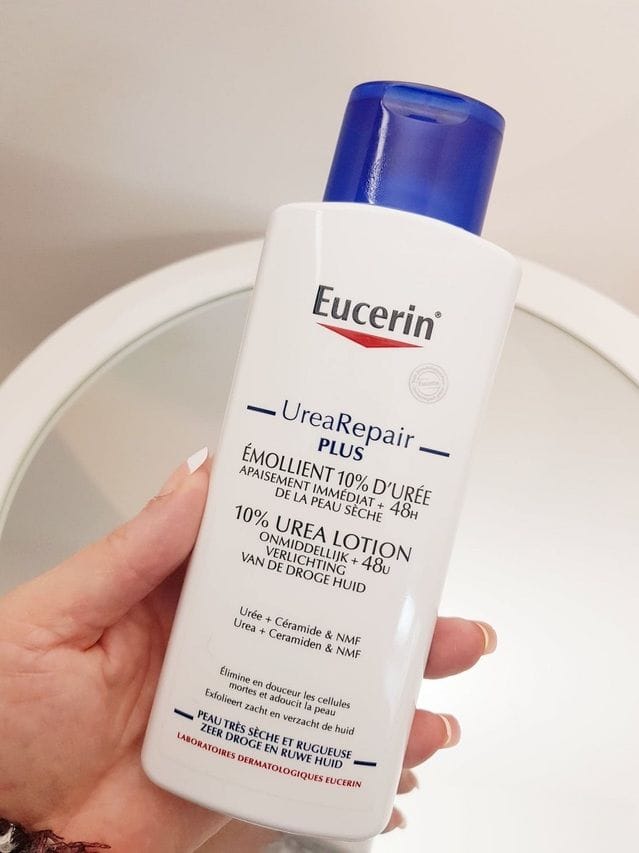
Eucerin says it delivers immediate relief and delays dryness for up to 48 hours. The brand also lists it as suitable for dry skin linked to conditions like xerosis, keratosis pilaris, psoriasis, and diabetes, as part of adjunctive care. At Sephora UK, it holds a 4.65 rating from 466 reviews.
What to watch: it’s positioned as a body product, so keep it off your face. Skinsort also flags an ingredient in the formula that isn’t considered Malassezia-safe, which matters if you’re prone to fungal acne on your body.
Best for: very dry, rough body skin that needs more than a regular lotion.
Price: about £16.50 to £17.30 for 250 ml in the UK.
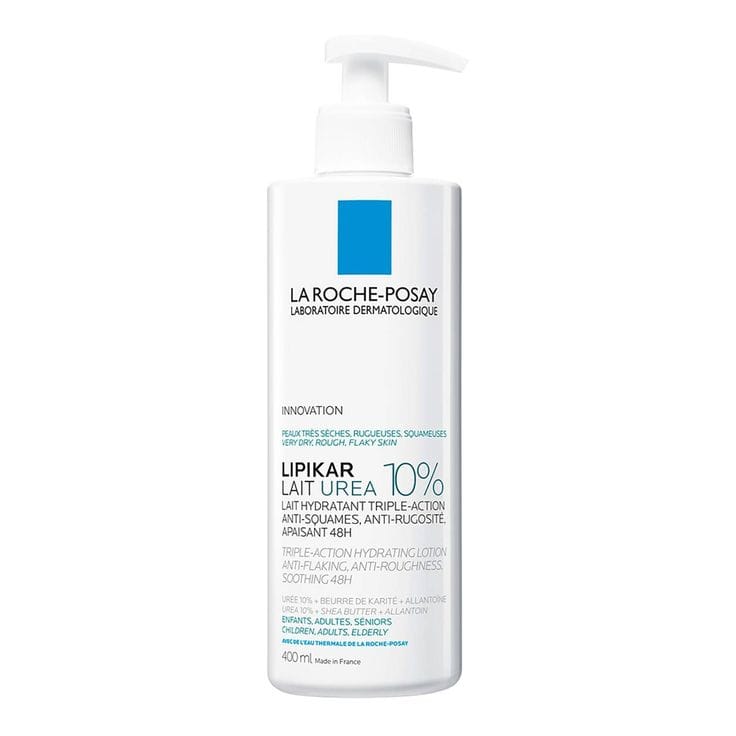
6. La Roche-Posay Lipikar Urea 10% (Best for Rough, Bumpy Body Skin)
La Roche-Posay’s lotion has 10% urea plus shea butter, and it’s fragrance-free, dermatologist-tested, and sensitive-skin-tested. The brand claims it cuts the appearance of dryness by 98% after the first use and delivers 48-hour hydration.
It’s a solid pick for flaky, rough, or bumpy skin on the body, and it costs about $22.99 for a 13.5 oz bottle in the US.
What to watch: several reviewers say it feels tacky and never quite absorbs. If you hate that sticky finish, the Eucerin lotion above may suit you better. And as noted, the UK label says not to use it on the face.
Best for: rough, flaky, bumpy skin on arms, legs, and elbows.
Urea Cream Comparison at a Glance
| Product | Quick Details |
|---|---|
| Eucerin UreaRepair Face Cream | 5% urea, face, light cream, fragrance-free |
| Prequel Urea Advanced Relief | 10% urea, face and body, lotion-style milk, fragrance-free |
| Sebamed Extreme Dry Skin Relief | 5% urea, face, rich cream, check label for fragrance |
| JUMISO Urea 5 | 5% urea, face, rich cream, no added artificial fragrance |
| Eucerin UreaRepair Plus Lotion | 10% urea, body only, fast-absorbing lotion, fragrance-free |
| La Roche-Posay Lipikar Urea 10% | 10% urea, body only, lotion, fragrance-free |
How to Use Urea Cream on Your Face and Body
Using it right matters as much as picking the right product.
Patch Test First
Put a small amount on your inner forearm or behind your ear and wait a day or two. If you see redness, itching, or burning, don’t use it on your face.
Apply It to Damp Skin
The AAD advises applying moisturizer right after bathing, when skin is still damp, because the cream traps moisture that’s already there. For keratosis pilaris, it suggests applying within five minutes of bathing.
Start Once a Day
Use it once a day for the first week, then move to morning and night if your skin feels comfortable. Keep it away from your eyes. Sebamed recommends staying about 1 cm from the eyelid edges.
Wear Sunscreen in the Daytime
Dry skin is more reactive. The AAD recommends a broad-spectrum, water-resistant sunscreen with SPF 30 or higher every day.
Go Easy With Other Actives
Urea already loosens dead skin. Stack it with strong exfoliants, and your skin can end up stinging and tight. If you use at-home chemical peels, retinol, or acids, space them out from your urea cream. Our guides on peptides vs retinol and azelaic acid serum ingredients can help you build a routine that doesn’t overload your skin.
Also hold off on urea right after treatments that leave skin reactive, like a Reedle Shot or a spicule serum. Wait until the irritation settles.
Fix What’s Drying Your Skin in the First Place
A good cream can only do so much if your habits keep stripping your skin. The AAD suggests short, warm showers of five to ten minutes and a humidifier in dry rooms. Hard water can add to the problem, so our comparison of a shower filter vs. a water softener is worth a read.
Who Should Be Careful With Urea Cream?
Urea suits most people, but a few situations need extra care.
Cracked or broken skin: urea can sting on open skin. Let the skin calm down first.
Very sensitive skin: stick to 5% and patch test. Our guides to the best products for sensitive skin and the Vanicream Enhanced Moisturizer offer gentler options if urea stings.
Ingredient allergies: check labels for lanolin, coconut oil, or fragrance if you’ve reacted to them before.
Dryness that won’t budge: the AAD notes that very dry skin can come from an underlying condition such as atopic dermatitis, psoriasis, or kidney disease. If a good moisturizer isn’t helping, see a dermatologist.
Children and pregnancy: ask a doctor or pharmacist before using strong exfoliating products.
Common Mistakes People Make With Urea Cream
Buying by brand, not by percentage. Two creams from the same line can have very different strengths.
Using body lotion on the face. A 10% body lotion isn’t the same as a face cream, even if the ingredients look similar.
Expecting a miracle overnight. Urea smooths rough skin gradually. Give it a few weeks.
Piling on acids. More exfoliation doesn’t mean faster results. It usually means a damaged barrier.
Rubbing skin dry after a shower. Pat it instead, then moisturize while your skin is still damp.
Frequently Asked Questions
What percentage of urea is best for the face?
For most people, 5% is the best place to start. It hydrates and smooths without much irritation. Move higher only if your skin tolerates it, and check with a dermatologist first.
Can I use a body urea cream on my face?
Not unless the product says it’s for face and body. Face skin is thinner and reacts faster. Use a face-specific cream, or a product like Prequel’s 10% milk that’s labeled for both, and test it carefully.
Is urea cream good for sensitive skin?
Often, yes, at lower strengths. The research describes it as well tolerated, with mild side effects. Pick a fragrance-free formula at 5% and patch test before using it on your face.
How often should I use urea cream?
Start once a day. If your skin feels fine after a week, you can use it morning and night. Cut back if you notice stinging or redness.
What's the best urea cream for face and body?
There’s no single winner, because face and body need different strengths. Our pick for the face is the Eucerin 5% cream, and for the body, the Eucerin UreaRepair Plus 10% lotion. If you want one bottle for both, Prequel’s 10% milk is the closest fit.
Final Verdict
If you want the best urea cream for face use, start with the Eucerin UreaRepair Replenishing Face Cream 5%. It’s light, fragrance-free, and sits at the strength most facial skin handles well. If your budget is tight, Sebamed gives you 5% urea for less. If your winters are harsh, JUMISO’s richer cream is worth a look.
For your body, go to 10%. The Eucerin UreaRepair Plus lotion is our pick for very dry skin, and La Roche-Posay’s Lipikar suits rough, bumpy patches if you don’t mind a slightly tacky finish.
Whatever you choose, patch test, start slow, and keep the rest of your routine simple. The right percentage matters more than the brand name on the bottle.