Anua vs The Ordinary Azelaic Acid: Which Is Better?
Two bottles. Both say 10% azelaic acid. One costs about the same as a coffee, the other a little more.
So why do people argue so hard over Anua vs The Ordinary azelaic acid?
Because the formulas could not feel more different. One is a thin, pale-green, water-like serum. The other is a thick, white, silicone-heavy paste that some people love and others cannot stand.
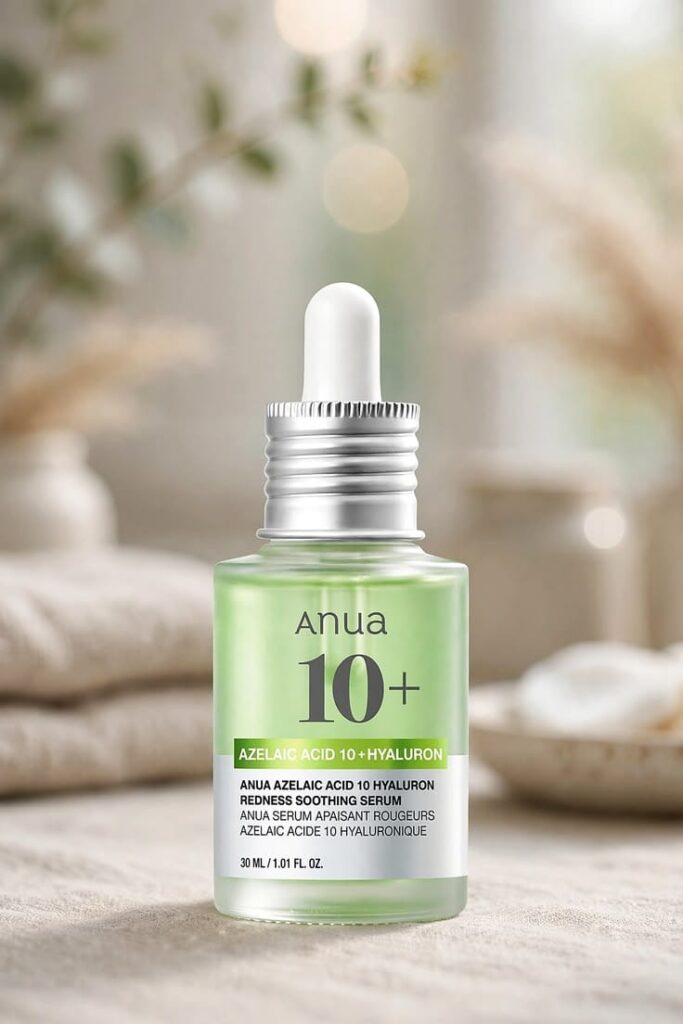
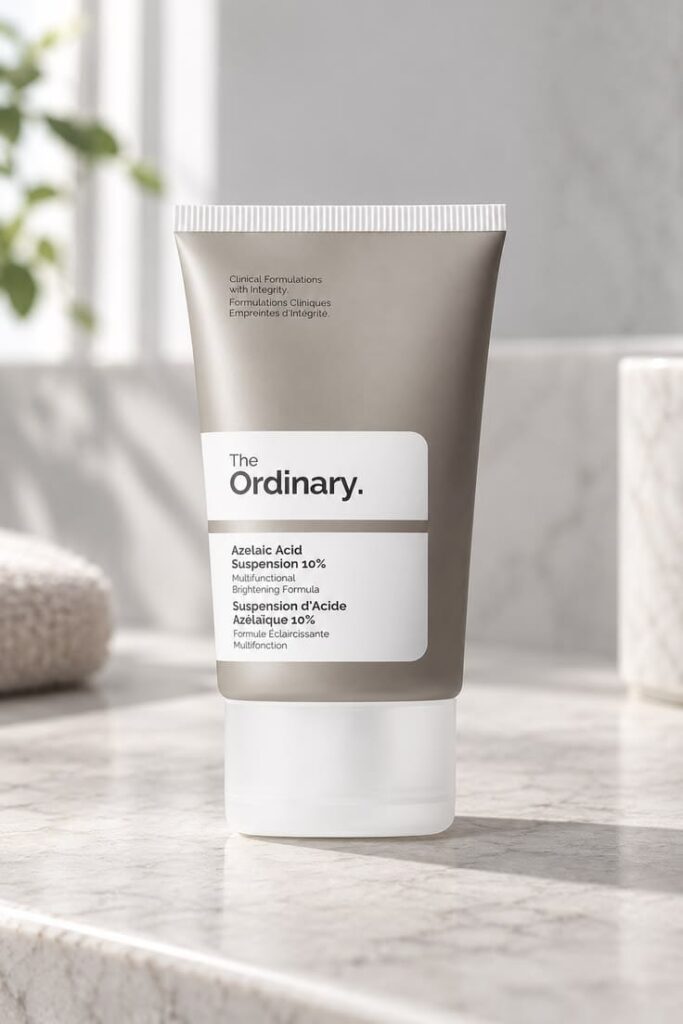
V/S
In this comparison, we break down the ingredients, textures, prices, and which one makes more sense for redness, breakouts, and sensitive skin. We also look at what the research actually says, and where marketing goes a little further than the evidence.
By the end, you will know which 10% fits your skin, and which one to skip.
Quick Summary
- Anua Azelaic Acid 10 Hyaluron Redness Soothing Serum is a lightweight, hydrating, fast-absorbing serum built for sensitive, redness-prone skin. It adds hyaluronic acid, panthenol, ceramide NP, and soothing plant extracts around the azelaic acid.
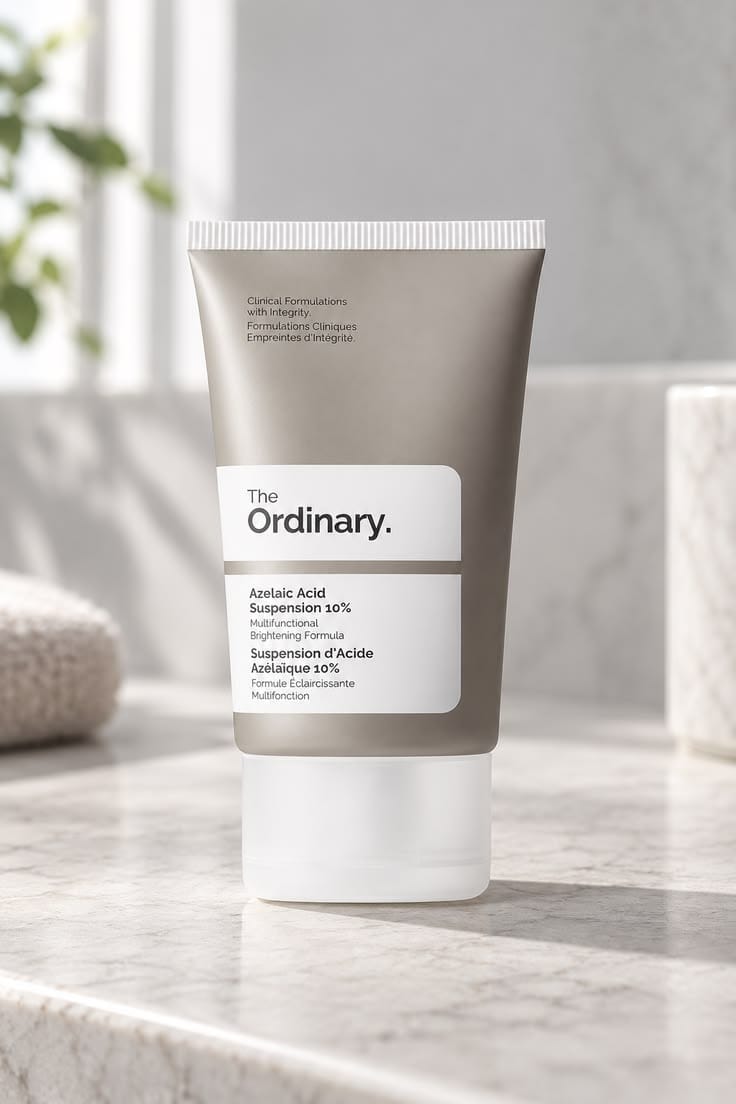
- The Ordinary Azelaic Acid Suspension 10% is a cream-gel suspension with a short, simple formula. It is cheaper, but its gritty, paste-like texture is polarizing.
- Best for redness and sensitivity: Anua, mainly because of its comfort and hydration.
- Best for budget and bumpy texture: The Ordinary, if you can tolerate the feel.
- Important truth: both contain 10% azelaic acid. Most clinical trials used 15% gel or 20% cream, so neither product is a stand-in for prescription treatment.
- Our verdict: pick Anua for reactive, dry-leaning skin. Pick The Ordinary if price matters most and your skin handles heavier textures.
Affiliate Disclosure and Editorial Team
Review Dermatica is reader-supported. If you buy through links on this page, we may earn a small commission at no extra cost to you. This never changes our verdict. We compare products by ingredients, evidence, and fit for different skin types. This article was prepared by the Review Dermatica editorial team. Newaj Hossain Asim, founder and lead analyst, handles product analysis and SEO. Co-founder Tahmina Zannat Lamya handles clinical and formulation research.
Anua vs The Ordinary Azelaic Acid at a Glance
Here is the short version before we dig deeper.
- Full names: Anua Azelaic Acid 10 Hyaluron Redness Soothing Serum vs The Ordinary Azelaic Acid Suspension 10%
- Azelaic acid strength: 10% in both
- Format: water-like serum vs cream-gel suspension
- Texture: thin, fast-absorbing, pale green vs thick, paste-like, slightly gritty
- Extras: hyaluronic acid, panthenol, ceramide NP, aloe, cica vs a short, silicone-based formula
- Best for: sensitive, redness-prone, dry-leaning skin vs budget-focused users with bumpy or blemish-prone skin
- Price (typical): around $22 or £22 vs around £11
Both can work. The real question is which one you will actually enjoy using every day, because azelaic acid only helps when you stay consistent.
Why 10% Azelaic Acid? What the Research Actually Says
Before comparing bottles, let us look at the ingredient itself.
Azelaic acid is a well-studied dermatology ingredient. A 2024 review in Clinical, Cosmetic and Investigational Dermatology explains that it is FDA-approved for papulopustular rosacea and shows significant efficacy in acne vulgaris and melasma. nih
For redness specifically, the evidence is strong. A systematic review of randomized controlled trials concluded that 20% cream and 15% gel formulations appear effective for papulopustular rosacea, particularly for inflammatory lesion counts and erythema. A more recent comprehensive review in Pharmaceuticals reports that the 15% gel was comparable to metronidazole for reducing papules, pustules, and erythema.
The Catch: Trials Did Not Use 10%
Notice the numbers in those studies: 15% and 20%. The pivotal trials behind prescription products used those strengths. A review of azelaic acid formulations notes that both the 15% gel and 15% foam are FDA-approved for papulopustular rosacea in adults.
Anua and The Ordinary both sit at 10%, which is the typical over-the-counter level. So you should read the research as proof that azelaic acid works as an ingredient, not as proof that these exact bottles match prescription results.
Why pH and Formula Matter
The same 2024 review adds that azelaic acid’s antibacterial effect depends on concentration and pH, and is stronger at low pH and high concentrations. That is one reason formulation matters as much as the percentage on the label.
Side Effects to Expect
Burning, stinging, or itching can happen. Clinical data show that the most common effects of azelaic acid gel are burning, stinging, tingling, and itching, which are mostly mild to moderate and transient.
If you are exploring other acid-based options, our guide to at-home chemical peels explains how they compare.
Anua Azelaic Acid 10 Hyaluron Redness Soothing Serum Review
What It Is
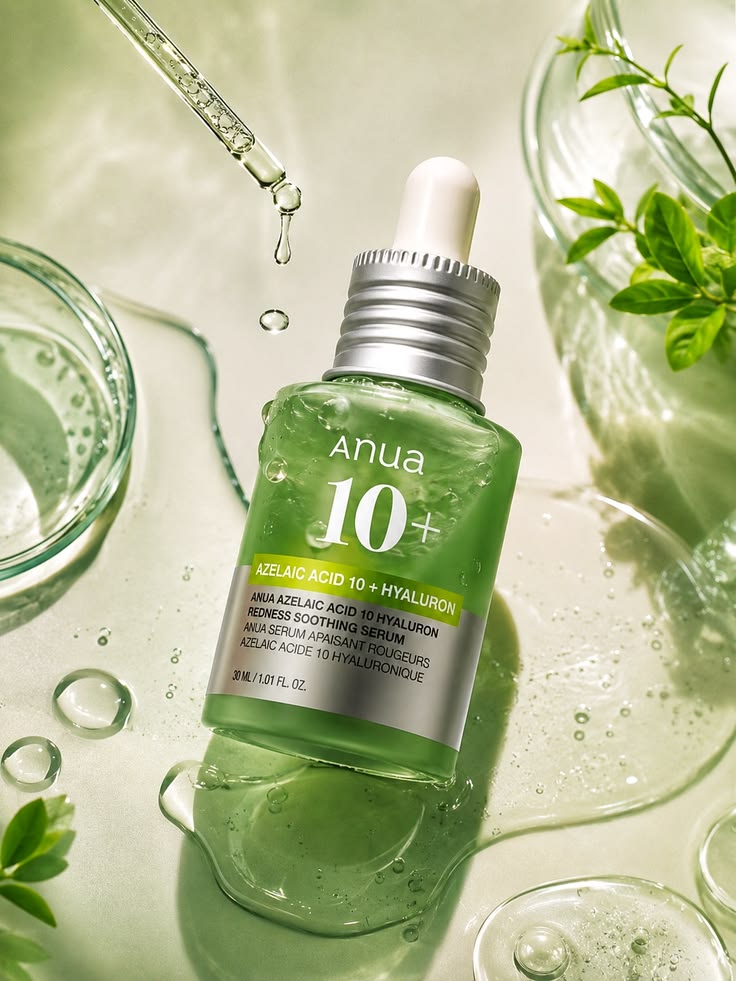
This is a lightweight serum built for calming. A European retailer describes it as a multitasker with 10% azelaic acid that targets redness and blemishes, plus hyaluronic acid for hydration. It is listed for sensitive and acne-prone skin.
We already covered the formula in detail in our Anua azelaic acid serum ingredients breakdown, so here is the summary.
INCIDecoder’s breakdown also highlights pentylene glycol, hydrogenated lecithin, and ceramide NP, a skin-identical ingredient. One retailer says it includes three types of hydrating hyaluronic acid.
Anua markets a “Gentle Calming Complex” with green tea leaf water, aloe, and a 7-Cica complex.
A Detail Many Retailers Get Wrong
Some stores list Blue Tansy Oil and Ubiquinone as ingredients. But Anua’s own brand team answered a shopper on Ulta, saying the product does not list Blue Tansy or Ubiquinone as ingredients. The same Q&A states it contains 0.01% niacinamide.
That is a tiny amount, so do not buy this serum expecting a niacinamide boost. Always check the packaging on your own bottle.
Texture and Finish
This is where Anua shines. It has a lightweight, water-like consistency that absorbs quickly, with a green hue from natural ingredients. It slides under moisturizer easily and does not pill for most users.
One retailer calls it designed for sensitive skin, minimizing the look of redness caused by dryness while adding hydration.
What Anua Says It Will Not Do
Anua is refreshingly honest in its Q&A. The brand says the serum is not designed to treat true acne scars, such as indented or textured ones. It also says it is not a primary treatment for stubborn closed comedones.
Watch-Outs
- It is a 10% acid, so tingling is possible at first, even though the formula is hydrating.
- Ratings are not uniformly glowing. Ulta shows 4.5 stars from 241 reviews, which is strong but not perfect.
- Some retailers list conflicting ingredients, so confirm on the packaging.
Check Today’s Price on Amazon →
The Ordinary Azelaic Acid Suspension 10% Review
What It Is
The Ordinary describes this product as a cream-like formulation targeting textural irregularities, dullness, the look of redness, and uneven tone. A UK retailer calls it a lightweight cream-gel system that visibly smooths and brightens the complexion.
Key Ingredients
The formula is short and simple. The start of the ingredient list reads aqua, isodecyl neopentanoate, dimethicone, and azelaic acid. There is no hyaluronic acid, ceramides, or plant extracts to cushion the active.
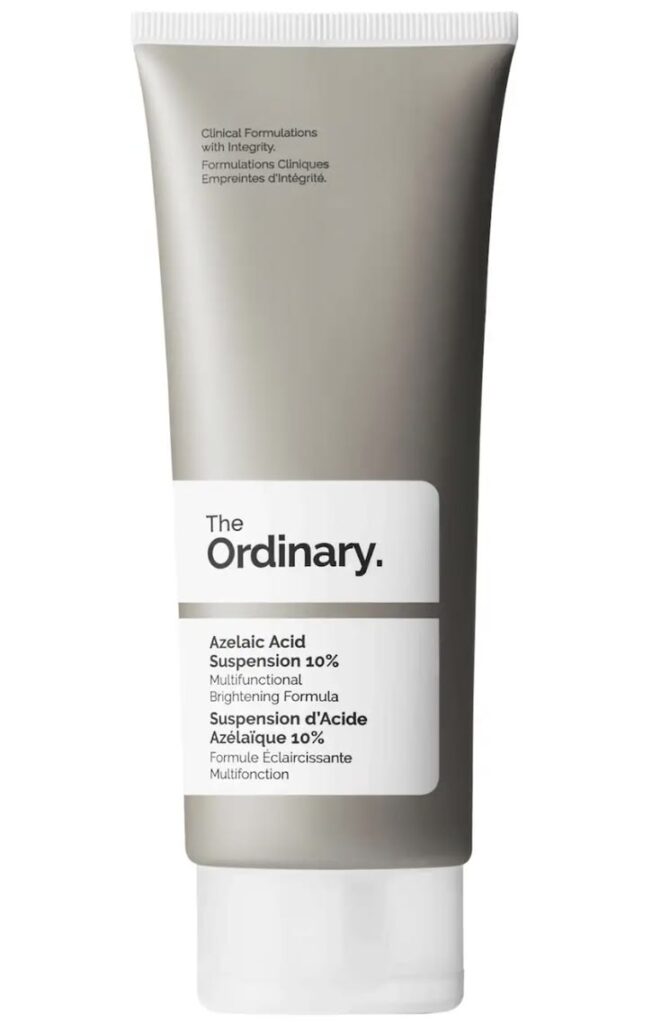
According to the brand page, the product has a pH of 4.0 to 5.0 and is alcohol-free.
Texture and Finish
This is the big talking point. The “suspension” in the name means the azelaic acid is not fully dissolved. An analysis from DermFND says the particles are suspended in the vehicle, creating a slightly gritty texture that polarizes users.
A reviewer at Reviewed described it as having a paste-like texture that felt uncomfortable on skin, while still recommending it for acne, redness, scarring, and dullness.
If you like silky serums, this will feel odd. If you do not mind a heavier, silicone-style finish, it can sit fine under a moisturizer.
Price and Reputation
It is one of the cheapest ways to get 10% azelaic acid. Sephora UK lists it at £11.00, with a 4.55 rating from 1,546 reviews. LookFantastic lists it at £11.83.
Watch-Outs
- DermFND notes that you may feel initial stinging or burning during the first week. dermfnd
- The Ordinary itself says to avoid using it with strong acids, retinoids, or peptides.
- The gritty feel can make it hard to blend under makeup.
For readers using peptide products, see our The Ordinary Buffet peptide serum review to understand why mixing can be tricky.
Check Today’s Price on Amazon →
Azelaic Acid Serum vs Suspension: What Is the Difference?
This is the question behind the keyword azelaic acid serum vs suspension, so let us make it simple.
Serum (Anua)
A serum here means the azelaic acid is dissolved in a water-based liquid. It spreads thinly, feels light, and layers easily. The trade-off is that dissolving azelaic acid in water usually needs careful pH adjustment, which is why you see sodium hydroxide in the list.
Suspension (The Ordinary)
A suspension means the azelaic acid is dispersed as tiny particles in a creamy base. It keeps the formula simple and cheap, but it feels thicker and slightly gritty.
Does One Work Better?
Honestly, we cannot say that from independent head-to-head data. We did not find a published trial comparing these two products. Both contain 10%, and texture is the main practical difference.
So choose based on comfort. The best azelaic acid is the one you will apply consistently for 8 to 12 weeks.
Anua vs The Ordinary Azelaic Acid for Redness
Redness is the main reason people search for this comparison, so here is the honest breakdown.
Why Anua Has the Edge
Anua is built around redness. Its name says it, and its formula backs it with panthenol, ceramide NP, hyaluronic acid, aloe, and cica extracts. These are added to keep skin comfortable while the azelaic acid works.
When skin is red because of dryness or sensitivity, a comfortable formula matters. A burning, tight serum can make redness worse.
Why The Ordinary Can Still Work
The Ordinary offers the same 10% active at half the price. Many users report calmer skin and fewer spots. It simply lacks the cushioning ingredients, so you may need a good moisturizer on top.
A Word on True Rosacea
If your redness is from diagnosed rosacea, an over-the-counter 10% product is not the same as a prescription 15% gel. The American Academy of Dermatology recommends choosing fragrance-free rather than unscented products, and testing skincare before applying it to your face. You can read their full rosacea skincare tips. aad
For gentle alternatives, our guide to the best products for sensitive skin and the best skincare brands for sensitive skin can help you build a calm routine.
Ingredients Compared
Core Active
Both contain 10% azelaic acid. No difference here.
Hydration
Anua wins. It includes hyaluronic acid and humectants. If you want to understand why hydration matters, read our comparison of hyaluronic acid vs glycerin.
Barrier Support
Anua includes ceramide NP and panthenol. The Ordinary does not, so pair it with a barrier moisturizer like those in our CeraVe Moisturizing Cream review or Vanicream Enhanced Moisturizer review.
Simplicity
The Ordinary wins here. Its short list is easier to check if you have many sensitivities.
Texture Ingredients
The Ordinary uses dimethicone and an ester, which create its thick feel. Anua relies on water, glycols, and lecithin for a light finish.
Texture, Layering, and Makeup
Anua
It absorbs quickly, so you can apply it right after toner and follow with moisturizer within a minute or two. It works well under sunscreen and makeup.
The Ordinary
Give it extra time to settle. Use a thin layer, since a thick one can feel heavy. Because of the gritty texture, some users find it harder to wear under makeup.
Order in Your Routine
Use either one after cleansing and any watery toner, and before moisturizer. The Ordinary suggests using it in the treatment step, after water-based products and before heavier ones.
Which One Is Best for Your Skin Type?
Sensitive Skin
Go with Anua. The added hydration and calming ingredients make a 10% acid more comfortable.
Dry or Dehydrated Skin
Anua again. Pair it with a moisturizer from our list of the best moisturizers for dehydrated skin.
Oily or Acne-Prone Skin
Both are options. Anua is marketed for acne-prone skin and is lighter. The Ordinary targets blemish-prone skin at a lower price, though its silicone base may feel heavy on very oily skin.
For more non-greasy picks, see our guide to the best non-comedogenic moisturizers.
Textured Skin and Dullness
The Ordinary claims to target texture and dullness. Anua also says it refines texture, but the brand is clear it does not treat indented scars.
Skin Prone to Dark Marks
Azelaic acid is widely used for pigment concerns, and both products can help the look of uneven tone over time. Be patient, since results are gradual.
Price and Value
Prices change often, and Amazon prices change more than most. Always check the live listing before buying. Here is what we found on Amazon.
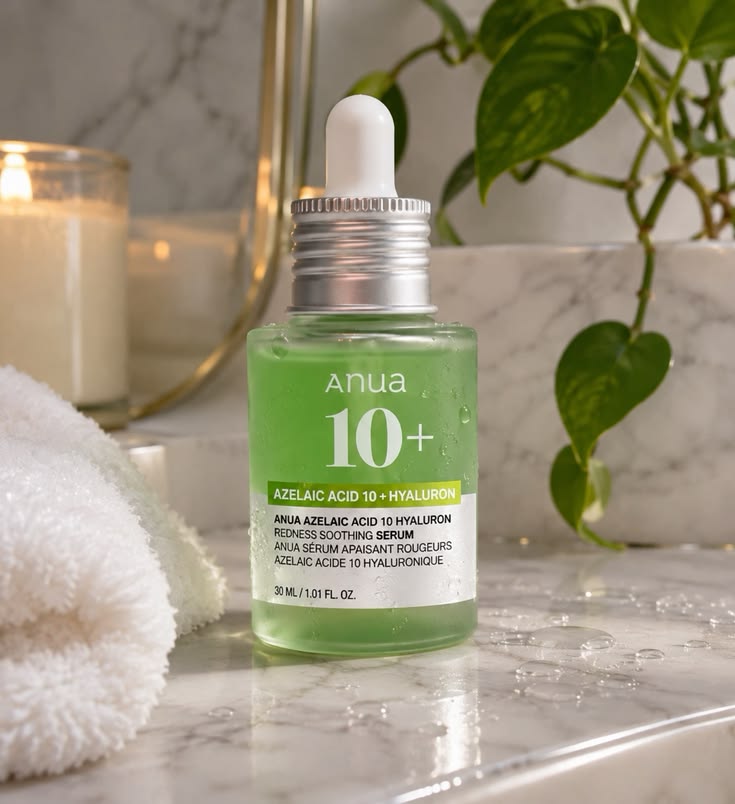
Anua Azelaic Acid 10 Hyaluron Redness Soothing Serum (30 ml):
- Amazon US: $16.20, against a typical price of $22.00.
- Amazon UK: £12.60 with Subscribe & Save, down from a previous £19.99.
The Ordinary Azelaic Acid Suspension 10% (30 ml):
- Amazon US: $12.20, as recorded on 20 August 2026. verifiedbeautydata
- Amazn UK: £8.44 with Subscribe & Save, against an RRP of £11.10.
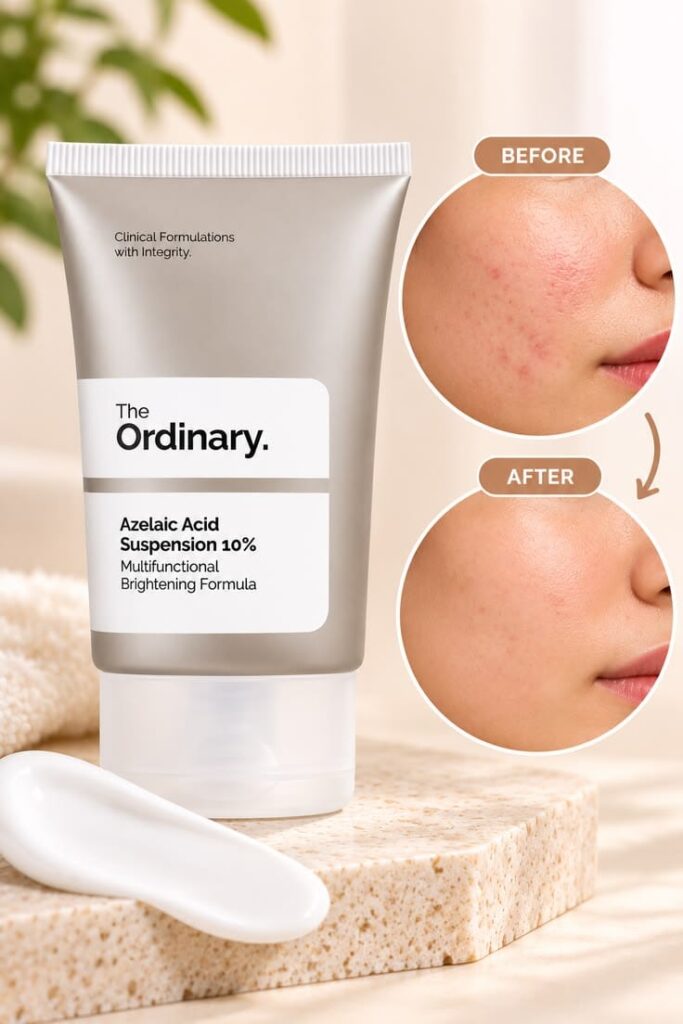
Per ml, The Ordinary is roughly half the cost. That is real value if the texture works for you.
Still, value is not only about price. An inexpensive serum you stop using after a week is a worse deal than a pricier one you finish.
How to Use Azelaic Acid Safely
Patch Test First
The AAD advises testing new products before putting them on your face. For sensitive skin, a quarter-sized patch on the inner arm applied daily for 7 to 10 days is a smart way to check. newswise
Start Slowly
Begin once a day, preferably at night, for the first week or two. If skin stays calm, you can move to twice a day. Pause if you feel strong burning.
Moisturize
Follow with a simple barrier moisturizer. Our Vanicream Enhanced Moisturizer vs Daily Facial Moisturizer comparison is a good starting point.
Wear Sunscreen
The Ordinary says azelaic acid does not significantly raise sun sensitivity, but it still recommends daily sun protection. The AAD suggests a gentle, broad-spectrum SPF 30 or higher sunscreen with zinc oxide, titanium dioxide, or both for sensitive skin.
See our EltaMD UV Clear vs Supergoop Unseen and Ultra Violette Supreme Screen review for options.
Do Not Stack Too Many Actives
Avoid layering strong exfoliants, retinoids, or multiple acids in the same session, especially in the first month. If you also use a BHA, check our COSRX BHA Blackhead Power Liquid review before combining. For a bigger picture, read peptides vs retinol.
Be Patient
Azelaic acid works slowly. Plan on 8 to 12 weeks before judging results. If you are pregnant, breastfeeding, or treating a medical condition, ask your doctor before starting.
Pros and Cons
Anua Pros
- Lightweight, fast-absorbing texture
- Hyaluronic acid, panthenol, and ceramide NP in the formula
- Fragrance-free and positioned for sensitive skin
- Easy to layer under sunscreen and makeup
Anua Cons
- Costs about twice as much as The Ordinary
- Conflicting ingredient claims across retailers
- Only 0.01% niacinamide, so it is not a niacinamide serum
- Not for indented scars or stubborn closed comedones
The Ordinary Pros
- Very affordable
- Short, simple ingredient list
- Large review base with a strong average rating
The Ordinary Cons
- Gritty, paste-like texture
- Silicone-heavy feel
- No added hydrators or soothers
- Brand advises against mixing with strong acids, retinoids, or peptides
Final Verdict: Anua vs The Ordinary Azelaic Acid
So, which 10% is best?
Choose Anua if:
- Your skin is sensitive, dry-leaning, or easily red
- You want a light, elegant texture
- You are willing to pay a bit more for comfort
Choose The Ordinary if:
- Budget matters most
- You have bumpy or blemish-prone skin
- You do not mind a thicker, gritty texture
Our honest take: in the Anua vs. The Ordinary azelaic acid debate, Anua is the more comfortable pick for redness, and The Ordinary is the better value pick for everything else. Neither one replaces prescription azelaic acid for true rosacea.
Ready to try one? Check the current prices below.
Check Today’s Price on Amazon → (Anua)
Check Today’s Price on Amazon → (The Ordinary)
FAQs About Anua vs The Ordinary Azelaic Acid
Is Anua or The Ordinary azelaic acid better for redness?
Anua is usually the more comfortable choice for redness because it adds hydrators and soothers. The Ordinary contains the same 10% active but a plainer formula.
What is the difference between azelaic acid serum vs suspension?
A serum has the azelaic acid dissolved in a light liquid. A suspension keeps the acid as fine particles in a creamy base, which feels thicker and slightly gritty.
Is The Ordinary Azelaic Acid Suspension 10% good for sensitive skin?
The brand says it is generally well tolerated, but recommends patch testing if your skin is sensitive. Expect possible stinging in the first week.
Can I use Anua azelaic acid every day?
Many people do, once their skin adjusts. Start with once daily at night, then increase if comfortable.
Can I use these with vitamin C, retinol, or peptides?
The Ordinary advises avoiding strong acids, retinoids, and peptides with its product. Anua’s team says its serum can be used with a peptide moisturizer. When in doubt, separate actives to morning and night.
Final Thoughts
The Anua vs The Ordinary azelaic acid choice comes down to feel and price. Anua is the soothing, hydrating, light-textured option. The Ordinary is the budget workhorse with a texture you either tolerate or do not.
Patch test, start slow, wear sunscreen, and give it a full two to three months. If your redness is stubborn, a dermatologist can discuss prescription strength.
For more brand face-offs, read Beauty of Joseon vs Anua or The Ordinary vs Paula’s Choice next.
This article is for educational purposes and is not medical advice.