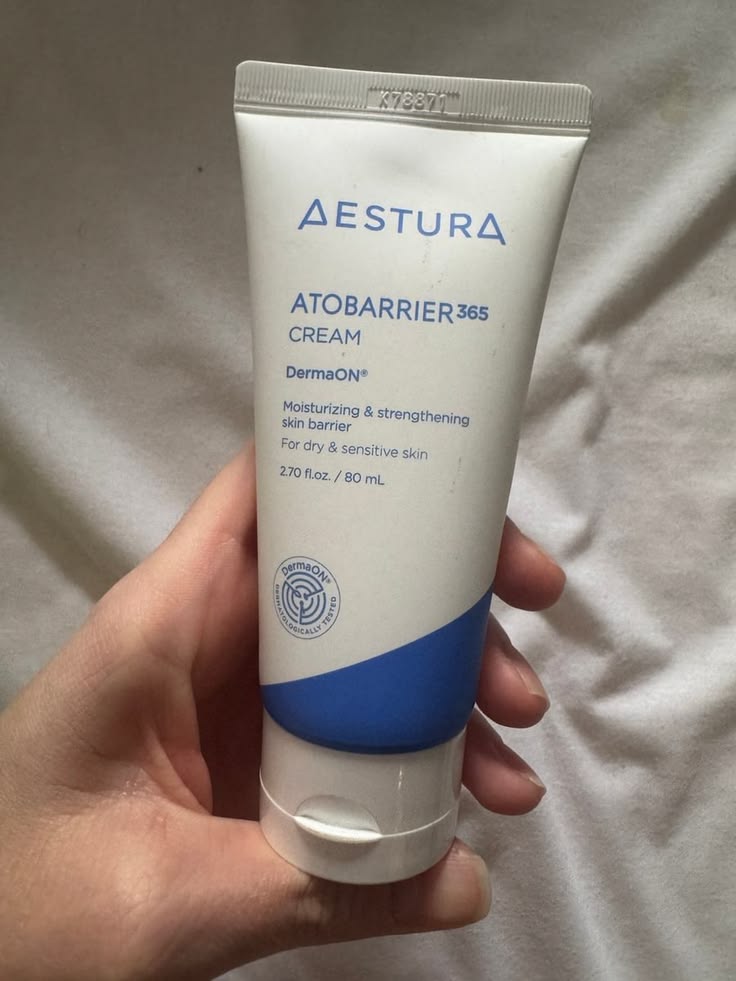
Aestura Atobarrier 365 Cream Review: Worth the Hype?
If your face feels tight by lunchtime every winter, the problem usually isn’t a lack of products. It’s a skin barrier that can’t hold on to water.
That’s the gap Aestura Atobarrier 365 Cream was built to fill. It’s a Korean barrier cream that keeps turning up on eczema-friendly product lists and in dermatologist-style routines.
We went through the full ingredient list, the brand’s own claims, the National Eczema Association listing, and the published research on ceramides before writing this Aestura Atobarrier 365 cream review. Everything here is ingredient-focused, so you’ll see what each part of the formula does and where the marketing gets ahead of the evidence.
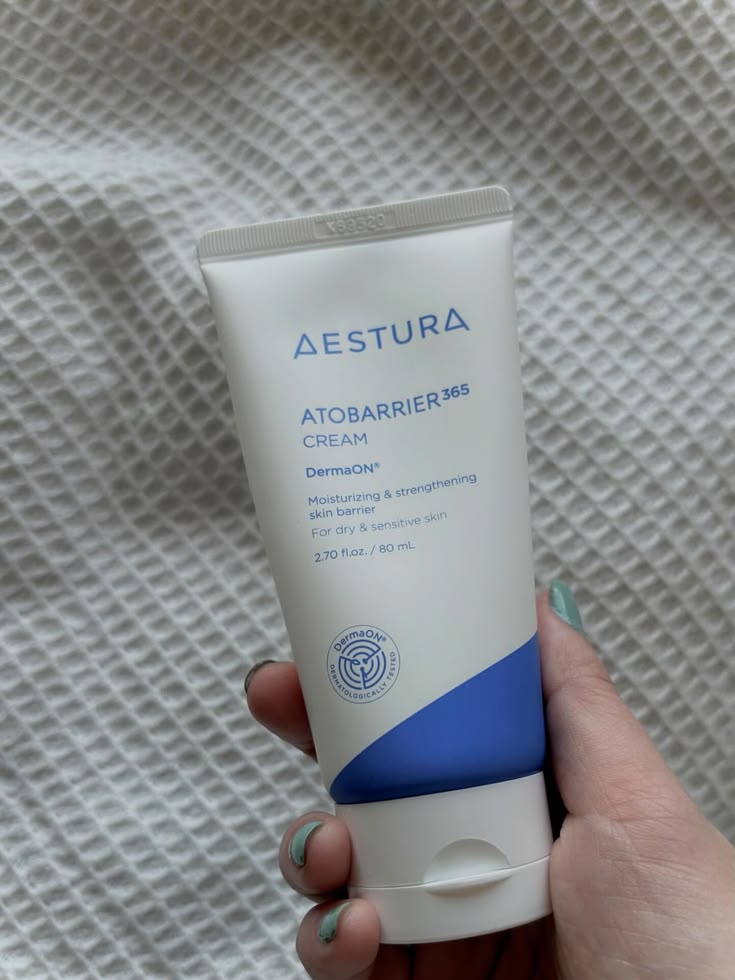
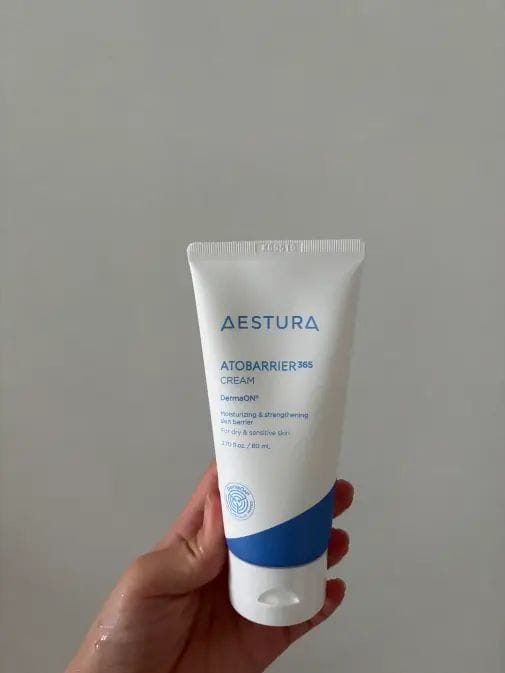
The short version: it’s a well-built cream with the right kind of lipids, a short list of gentle extras, and no fragrance in the ingredient list. It also has a few things that won’t suit everyone, and we’ll point those out too.
Quick Summary
- Product: Aestura Atobarrier 365 Cream (80 mL jar)
- Best for: dry, dehydrated, sensitive, and eczema-prone skin, especially in cold, dry weather
- Key ingredients: Ceramide NP, cholesterol, phytosphingosine, sphingolipids, fatty acids, squalane, glycerin, niacinamide, allantoin
- Texture: rich cream with a silicone-smooth finish
- Fragrance: none listed in the ingredients
- Standout credential: listed in the National Eczema Association’s Seal of Acceptance directory
- Watch-outs: contains silicones and several fatty esters, which some acne-prone or fungal-acne-prone people avoid
- Our take: a strong, no-drama barrier cream for dry and sensitive skin, though not the lightest option for oily skin
Affiliate Disclosure and Editorial Team
Review Dermatica may earn a small commission if you buy through links on this page. It costs you nothing extra, and it never changes what we write. Our verdicts come from ingredient analysis and published research, not from who pays us.
This article was written by Newaj Hossain Asim, lead analyst at Review Dermatica, with clinical and formulation research by co-founder Tahmina Zannat Lamya. This content is educational and isn’t medical advice. If you have diagnosed eczema, rosacea, or any ongoing skin condition, check with a dermatologist before changing your routine.
What Is Aestura Atobarrier 365 Cream?
Aestura is a dermatology-focused skincare brand from South Korea, and Atobarrier 365 is its flagship barrier line. The name tells you the target: “ato” comes from atopic skin, and “barrier” is the whole point.
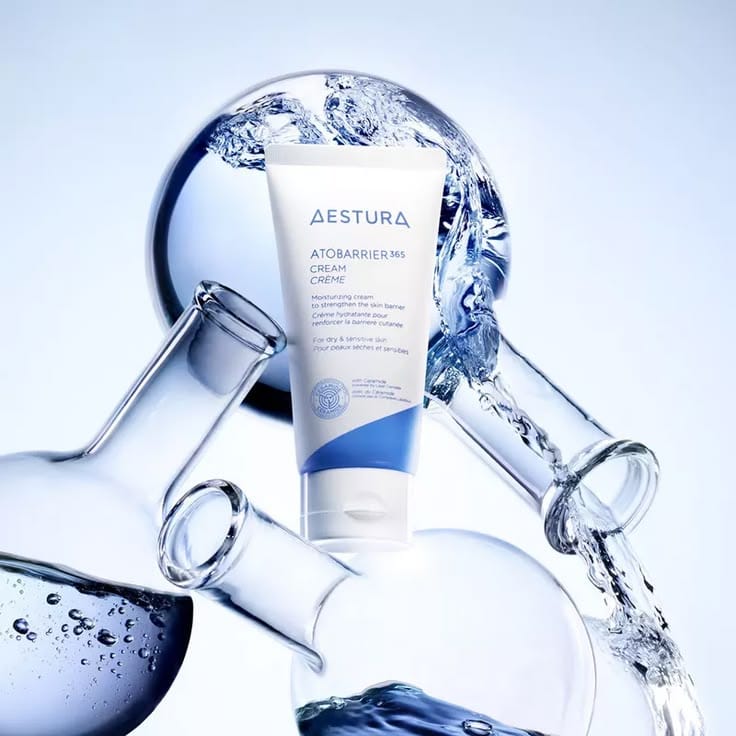
The cream is built around what Aestura calls capsule technology. According to the brand, each jar contains over a million ceramide-rich capsules designed to sit in the gaps of a weakened barrier and release lipids over time.
Treat that capsule language as a brand claim. We can’t verify the capsule mechanism from the label. What we can verify is the ingredient list, and that’s where this cream earns its reputation.
Aestura also lists the cream for dry skin, dehydrated skin, sensitive skin, acne-prone skin, and eczema-prone skin on its official product page.
Quick naming note, because the line is confusing. There’s the original Atobarrier 365 Cream (this review), a Cream Plus, and a lighter Hydro Soothing Cream. Aestura describes the Hydro Soothing version as a non-sticky, matte-finish option for combination skin, so don’t assume the ingredient list we cover here applies to it.
Aestura Atobarrier 365 Cream Ingredients List (Full INCI)
Here’s the complete Aestura Atobarrier 365 cream ingredients list, in the order Aestura prints it on its own site:
Water, Butylene Glycol, Glycerin, Butylene Glycol Dicaprylate/Dicaprate, Cetyl Ethylhexanoate, Squalane, Pentaerythrityl Tetraisostearate, Dicaprylyl Carbonate, Behenyl Alcohol, Dimethicone, Hydroxypropyl Bispalmitamide MEA, Stearic Acid, Betaine, Mannitol, C14-22 Alcohols, Palmitic Acid, Hydroxypropyl Bislauramide MEA, Arachidyl Alcohol, Cholesterol, Polyacrylate-13, C12-20 Alkyl Glucoside, Allantoin, Arachidyl Glucoside, Niacinamide, Ceramide NP, Glyceryl Caprylate, Ethylhexylglycerin, Hydrogenated Polyisobutene, Carbomer, Tromethamine, Dimethiconol, Polyglyceryl-10 Laurate, Hydrogenated Lecithin, Ethylhexyl Palmitate, Acrylates/Ammonium Methacrylate Copolymer, Sorbitan Isostearate, Silica, Phytosphingosine, Sphingolipids, Arachidic Acid, Tocopherol, Oleic Acid.
That’s 42 ingredients. The same list appears, alphabetized, in the National Eczema Association’s product directory, which is a handy cross-check.
One reading tip: ingredients are ordered by concentration down to roughly 1%. After that point, the order doesn’t tell you much. Keep that in mind when we get to ceramides and niacinamide.
Aestura Atobarrier 365 Cream Ingredients Explained
Let’s group the formula by job instead of marching through all 42 one by one.
The Barrier Lipid Trio: Ceramide, Cholesterol and Fatty Acids
Healthy skin holds its outer layer together with three lipid families: ceramides, cholesterol, and free fatty acids. A review of the stratum corneum lipid matrix describes them as sitting in roughly equal molar amounts, and credits that matrix with most of the barrier’s effectiveness.
Atobarrier 365 puts all three in the jar. Ceramide NP is there. Cholesterol is there. And the fatty acids show up as stearic acid, palmitic acid, arachidic acid, and oleic acid.
This matters because of a classic piece of research. A 1997 study in the Journal of the American Academy of Dermatology found that applying all three lipids together, with cholesterol dominant, sped up barrier recovery in older skin. The lesson is that lipids work better as a team than alone.
Aestura’s own FAQ makes the same point, saying the cream carries all three components stabilized in capsules.
Here’s the honest caveat. Cholesterol sits 19th on the list, and Ceramide NP sits 25th. That puts both in the middle of the formula, which hints at modest amounts rather than a ceramide-heavy jar. Because the order stops being reliable below 1%, we can’t say exactly how much is in there.
Phytosphingosine, Sphingolipids and the “Pseudo-Ceramides”
This is the part most reviews skip. Hydroxypropyl Bispalmitamide MEA and Hydroxypropyl Bislauramide MEA are pseudo-ceramides, lab-made molecules that imitate how natural ceramides behave. Both sit high on the list, at 11th and 17th.
Phytosphingosine and sphingolipids appear near the end of the list. They’re the building blocks the skin uses to make its own ceramides, so they’re a reasonable supporting cast even in small amounts.
Pseudo-ceramide moisturizers have some clinical backing. In a four-week open-label trial of 40 patients with mild-to-moderate atopic dermatitis, a pseudoceramide moisturizer was linked with better disease severity scores and skin hydration. It was a small, uncontrolled study and a different product, so read it as encouraging, not conclusive.
Humectants: Glycerin, Butylene Glycol, Betaine and Mannitol
Water, butylene glycol, and glycerin lead the list. That’s a classic hydration base.
Glycerin is the workhorse here. It pulls water into the upper layers of the skin and keeps it there. If you’re curious how it compares with other hydrators, our guide on hyaluronic acid vs glycerin breaks it down.
Betaine and mannitol add extra water-binding without feeling sticky. Both are gentle and rarely cause trouble.
Emollients, Squalane and Silicones
This is where the “rich cream” feel comes from. Cetyl Ethylhexanoate, Dicaprylyl Carbonate, Butylene Glycol Dicaprylate/Dicaprate, and Pentaerythrityl Tetraisostearate are lightweight esters that soften and smooth the skin surface.
Squalane is the standout. It’s a stable, skin-friendly oil that mimics the skin’s own lipids and rarely irritates.
Behenyl alcohol, C14-22 alcohols, and arachidyl alcohol are fatty alcohols. They sound alarming if you only know drying alcohols like ethanol, but these are waxy, thickening, and moisturizing.
Dimethicone and dimethiconol are silicones. They leave a smooth finish and help limit water loss. Some people love that, and some people (especially those who get congested) would rather skip it. More on that below.
Niacinamide, Allantoin and Vitamin E
Niacinamide sits 24th, so it’s a supporting player, not the star. Still, it has real barrier credentials. In a study by Tanno and colleagues, nicotinamide boosted ceramide synthesis in skin cells, and topical use raised ceramide and fatty acid levels while lowering water loss in dry skin.
Don’t expect this cream to behave like a 5% or 10% niacinamide serum, though. At its place on the list, the amount is probably small.
Allantoin is a classic soothing ingredient, and tocopherol (vitamin E) acts as an antioxidant that also helps protect the oils in the formula from going rancid.
Texture Builders, Emulsifiers and What’s Missing
Polyacrylate-13, carbomer, acrylates copolymer, silica, tromethamine, and a few glucoside and polyglyceryl emulsifiers hold the cream together. They’re mostly invisible to your skin.
Glyceryl caprylate and ethylhexylglycerin are skin-conditioning ingredients that also support the formula’s stability.
Now the useful part: what you won’t find. There’s no fragrance or parfum in the ingredient list, no essential oils, no menthol, and no drying alcohols. Aestura also says the cream is free of parabens, phthalates, mineral oil, and sulfates.
One small flag. Aestura’s website wording around synthetic fragrance on this product is a bit unclear, even though the NEA listing describes the cream as formulated without fragrance. If fragrance is a trigger for you, check the packaging on the exact jar you buy.
What Does Research Say About Ceramide Creams?
A cream can have a great ingredient list and still disappoint. So what does the evidence on ceramide moisturizers actually say?
A review of ceramide-containing formulations looked at 41 reports and focused on 12 of them. Those studies suggested that ceramide-containing products can improve dry skin and barrier function in people with atopic dermatitis. The authors also noted that larger double-blind studies are still needed.
A 2023 systematic review and meta-analysis pooled five randomized trials. Ceramide moisturizers improved SCORAD (a standard eczema severity score) more than other moisturizers did. The difference in water loss through the skin wasn’t statistically significant, and the results varied a lot between trials.
So the fair summary is this: ceramide creams look helpful for dry, eczema-prone skin, but they aren’t magic, and the evidence is still maturing.
The same caution applies to Aestura’s marketing. The brand says clinical tests show a single application doubles moisture and barrier improvement, and that the cream passed dermatologist, non-comedogenic, and hypersensitive-skin tests. Those are the brand’s statements, and we couldn’t find the underlying data to review ourselves.
Is Aestura Atobarrier 365 Cream Good for Sensitive and Eczema-Prone Skin?
On paper, yes, with a few honest limits.
First, the formula follows the basic playbook dermatologists suggest. The American Academy of Dermatology says people with eczema should use a cream or ointment instead of lotion and choose fragrance-free products. It also warns that “unscented” isn’t the same as fragrance-free, because unscented products can contain masking fragrance.
Atobarrier 365 is a thick cream, and the ingredient list shows no fragrance. That ticks both boxes.
Second, there’s the NEA listing. Atobarrier 365 Cream appears in the National Eczema Association’s Seal of Acceptance directory. That’s a meaningful signal for sensitive-skin shoppers.
But keep it in perspective. The NEA itself says people with eczema or sensitive skin are responsible for checking ingredients for possible triggers, and that questions about suitability should go to a healthcare provider. A seal is a screening tool, not a guarantee.
Third, how you apply it matters as much as what you apply. The AAD advises moisturizing right after bathing and whenever the skin feels dry, because eczema skin loses water quickly. A great cream used twice a week won’t do much.
A realistic expectation: Atobarrier 365 can be a solid daily moisturizer for mild dryness, tightness, and sensitivity. For moderate-to-severe eczema, it’s a supporting product, not a replacement for whatever your dermatologist prescribes. Even in trials, moisturizers are often used alongside medicated treatment, not instead of it.
If you’re still building a sensitive-skin lineup, our guides to the best products for sensitive skin and the best skincare brands for sensitive skin are good next stops.
Texture, Feel and Winter Performance
Aestura describes the original Atobarrier 365 Cream as rich and creamy, and the ingredient list backs that up. A mix of esters, fatty alcohols, squalane, and dimethicone usually gives a cushiony cream that spreads easily and leaves a soft, slightly cushioned finish.
That profile suits cold weather. Winter skin loses moisture to dry air and indoor heating, so a cream with both humectants and lipids makes sense. The humectants pull water in, and the lipids and silicones help slow its escape.
Here’s a simple way to think about it:
- Glycerin, betaine, mannitol, and butylene glycol: bring water in
- Ceramide NP, cholesterol, fatty acids, pseudo-ceramides: rebuild the barrier’s structure
- Squalane, esters, dimethicone: soften and seal the surface
Because we haven’t put it through a personal wear test, we won’t promise how it feels on your skin. Texture is personal, and that’s one reason we always suggest patch testing.
If you find it too heavy for your climate or skin type, the lighter Hydro Soothing version may be worth a look. And if you’re dealing with dehydration more than dryness, our list of best moisturizers for dehydrated skin has more options.
Who Should Skip Aestura Atobarrier 365 Cream?
No cream suits everyone. Here’s who might want to think twice.
Oily or very acne-prone skin. The formula is rich, and the brand lists acne-prone skin as a target, but heavier creams can feel like too much on oily skin. If breakouts are your main worry, start with our best non-comedogenic moisturizer roundup.
Fungal acne-prone skin. Ingredient-checking tools such as SkinSort flag several ingredients here, including stearic acid, palmitic acid, ethylhexyl palmitate, and polyglyceryl-10 laurate, as potential triggers for Malassezia-related breakouts. That doesn’t mean it will cause trouble, because concentration and your own skin matter. It’s just worth knowing if you’ve had fungal acne before.
Silicone avoiders. Dimethicone and dimethiconol are in the formula. If you prefer silicone-free routines, this isn’t your cream.
People who want very heavy occlusion. For severe dryness, cracked skin, or serious eczema flares, dermatologists often point to thicker products. The NEA explains that creams are water-and-oil based while ointments are oil-based, and ointments seal moisture in more strongly. A cream like this one may not be enough on its own for those cases.
Anyone with a known ingredient allergy. Always read the full list. If you’ve reacted to cosmetic ingredients before, patch test on your inner arm or behind the ear for a few days first.
And if you’re someone who prefers old-school, minimalist options, you might also be curious about trends like beef tallow moisturizer, though that’s a very different philosophy from a lab-built ceramide cream.
How to Use Atobarrier 365 Cream in a Winter Routine
You don’t need a 10-step routine. Barrier-friendly skincare works best when it’s simple.
Morning
Cleanse gently, or just rinse with water if your skin is very dry. Apply a hydrating serum if you use one, then a thin layer of Atobarrier 365 Cream while the skin is still slightly damp. Finish with sunscreen, because winter UV still counts. Our Ultra Violette Supreme sunscreen review is a good place to start.
Night
Cleanse, apply your hydrating layer, and then use the cream as your final step. A slightly thicker layer at night is fine for very dry skin.
If you like a water-based serum underneath, the Torriden Dive-In serum is a lightweight example. Layering a humectant under a barrier cream is a simple way to cover both hydration and sealing.
A Few Practical Tips
- Apply to damp skin. The AAD recommends moisturizing right after bathing, and the same idea works for your face.
- Introduce it slowly. Use it for a few days on a small area before going full-face.
- Pause the heavy actives while your barrier is struggling. That means aggressive acids, strong retinoids, and at-home chemical peels. If you use retinoids, see how they stack up in our peptides vs retinol comparison.
- Mind your water. Hard water can leave skin feeling tight, so a shower filter or water softener may be worth considering in some homes.
- Give it time. Barrier repair is slow. Expect to judge results over a few weeks, not a few days.
If your skin is mature as well as dry, you may find extra ideas in our guide to skincare for mature skin.
Aestura Atobarrier 365 Cream Price, Size and Where to Buy
The standard jar is 80 mL (2.7 fl oz). U.S. retailer listings we found show a list price of $32 for the 80 mL cream, with sale prices a few dollars lower at times. Prices vary a lot by seller and country, so check before you buy.
Be careful with marketplace sellers, especially for skincare. Stick to the brand’s official store or established retailers, and check the batch and expiry on arrival.
Is it worth it? On a per-mL basis, it sits in the mid-range for Korean barrier creams. Given the ceramide-and-lipid formula, the NEA listing, and the lack of fragrance, we’d call the price fair.
How It Compares With Other Barrier Moisturizers
Barrier creams are a crowded category, so here’s how Atobarrier 365 fits in without a long product-by-product breakdown.
If you want a pharmacy-style classic that’s widely available, our CeraVe Moisturizing Cream review covers one of the best-known ceramide creams.
If you want an ultra-minimal formula for reactive skin, see our Vanicream Enhanced Moisturizer review and the Vanicream Enhanced vs Daily Facial comparison.
If you prefer an oat-based gel texture, our Aveeno Oat Gel moisturizer ingredients breakdown is worth a read.
And if you want a classic rich cream with a long track record, we’ve covered the Kiehl’s Ultra Facial Cream too.
Where Atobarrier 365 stands out is the combination: ceramide, cholesterol, fatty acids, and pseudo-ceramides in one formula, plus an NEA listing and no listed fragrance.
Pros and Cons
Pros:
- Contains ceramide NP, cholesterol, fatty acids, phytosphingosine, and sphingolipids
- Adds pseudo-ceramides and squalane for extra barrier support
- No fragrance in the ingredient list
- Listed in the NEA Seal of Acceptance directory
- Suits dry, dehydrated, and sensitive skin
- Works well as a simple winter moisturizer
Cons:
- Ceramide and cholesterol sit mid-list, so amounts are probably modest
- Contains silicones and fatty esters that some people avoid
- May feel heavy on oily skin
- Several of Aestura’s clinical claims come from the brand, and we couldn’t check the data
- Not a replacement for medical treatment in moderate-to-severe eczema
Aestura atobarrier 365 cream Review FAQ
Is Aestura Atobarrier 365 Cream good for eczema-prone skin?
It’s a reasonable supporting moisturizer. The formula is fragrance-free in its ingredient list, rich in barrier lipids, and listed in the NEA directory. But it’s not a treatment. If you have diagnosed eczema, ask your dermatologist how to fit it in alongside prescribed care.
Does Atobarrier 365 Cream contain fragrance?
No fragrance or parfum appears in the ingredient list, and the NEA listing describes the cream as formulated without fragrance. Since Aestura’s site wording is slightly unclear, double-check the packaging on your jar.
What are the main Aestura Atobarrier 365 cream ingredients?
The headline ingredients are Ceramide NP, cholesterol, phytosphingosine, sphingolipids, fatty acids (stearic, palmitic, arachidic, and oleic), squalane, glycerin, niacinamide, allantoin, and tocopherol. Two pseudo-ceramides (Hydroxypropyl Bispalmitamide MEA and Hydroxypropyl Bislauramide MEA) add extra barrier support.
Can I use it every day?
Most people can use it morning and night, as long as it doesn’t irritate or clog their skin. Start slowly, patch test first, and stop if you notice burning, itching, or new bumps.
Is it okay for acne-prone or oily skin?
Aestura lists acne-prone skin among its target concerns, but the cream is rich. If your skin is oily or you break out easily, test a small area first, or consider a lighter, non-comedogenic option.
Final Verdict: Is Aestura Atobarrier 365 Cream Worth It?
For dry, dehydrated, and sensitive skin, yes, it’s a smart pick. The Aestura Atobarrier 365 cream ingredients list covers all three barrier lipids, adds supportive pseudo-ceramides and squalane, and avoids the usual irritants. The NEA listing adds welcome credibility.
It isn’t flawless. Ceramide and cholesterol sit mid-list, the capsule claims are the brand’s own, and anyone avoiding silicones or prone to fungal acne should read the list carefully.
Our recommendation: buy it if winter leaves your skin tight, flaky, or reactive and you want a simple, fragrance-free barrier cream. Patch test first, apply to damp skin, and give it a few weeks.
If you’re comparing options, start with our guide to the best products for sensitive skin.