Glutathione for Skin: Benefits, Uses & Side Effects
Few skincare ingredients carry as much hype as glutathione. Scroll through any beauty feed, and you’ll see it sold as a glow shortcut, a dark spot eraser, even a “skin whitening” miracle.
So let’s slow down. Does a glutathione peptide serum actually do anything when you put it on your face? Or is it just an expensive way to buy a trending ingredient?
The honest answer sits somewhere in the middle. There’s real science behind glutathione. There’s also a lot of marketing running ahead of that science, especially for creams and serums.
In this guide, we’ll explain what glutathione is, what the clinical studies really show, and what side effects to watch for. We’ll also compare three popular serums so you can decide whether one deserves a place in your routine.
Quick Summary
- Glutathione is a tripeptide (three amino acids) your body makes naturally. It works as an antioxidant and may slow pigment production.
- The best topical evidence comes from small, short trials. They show a modest improvement in tone, not a dramatic change.
- A glutathione peptide serum is best seen as a brightening and dark spot support step, not a bleaching treatment.
- Daily sunscreen matters more than any serum. Without it, pigment comes back.
- Our three picks are Medicube AGE-R Glutathione Glow Serum, TOSOWOONG Glutathione 2% Serum, and ma:nyo Glutathione 7 Dark Spot Serum.
- Skip glutathione injections and drips for skin tone. The safety data just isn’t there.
Affiliate Disclosure and Editorial Team
Review Dermatica is reader-supported. If you buy through a link on this page, we may earn a small commission at no extra cost to you. It never changes our opinion of a product, and we say so when something falls short.
This guide was written by Asim, founder and lead analyst at Review Dermatica. Our co-founder, Tahmina Zannat Lamya, handled the clinical and formulation research behind it. Nothing here replaces advice from your own dermatologist.
What Is Glutathione Peptide?
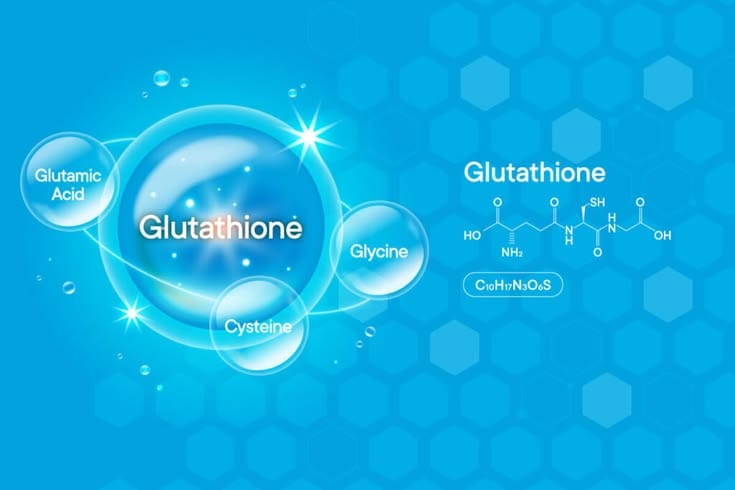
If you’ve ever wondered “what is glutathione peptide?”, here’s the short version. Glutathione is a small molecule made of three amino acids: cysteine, glycine, and glutamate. Because it’s a short chain of amino acids, scientists call it a tripeptide, which is why you’ll see the term “glutathione peptide” on labels and in search results.
Your cells produce it all the time. It protects them from oxidative stress, helps with detoxification, and keeps your cellular environment stable. The researchers behind one topical glutathione trial describe it as a primary antioxidant in the body.
Here’s where people get confused. When most skincare fans hear “peptide,” they think of signal peptides, the ingredients that tell skin to make more collagen. Glutathione isn’t that kind of peptide. Its job is antioxidant and pigment-related, not collagen signaling. If you want to understand the difference, our guide on peptides vs. retinol breaks it down, and our review of The Ordinary Buffet peptide serum shows what a classic signal peptide formula looks like.
Reduced vs. Oxidized Glutathione
Glutathione exists in two forms. Reduced glutathione (GSH) is the active, electron-donating form. Oxidized glutathione (GSSG) is what GSH becomes after it does its antioxidant work.
This matters for serums. The same trial notes that GSSG holds up better in water-based liquids, which makes it easier to formulate. Reduced glutathione is more fragile. It can break down with air, light, and time. That’s why packaging and storage matter so much with these products, and we’ll come back to it later.
How Does Glutathione Work on Skin?
Skin color comes from melanin, the pigment made by cells called melanocytes. An enzyme called tyrosinase kicks off that process. Dark spots, sun spots, and post-acne marks all involve extra melanin in one area.
A clinical review of glutathione for skin lightening outlines the main ideas behind how it may work:
- It may interfere with tyrosinase, the enzyme that starts melanin production.
- It may nudge pigment production toward a lighter type of melanin.
- It acts as an antioxidant, calming the oxidative stress that can push melanocytes into overdrive.
Notice the word “may.” These are proposed mechanisms, and lab behavior doesn’t always translate to a bottle on your bathroom shelf. A molecule has to actually reach the right layer of skin, in a stable form, at a useful strength. That’s the hard part for any topical glutathione.
Glutathione Benefits for Skin: What the Research Shows
When people search “glutathione benefits,” they usually want one answer: will it make my skin lighter and more even? Let’s look at the evidence by route.
Topical Glutathione
The most relevant study for serums is a randomized, double-blind trial of 2% oxidized glutathione lotion. Thirty healthy women applied the glutathione lotion to one side of the face and a placebo lotion to the other, twice daily for ten weeks. The melanin index was significantly lower on the glutathione side. Skin moisture and smoothness also improved, and there were no marked side effects.
That’s encouraging. But a few honest caveats apply:
- The study was small, with 30 participants.
- It tested oxidized glutathione at 2%, not every form found in today’s serums.
- The authors were affiliated with an ingredient manufacturer.
Interestingly, the TOSOWOONG serum we review below also lists 2%, while the other two don’t list a verified strength on the label.
Oral Glutathione
Oral studies are more numerous, and the results are mixed. A double-blind trial in Thailand gave women 250 mg of glutathione daily for 12 weeks. It found effects on skin properties and no serious adverse events. A 12-week trial of oral glutathione with L-cystine in 124 Asian women also reported significant skin lightening.
On the other hand, an Indonesian multicenter trial of a glutathione supplement found only slight benefits in some subgroups, and the results weren’t statistically significant.
Topical Plus Oral
One double-blind trial of 46 participants found that both topical and oral glutathione worked as skin lightening agents. The combination looked better than either alone. It’s interesting, but it’s a single small study, so treat it as a lead rather than a rule.
Injections and Drips
This is where we draw a firm line. A review of intravenous glutathione for skin lightening found no studies of its safety for chronic use for any indication. The authors called the safety data inadequate. The evidence update also describes IV use as the most popular and the most controversial route.
If a clinic offers a glutathione drip for skin tone, we’d walk away. A serum is a far lower-risk way to try the ingredient.
So, What’s the Realistic Takeaway?
Glutathione probably helps skin look a bit brighter and more even over a couple of months, especially alongside sun protection. It isn’t a fast fix, and it won’t change your natural skin color. The studies measured shifts on instruments, and those shifts are modest.
Glutathione Serum vs. Other Brightening Ingredients
Glutathione rarely works alone in a good serum. Most formulas pair it with a few better-studied brighteners. Here’s how it compares to the usual suspects.
- Niacinamide: Helps with uneven tone and supports the barrier. It’s the most common sidekick for glutathione.
- Vitamin C: A classic antioxidant and brightener. If you want to compare, see our look at Klairs Freshly Juiced Vitamin Drop.
- Azelaic acid: Great for post-acne marks and redness. Our Anua azelaic acid serum breakdown shows what a good one looks like.
- Tranexamic acid and arbutin: Often added to dark spot serums for extra pigment support.
- Chemical exfoliants: Speed up the fading of surface pigment. Check our guide to the best at-home chemical peels if you want that route.
If dark spots are your main goal, glutathione is a supporting player. The American Academy of Dermatology lists ingredients like azelaic acid, glycolic acid, kojic acid, retinoids, and vitamin C among options that can fade dark spots. Glutathione isn’t on that list, which tells you where it sits in the pecking order.
Glutathione Serum Side Effects and Safety
Good news first. In the topical trials we found, side effects were minimal. Glutathione on its own is generally gentle.
The bigger risk is everything around it. Most glutathione serums are really multi-active blends, and that’s where irritation tends to come from. Watch for:
- Redness, stinging, or tightness, especially if the formula also includes kojic acid, vitamin C, or acids
- Allergic reactions to plant extracts or fragrance-type ingredients
- A sulfur-like smell or a color change, which can signal the formula is oxidizing
- Sun sensitivity if you pair it with exfoliating acids
A few safety habits help:
- Patch test on your inner arm or behind the ear for two to three days.
- Introduce one new active at a time.
- Stop if you notice burning, swelling, or hives.
- If you’re pregnant, nursing, or on medication, ask your doctor first.
One more warning, and it matters. The AAD cautions that some lightening products from outside the US have been found to contain hidden steroids or mercury that weren’t on the label. Stick with reputable brands and authorized sellers. Never use liquid bleach on your skin, and don’t buy “whitening” products with no ingredient list.
If your skin reacts easily, start with our guide to the best products for sensitive skin or our roundup of the best skincare brands for sensitive skin.
Who Should Try a Glutathione Peptide Serum?
It may suit you if you:
- Have mild uneven tone, dullness, or leftover marks from breakouts
- Already use sunscreen every day
- Want a gentler, lower-commitment brightening step than prescription treatments
- Are patient enough to give it eight to twelve weeks
You might want to skip it, or see a dermatologist first, if you:
- Have deep, stubborn pigment like melasma
- Have a rash, open skin, or an active skin condition
- Are hoping to change your natural skin color
The AAD points out that treating the cause of dark spots comes first. Fading can also take a long time. A spot that’s a few shades darker than your natural skin usually fades within 6 to 12 months once the trigger is gone, and deeper pigment can take years. If a spot is changing shape, bleeding, or growing, get it checked rather than treating it yourself.
How to Use a Glutathione Peptide Serum
A simple routine works best. Here’s the order we recommend.
Morning
- Cleanse gently.
- Apply a few drops of glutathione serum to damp skin.
- Follow with a moisturizer. If your skin runs dry, see our list of the best moisturizers for dehydrated skin.
- Finish with broad-spectrum sunscreen, SPF 30 or higher. Our reviews of Ultra Violette Supreme Screen and the EltaMD UV Clear vs Supergoop Unseen comparison can help you choose.
Evening
- Cleanse, and double cleanse if you wore sunscreen or makeup.
- Apply the serum.
- Seal it in with a barrier-friendly moisturizer. CeraVe Moisturizing Cream and Vanicream Enhanced Moisturizer are simple, reliable choices.
A Few Practical Tips
- Start every other day for the first week, then go daily if your skin is calm.
- Use a pea-sized amount, or three to four drops. More doesn’t work faster.
- Keep the bottle capped, cool, and out of direct light.
- Don’t layer it with strong acids on the same night until you know how your skin reacts.
- Take a photo in the same lighting every two weeks. Mirrors lie, photos don’t.
Sunscreen deserves a second mention. The AAD says daily sunscreen can prevent new dark spots and help clear existing ones, and it suggests tinted sunscreen with iron oxide for visible light. A brightening serum without sunscreen is like mopping while the tap runs.
What to Look for When Buying a Glutathione Serum
Not all bottles are equal. Here’s our checklist.
- A clear concentration. Brands that state the percentage give you something to judge. Be wary of vague “high content” wording.
- A supporting cast. Niacinamide, hyaluronic acid, and adenosine are friendly partners.
- Fragrance and irritants. If you’re sensitive, scan for heavy plant extracts and multiple strong brighteners.
- Packaging. Airless pumps and opaque bottles protect an unstable ingredient better than a clear dropper.
- Authentic sellers. Buy from the brand, a major retailer, or a verified store.
The Best Glutathione Peptide Serums to Consider
We looked at three popular options. Each one takes a different approach, so the right choice depends on your skin and budget.
1. Medicube AGE-R Glutathione Glow Serum
Best for: people who like a glow-focused, hydrating K-beauty serum, and anyone who already owns a Medicube device.
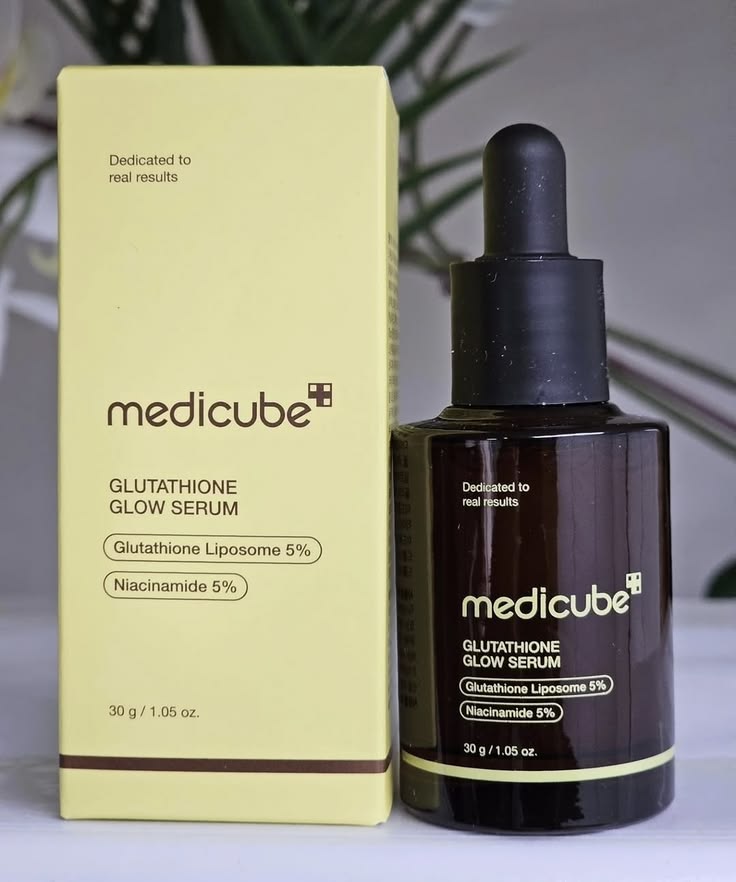
Medicube’s serum is built around glutathione plus niacinamide, adenosine, a skin-mimicking collagen, and bifida ferment lysate. Several retailers list the glutathione at 50,000 ppm, which would be 5%. We’d double-check the label on your bottle, since a few listings give a different figure.
The texture is watery and light, and it absorbs in under a minute. It’s designed to pair with the brand’s AGE-R Booster-H device, though it works fine on its own. Medicube reports the serum passed a primary patch test for low irritation. It also shares a small, brand-reported result: skin glow rose about 3.5% after four weeks when used with the device. That’s a modest number, and it’s worth reading it that way.
Pros:
- Lightweight and easy to layer
- Supports hydration and barrier along with brightening
- Gentle profile for most skin types
Cons:
- Brightening effect is subtle rather than dramatic
- Concentration claims vary across listings
- Best results are marketed with a separate device
Price usually lands between about $20 and $40, depending on the retailer and region.
If you enjoy the brand, our review of the Medicube Zero Exosome Shot shows how it handles another trending ingredient.
2. TOSOWOONG Glutathione 2% Serum
Best for: anyone who wants a simple, no-frills formula with a stated concentration.
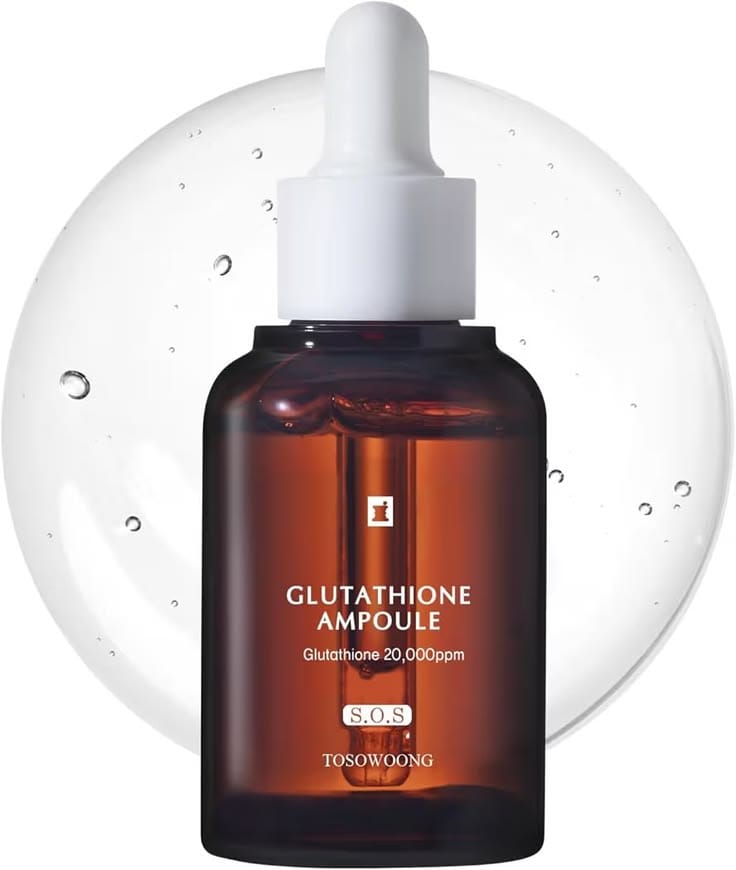
This one is refreshingly straightforward. The Amazon listing lists 20,000 ppm of glutathione, which is the same 2% concentration used in the topical oxidized glutathione trial we discussed earlier. The rest of the formula is short, at about 27 ingredients. It includes niacinamide, five types of hyaluronic acid, and adenosine.
That shorter list is the appeal. Fewer actives usually means fewer things that can irritate. The brand describes it as gentle and suitable for all skin types. One caution: the ingredient list includes plant extracts such as anise and vanilla fruit extract. If you’re fragrance-sensitive, patch test before using it on your whole face.
Pros:
- Clear 2% concentration
- Short, simple formula
- Easy to slot into a minimal routine
Cons:
- Fewer extra brighteners, so dark spot results may be slower
- A couple of plant extracts could bother very reactive skin
- Smaller 30 ml bottle
3. ma:nyo Glutathione 7 Dark Spot Serum
Best for: post-acne marks and stubborn dark spots, if your skin tolerates actives well.
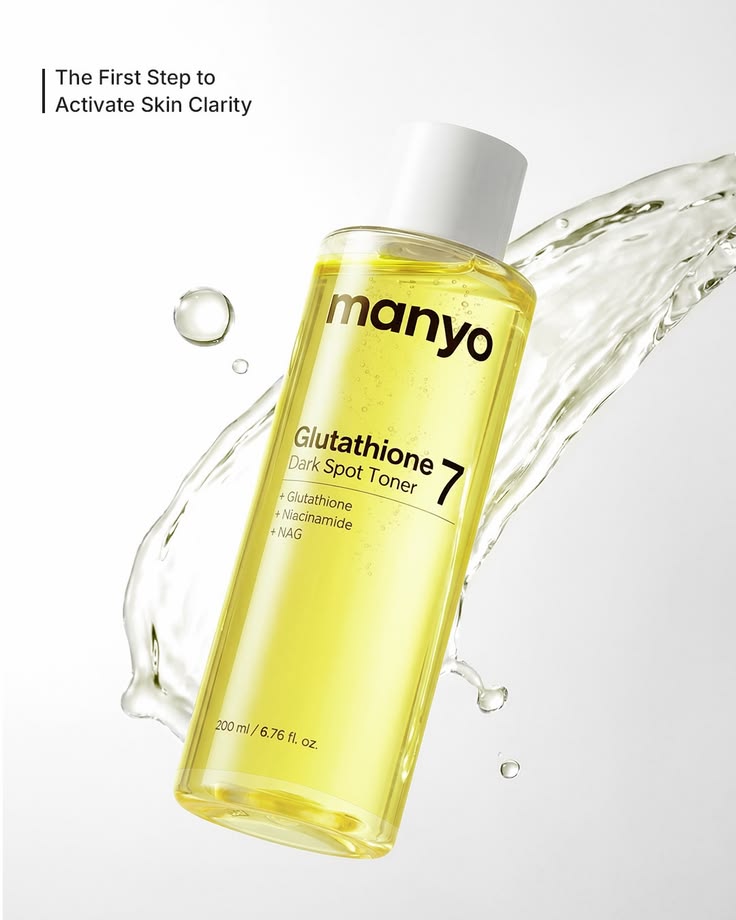
ma:nyo takes the opposite approach. Glutathione is one piece of a stacked formula that also includes niacinamide, N-acetyl glucosamine, tranexamic acid, a vitamin C derivative, alpha-arbutin, and kojic acid, plus hyaluronic acids. The brand markets its “nano” glutathione as small enough to absorb deeply, and it promises visible clarity in seven days.
Treat that seven-day line with some skepticism. Most pigment doesn’t shift that fast, and the nano claim comes from the brand rather than independent testing. Still, with so many proven brighteners in one bottle, it’s the most likely of the three to make a visible difference on spots. The trade-off is that more actives mean more chances of irritation.
Pros:
- Targets dark spots from several angles
- Multiple well-known brighteners in one step
- Usually the most affordable of the three, often around $21 to $23
Cons:
- Highest irritation risk of the group
- Marketing claims run ahead of the evidence
- May be too much for sensitive or barrier-damaged skin
Which One Should You Pick?
- Choose TOSOWOONG if you want simple and gentle, with a clear 2% on the label.
- Choose Medicube if hydration and glow matter as much as pigment.
- Choose ma:nyo if dark spots are the main problem and your skin handles actives well.
Remember that the glutathione isn’t doing all the work in the multi-active formulas. If a serum helps, some of the credit probably belongs to the niacinamide, arbutin, and tranexamic acid alongside it.
How Long Until You See Results?
Skin turns over its surface cells roughly every month, and pigment takes longer than that to settle down. In the studies we reviewed, measurable changes showed up over 10 to 12 weeks. Give any serum at least 8 weeks before judging it.
You may notice some glow and hydration sooner. That’s the niacinamide and hyaluronic acid at work, and it’s real, just not the same as pigment fading.
If nothing has changed after three months of consistent use with daily sunscreen, the serum probably isn’t the right tool. A dermatologist can offer stronger options, and for some spots a prescription is simply the better path. You can also read about stronger treatments like Dr. Melaxin peel shots or what mature skin needs to see change.
Frequently Asked Questions
What is glutathione peptide?
It’s a tripeptide made of cysteine, glycine, and glutamate. Your body makes it naturally, and it works mainly as an antioxidant. In skincare, it’s used for its potential brightening and tone-evening effects.
Is glutathione for skin safe to use every day?
Topical glutathione looked well tolerated in the trials we reviewed. Most irritation in real products comes from the other actives in the formula. Patch test first, and build up slowly.
Can a glutathione serum lighten my natural skin tone?
It’s not designed to, and the evidence doesn’t support a dramatic change. Realistically, you may see a more even, brighter look and slightly faded spots. Your natural color stays yours.
Is topical or oral glutathione better?
The research on oral glutathione is larger but mixed. Topical evidence is smaller. One trial suggested a combination could work better than either alone, but we’d want more studies before calling it proven.
Can I use glutathione with vitamin C or niacinamide?
Niacinamide pairs easily, and many serums already combine the two. Vitamin C is fine for most people too, though if your skin gets irritated, use them at different times of day.
Final Verdict: Is a Glutathione Peptide Serum Worth It?
Yes, with realistic expectations. A glutathione peptide serum is a reasonable, fairly gentle way to support brighter, more even-looking skin. The science is encouraging but still early, and the best results come when it’s part of a routine with daily sunscreen, a good moisturizer, and patience.
For most people, we’d start simple. The TOSOWOONG formula gives you a clear 2% without extra noise. If you want more glow and hydration, Medicube is a pleasant everyday option. And if post-blemish marks are your battle, manyo has the most firepower, as long as your skin can handle it.
Whatever you choose, skip the injections, avoid mystery “whitening” products, and give your skin a full two to three months before you judge. If you want to explore more of what we’ve tested, our comparison of Beauty of Joseon vs Anua is a good next stop.